Food
What to eat in Cali and where to try it
The dishes of Cali and the Valle, described from the Ministry of Culture’s recipe book, and the areas where to look for them. After the earthquake of August 10, 2026 almost no restaurant has published a dated notice: we say what is on record for each area.
In short
- To begin with: pandebono, empanadas with ají, sancocho de gallina, chuleta valluna, lulada, champús, cholado and manjar blanco.
- Where to look: Galería Alameda for breakfast or lunch, the Canchas Panamericanas for cholado, Pance for wood-fire sancocho and Parque del Perro to choose a restaurant.
- The earthquake affected 210 restaurants; as of October 14, 2026, 27 had not reopened. Check each place’s own channel before you go.
- Tipping is voluntary (you may be offered a suggested 10% at most), and the 8% tax must already be included in menu prices.
A day of eating in Cali
This is how the Ministry of Culture’s recipe book divides the day. No source gives clock times.
Breakfast
Orange juice, eggs, coffee or hot chocolate, with an arepa or fried plantain and cheese.
Mid-morning
Cold oat milk, champús, lulada or kumis, “all with pandebono, obviously.”
Lunch
A soup or a sancocho, never without rice and fried plantain.
Mid-afternoon
A pandeyuca (cassava cheese bread) or an aborrajado, or chontaduro and green mango with salt.
Dinner
Light: empanadas or fritanga (fried meats) with friends is common.
Sources: Ministerio de Cultura
What to try
The name is the one you will see on the menu. The “meat-free” mark comes from the published recipe, not from each kitchen.
Snacks
Pandebono
Baked cheese bread made of corn dough, sour cassava starch, salty white cheese and egg, shaped into balls or rings.
At any time of day: mid-morning, in the afternoon with cold oat milk or at breakfast. There are several versions of its origin; El País places it in the late 19th century at Hacienda El Bono, in Dagua.
Meat-free by the recipe
Sources: Ministerio de Cultura, Secretaría de Turismo de Cali, El País Cali
Empanadas vallunas
A fried corn-dough half-moon filled with a stew of pork or beef, potato and hogao (a tomato and onion sauce).
Hot, with ají (chili sauce) and a few drops of lime. In Cali, filling them with rice is frowned upon, according to El País.
Sources: Ministerio de Cultura, El País Cali
Marranitas
Fried plantain balls with bits of crisp pork crackling. Also called puerquitas.
The Ministry of Culture’s recipe book makes them with green plantain; Radio Nacional, with ripe plantain.
Aborrajado
Very ripe plantain, fried, filled with cheese and fried again in an egg, flour and milk batter. Some versions add guava paste.
In the mid-afternoon, or as a side at lunch.
Meat-free by the recipe
Chontaduro
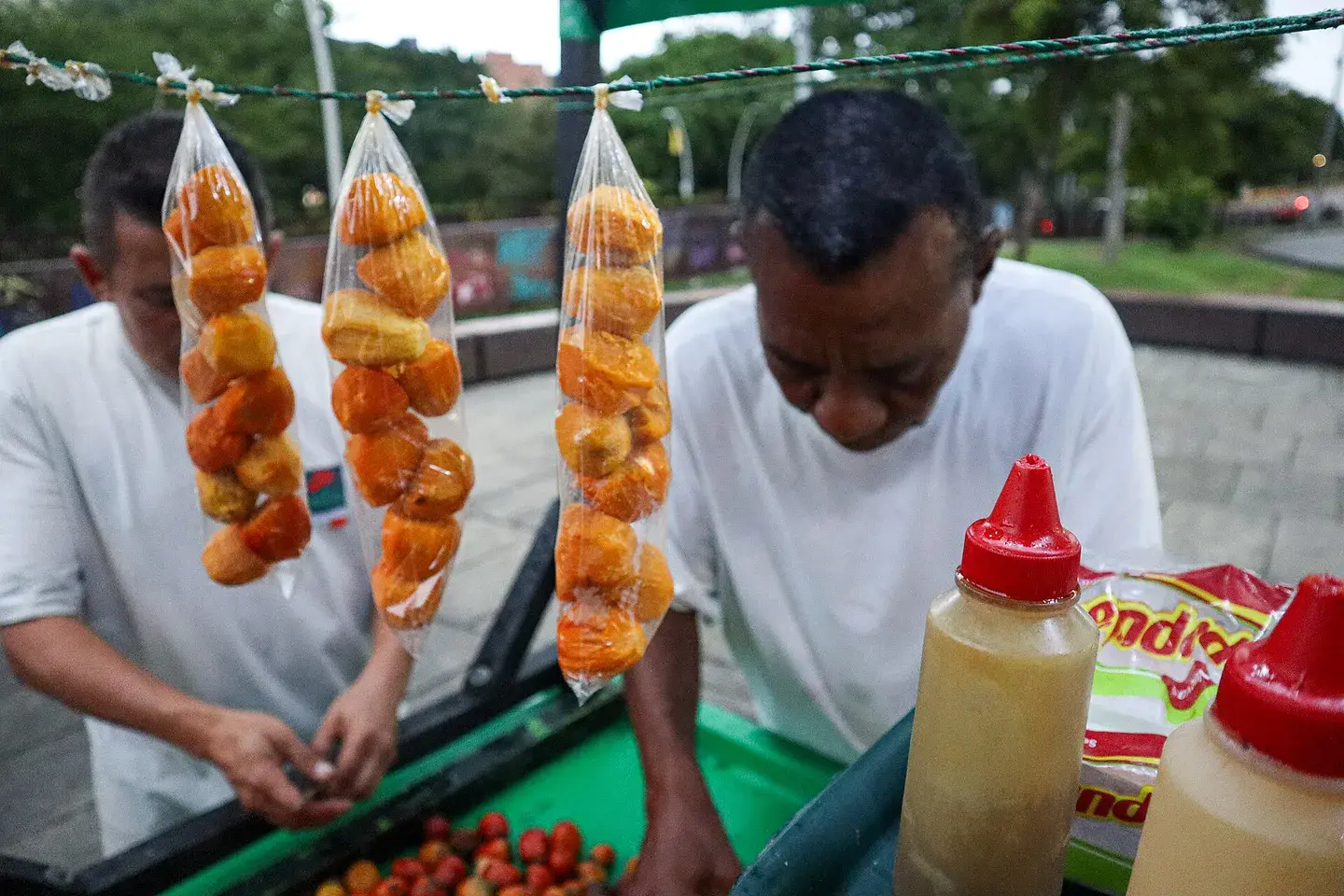
The fruit of a palm, boiled, sold at street stalls in parks and on corners.
Peeled, with honey, with lime or simply with salt.
No animal products by the recipe
Sources: Ministerio de Cultura
Main dishes
Sancocho de gallina
Hen soup with hand-broken green plantain, cassava and wild coriander. Served with rice, avocado and ají.
It is the meal of the “paseo de olla,” the family Sunday outing to a river, above all the Pance. Ginebra’s is famous across the country.
Sources: Ministerio de Cultura, El País Cali
Arroz atollado
Wet rice, almost a thick soup, with pork rib, pork, sausage, potato and hogao.
In a soup plate, with fried plantain, avocado and ají.
Sources: Ministerio de Cultura
Tamal valluno
Corn dough with hogao, filled with pork, potato, carrot, peas and egg, wrapped in plantain leaves and boiled.
With rice and ají. The ingredients vary from cook to cook.
Chuleta valluna
A thin pork chop simmered in a tomato and onion sauce with sugarcane water, then breaded and fried.
With lime slices, fried plantain and salad. Buga is the town known for it, according to El País.
Sources: Ministerio de Cultura, El País Cali
Drinks
Lulada
Lulo (a tart Andean fruit) crushed by hand, neither blended nor strained, in limeade with sugar and plenty of ice.
No animal products by the recipe
Champús
A cold drink of cooked white corn with panela syrup, cinnamon, cloves, orange leaves, pineapple and lulo.
No animal products by the recipe
Sources: Ministerio de Cultura
Cholado
Shaved ice with lime juice, colored syrup, chopped fruit and condensed milk, in a tall glass.
According to ProColombia, the recipe was born in Jamundí. In Cali, people have it at the stalls of the Canchas Panamericanas.
Meat-free by the recipe
Sources: Ministerio de Cultura, ProColombia
Sweets
Manjar blanco
Milk, sugar and a little ground rice, stirred nonstop in a copper pan until thick.
With fresh white cheese. It is a December sweet.
Meat-free by the recipe
Desamargado
Peels of sour orange, lime, green papaya and grapefruit, boiled until the bitterness is gone and cooked in panela syrup with cloves and cinnamon.
At Christmas and New Year, alongside manjar blanco.
No animal products by the recipe
Sources: Radio Nacional de Colombia, Secretaría de Turismo de Cali
Cocadas
A coconut sweet with panela or cane syrup, cinnamon and cloves, traditional on the Pacific coast.
No animal products by the recipe
Sources: Ministerio de Cultura
Macetas de alfeñique
A maguey stick decorated with sugar figures, paper, ribbons and pinwheels.
Godparents give them to their godchildren on June 29. The tradition, centered on San Antonio, has been on Colombia’s list of intangible cultural heritage since 2013.
Sources: Ministerio de Cultura
From the Pacific coast
Encocado
Fish or seafood cooked in coconut milk with Pacific herbs: black basil, pennyroyal and wild coriander.
Sources: Ministerio de Cultura
Arroz endiablado
Seafood rice with shrimp, squid, piangua (a mangrove mollusk), crab, clam and tollo (a small shark), sometimes spicy.
It was one of the best-selling dishes at the kitchens of the 2025 Petronio Álvarez festival.
Sources: Alcaldía de Cali
Viche
A craft sugarcane spirit made by the Black communities of the Pacific coast. It is the base of arrechón, made with borojó fruit, panela and anise.
A 2021 law recognizes it as the collective heritage of those communities. A legally sold bottle carries an “INVIMA LAE” registration on its label.
Sources: Ministerio de Cultura, Ministerio de Salud y Ministerio de las Culturas, INVIMA
Where to try them, by area
We recommend areas, not restaurants: after the earthquake almost no business has published a dated notice. Where a source names one, we say what it says and when. Check each place’s own channel before you go.
Downtown
Galería Alameda
The market where City Hall recommends having breakfast: sancocho, tamales, pandebono, chontaduro, fish and Pacific cooking.
No confirmation after the earthquake. There is only an indirect mention that it was operating in late August 2026. No stall has a confirmation of its own.
What the sources name
- Restaurante Basilia. Arroz atollado, arroz clavado and pastel chocoano, at a stall more than 40 years old (City Hall, September 2025).
- La Chonta House. Chontaduro pandebono (El País, February 2025).
Read the guide · Galería Alameda
Sources: Ministerio de Cultura, Secretaría de Turismo de Cali, Alcaldía de Cali, El País Cali
Barrio Obrero
Neighborhood cooking on the streets of the Ruta de la Salsa: the city’s tourism office counted 26 food businesses there in March 2026.
No confirmation after the earthquake. The neighborhood is active, but no food business has a confirmation after the earthquake.
What the sources name
- El Fogonazo de Nancy. Sancocho de gallina for about 25 years (City Hall, March 2026).
Read the guide · Barrio Obrero
Sources: Alcaldía de Cali
South
Parque del Perro (San Fernando)
The city’s busiest district, according to City Hall: bars, cafés and all kinds of cooking.
Dated activity after the earthquake. On September 11, 2026, about 60 restaurants in the area took part in “De Borondo,” according to City Hall.
Canchas Panamericanas
The cholado stalls on Calle 9, which City Hall calls “the Temple of the Cholado.”
No confirmation after the earthquake. The last dated news is from April 2026, before the earthquake.
Read the guide · Cholados de las Canchas Panamericanas
Sources: Secretaría de Turismo de Cali, ProColombia, Alcaldía de Cali
Pance
Wood-fire sancocho at the riverside eateries, after a swim: the Sunday “paseo de olla.”
No confirmation after the earthquake. In September 2026 City Hall reported a “De Borondo” edition in Pance with 180 businesses, without giving its date. No source names a specific eatery.
Sources: Ministerio de Cultura, Secretaría de Turismo de Cali, Alcaldía de Cali
La Casona Valluna (Calle 5)
Lulada, marranitas and chuleta: that is what it served at Cali’s birthday celebration in 2025, according to City Hall. El País places it on Calle 5 at Carrera 38.
No confirmation after the earthquake. We found no confirmation after the earthquake.
Sources: Alcaldía de Cali, El País Cali
West
Bulevar del Río y Plazoleta Jairo Varela
It has no documented permanent stalls, but it is where the fairs are held: “De Borondo” and, in the plaza next door, World Pandebono Day.
Dated activity after the earthquake. “De Borondo” came to the boulevard on September 17–19, 2026, and World Pandebono Day brought together ten bakeries on October 23.
Read the guide · Bulevar del Río
Sources: Alcaldía de Cali
San Antonio y El Peñón
The neighborhood of the macetas de alfeñique, with restaurants ranging from classic cooking to specialty coffee shops.
No confirmation after the earthquake. “De Borondo” is due to come to San Antonio and El Peñón before December 2026, with no date published. No restaurant has a confirmation of its own.
What the sources name
- El Zaguán de San Antonio. Traditional Colombian food with a lookout terrace, at Carrera 12 # 1-29 (City Hall, 2012); named among Cali’s recognized restaurants by El Colombiano in June 2026.
- Empanadas El Obelisco. Across from the Gato de Tejada; among Cali’s best-known empanadas, according to El País.
Sources: Ministerio de Cultura, Secretaría de Turismo de Cali, Alcaldía de Cali, El Colombiano, El País Cali
North
Granada
The restaurant district of the north. The earthquake damaged several of its venues.
No confirmation after the earthquake. Ringlete, the neighborhood’s house of traditional Valle cooking, was badly damaged and is moving to a smaller house in Granada; we found no reopening date.
What the sources name
- Ringlete. Traditional Valle cooking, by the cook Martha Jaramillo (City Hall, 2023).
Sources: El País Cali, Alcaldía de Cali
Outside Cali
Ginebra, Buga y Jamundí
Three Valle towns with a dish of their own: Ginebra’s sancocho de gallina, Buga’s chuleta and Jamundí’s cholados.
No confirmation after the earthquake. The recommendations date from March 2026, before the earthquake.
What the sources name
- Ginebra. El País names the restaurants Albania and Los Guaduales.
- Buga. El País recommends La Terraza and Metro de Chuleta.
Sources: El País Cali, Ministerio de Cultura, ProColombia
Kilómetro 18
On the road to the coast, with mist and cool weather: grilled meats and wood-fire cooking, especially on weekends.
No confirmation after the earthquake. We found no confirmation after the earthquake.
Sources: Secretaría de Turismo de Cali
The bill
What Colombian rules say and what is known about prices.
| Fact | What we know | Sources |
|---|---|---|
| Tipping | It is voluntary. The restaurant may suggest up to 10% and must ask you, when you request the bill, whether to include it. You can decline or name another amount, even after the bill is issued if you were not asked. | Superintendencia de Industria y Comercio |
| Tax | Menu prices must already include the 8% consumption tax, which is itemized on the bill. It is not charged on the tip. | Congreso de Colombia |
| Prices on display | Every restaurant must display a price list before you go in. A QR code does not replace the physical menu. | Superintendencia de Industria y Comercio |
| A set lunch | We found no 2026 price for Cali. The last dated figure is from June 2024: COP 18,000 to 20,000 for a “corrientazo” or set lunch, according to El País. | El País Cali |
| After the earthquake | The earthquake affected 210 restaurants in Cali. As of October 14, 2026, 27 had not reopened and 15 were operating with their kitchens closed, according to City Hall, which does not publish their names. | Alcaldía de Cali |
| If you do not eat meat | The “meat-free” marks on this page come from the published recipe, not from each kitchen. Hogao may contain lard, and nobody publishes what fat they fry in. From the Pacific, sopa de queso is a broth of potato, vegetables and cheese. | Ministerio de Cultura, Alcaldía de Cali |
Dates for eating
What is confirmed and what still has no date.
De Borondo
Pedestrian evenings with restaurants and small businesses, through December 2026. El Peñón, Granada, Avenida Sexta, Barrio Obrero and San Antonio are still to come; City Hall has not published the dates.
Sources: Alcaldía de Cali
Petronio Álvarez festival
It was not held in August 2026 because of the earthquake. A smaller version was announced for November, but as of November 15 we found no date or venue. The full edition, with its competition, moves to 2027.
Sources: El País Cali, CW+, Secretaría de Turismo de Cali
World Pandebono Day
It was held on October 23, 2026 at Plazoleta Jairo Varela, with ten bakeries.
Sources: Alcaldía de Cali
Festival de Macetas
The 2026 edition ran from June 24 to 29. Godchildren’s day is June 29; the 2027 dates have not been published.
Sources: Alcaldía de Cali, Ministerio de Cultura
Keep going
The guides to the places where people eat, and the night after.
Frequently asked questions
What is the typical food of Cali?
Pandebono, empanadas vallunas with ají, marranitas, aborrajado, sancocho de gallina, arroz atollado, tamal valluno and chuleta valluna. To drink, lulada, champús and cholado; for something sweet, manjar blanco. The city also cooks dishes from the Pacific coast, such as encocado and arroz endiablado.
Where can you eat typical food in Cali?
City Hall recommends Galería Alameda for breakfast, the Canchas Panamericanas for cholado and Pance for wood-fire sancocho. At Parque del Perro, about 60 restaurants took part in “De Borondo” in September 2026. After the earthquake, check each place’s own channel to confirm it is open.
How much do you tip in Cali?
Tipping is voluntary throughout Colombia. The restaurant may suggest up to 10% and must ask whether you want it included when you request the bill; you can accept it, decline it or name another amount.
What is a cholado?
Shaved ice with lime juice, colored syrup, chopped fruit and condensed milk, served in a tall glass. According to ProColombia, the recipe was born in Jamundí; in Cali people have it at the stalls of the Canchas Panamericanas.
What can you eat in Cali without meat?
By their published recipe, pandebono, aborrajado, cholado and manjar blanco contain no meat, and lulada, champús, chontaduro with salt, cocadas and desamargado contain no animal products at all. The recipe does not say what fat each kitchen fries in.
What is viche?
A craft sugarcane spirit made by the Black communities of Colombia’s Pacific coast, recognized by a 2021 law as the collective heritage of those communities. A legally sold bottle carries an “INVIMA LAE” registration on its label.
Sources
The facts in this guide come from these sources. Every price says when it was checked.
- Ministerio de Cultura: “Paseo de olla. Recetas de las cocinas regionales de Colombia” (2012) (opens in a new tab)
- Secretaría de Turismo de Cali: Cali Provoca: what to eat and where (opens in a new tab)
- Secretaría de Turismo de Cali: Food tourism: the areas of Cali (updated March 26, 2026) (opens in a new tab)
- Radio Nacional de Colombia: Eight typical foods of the Valle (opens in a new tab)
- Radio Nacional de Colombia: How the Valle’s desamargado sweet is made (opens in a new tab)
- El País Cali: Pandebono and its origin (opens in a new tab)
- El País Cali: A look at the world of the empanada (updated in 2023) (opens in a new tab)
- El País Cali: A food route through the Valle: Ginebra, Buga and Jamundí (opens in a new tab)
- ProColombia: Cholados at Cali’s Canchas Panamericanas (opens in a new tab)
- Ministerio de Cultura: Entries on the list of intangible cultural heritage: macetas de alfeñique and viche (opens in a new tab)
- Alcaldía de Cali: The best sellers at the traditional kitchens of the 2025 Petronio Álvarez (opens in a new tab)
- Ministerio de Salud y Ministerio de las Culturas: Joint Resolution 113 of 2024: sanitary requirements for viche (opens in a new tab)
- INVIMA: More than 100 special sanitary registrations for viche (opens in a new tab)
- Alcaldía de Cali: Basilia’s legacy at Galería Alameda (opens in a new tab)
- El País Cali: Culinary secrets of the Alameda market (opens in a new tab)
- El País Cali: The Petronio Álvarez after its cancellation over the earthquake (opens in a new tab)
- CW+: The Petronio is not canceled: its return in November (opens in a new tab)
- Secretaría de Turismo de Cali: 26 reasons to visit Cali at the end of the year (opens in a new tab)
- Alcaldía de Cali: The flavors of Barrio Obrero on the Ruta de la Salsa (opens in a new tab)
- Alcaldía de Cali: The “De Borondo” schedule through December 2026 (opens in a new tab)
- Alcaldía de Cali: “De Borondo” at Parque del Perro (opens in a new tab)
- Alcaldía de Cali: Environmental checks around the Canchas Panamericanas (opens in a new tab)
- Alcaldía de Cali: Traditional food at Cali’s birthday celebration (opens in a new tab)
- Alcaldía de Cali: World Pandebono Day 2026 (opens in a new tab)
- Alcaldía de Cali: Zaguán de San Antonio (opens in a new tab)
- El Colombiano: Recipes and food of Valle del Cauca (opens in a new tab)
- El País Cali: Cali’s business owners after the earthquake: Ringlete and Granada (opens in a new tab)
- El País Cali: The lessons of Ringlete (opinion column) (opens in a new tab)
- Alcaldía de Cali: Ringlete restaurant, from Cali to the world (opens in a new tab)
- Superintendencia de Industria y Comercio: Instructions on tipping and price lists (Circular Externa 007 of 2022) (opens in a new tab)
- Congreso de Colombia: Tax Statute, article 512-9: national consumption tax (opens in a new tab)
- El País Cali: What eating out costs in Cali (opens in a new tab)
- Alcaldía de Cali: Two months after the earthquake: the city’s balance (opens in a new tab)
- Alcaldía de Cali: The Pacific at the Petronio Álvarez, beyond seafood (opens in a new tab)
- Alcaldía de Cali: Festival de Macetas 2026 (opens in a new tab)