On March 31, 1903, Ana Joaquina Borrero wrote from Cali to McKesson & Robbins in New York. She wanted the firm to ship goods to her son Jorge on credit. Toward the end of the letter, she gave the suppliers two reasons to trust him. She would answer for the business herself, and the property she owned was free of mortgages.
Who ran the pharmacy on Carrera Cuarta?
Four years earlier, Joaquina’s husband, the physician Enrique Garcés Velasco, had died. His patients used to take their prescriptions straight to the family pharmacy, on the corner of Carrera Cuarta and Calle Once. Losing the doctor also meant losing the person who sent customers through the door.
Joaquina hired Guillermo Vallejo, an experienced pharmacist, and brought in Manuel María Viveros, who knew the local customers. With their help, she filled prescriptions from Cali’s doctors herself. While Jorge learned the trade, his mother ran the pharmacy.
Four months in New York, six in Paris
The day his mother wrote to McKesson & Robbins, Jorge sent a letter of his own. He had looked through the firm’s catalog and wanted to place a small order. He liked how quickly the New Yorkers shipped, but they allowed him four months to pay. Suppliers in Paris offered six. He asked for the same terms, pointing out that six months was what the New York firm had advertised in the catalog it sent him.
Twenty-two years later, you could read the family name from the street. A photograph published in El Relator in 1925 (opens in a new tab) shows the sign for Farmacia y Droguería Jorge Garcés B. above the door. Historian María Fernanda Erazo dates the shift to industrial production to 1931. The business had outgrown the workshop beside the pharmacy, and Jorge bought land in Cali’s San Nicolás neighborhood for the laboratories.
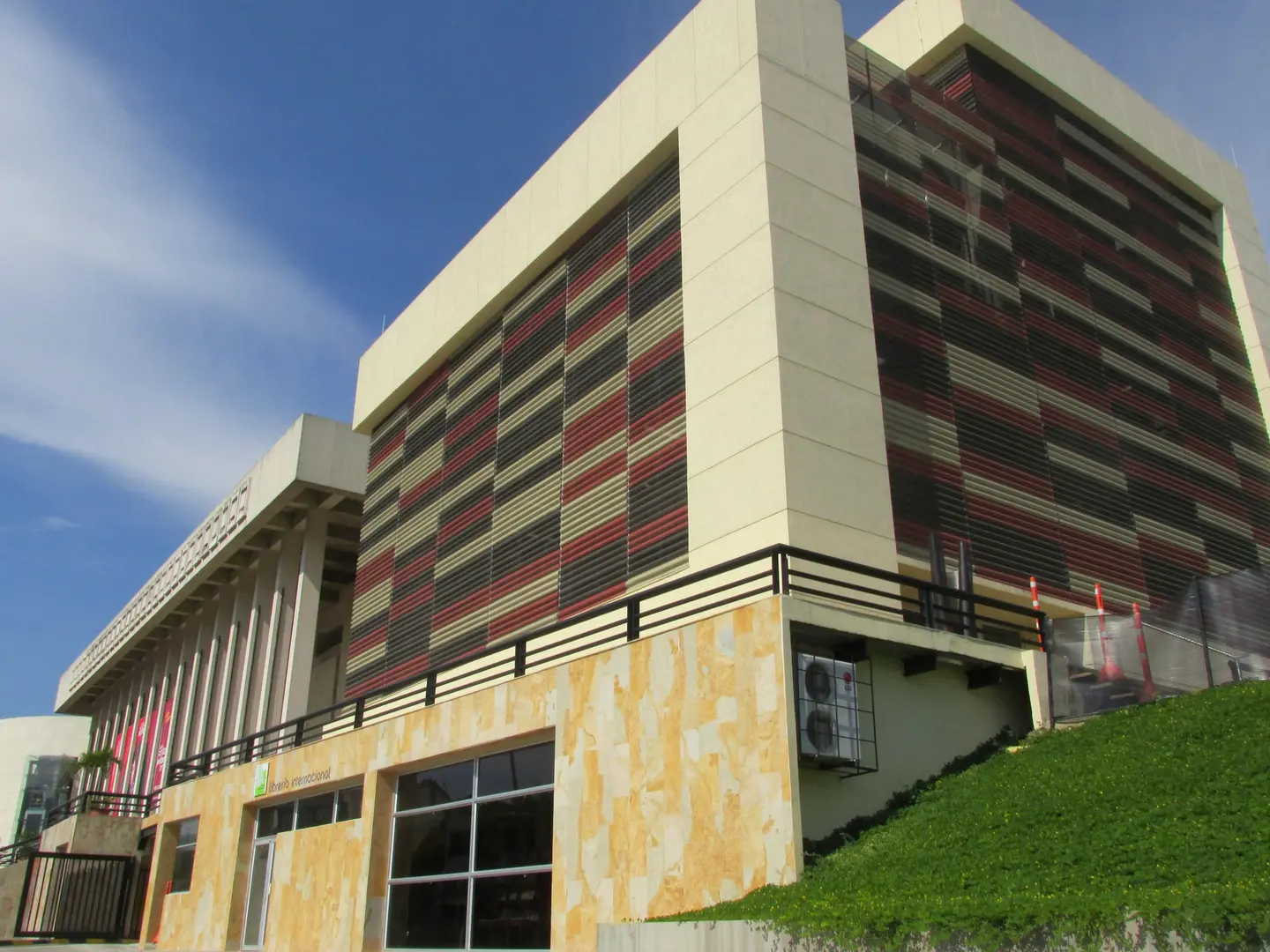
The family name is also familiar to readers on Calle Quinta. In 1953, Jorge’s son Diego Garcés Giraldo donated his father’s books to establish the Biblioteca Departamental Jorge Garcés Borrero, the public library pictured above. It organizes Cali’s Oiga Mire Lea literary festival. The library bears Jorge’s name. The letters preserve the signature of the woman who vouched for him with the New York supplier.
Sources
- Jaime E. Londoño and Rosa Helena Rodríguez Timaná, chapter on the JGB pharmacy in Optimismo, tesón y labor (Optimism, Determination and Work), Universidad Icesi, 2019, pp. 87–90 (in Spanish) (opens in a new tab).
- María Fernanda Erazo Obando, De lo artesanal a lo industrial (From Craft to Industry), Historia Crítica, 2016, pp. 150–154 (in Spanish) (opens in a new tab).
- Biblioteca Departamental Jorge Garcés Borrero, official library history, p. 11 (in Spanish) (opens in a new tab).