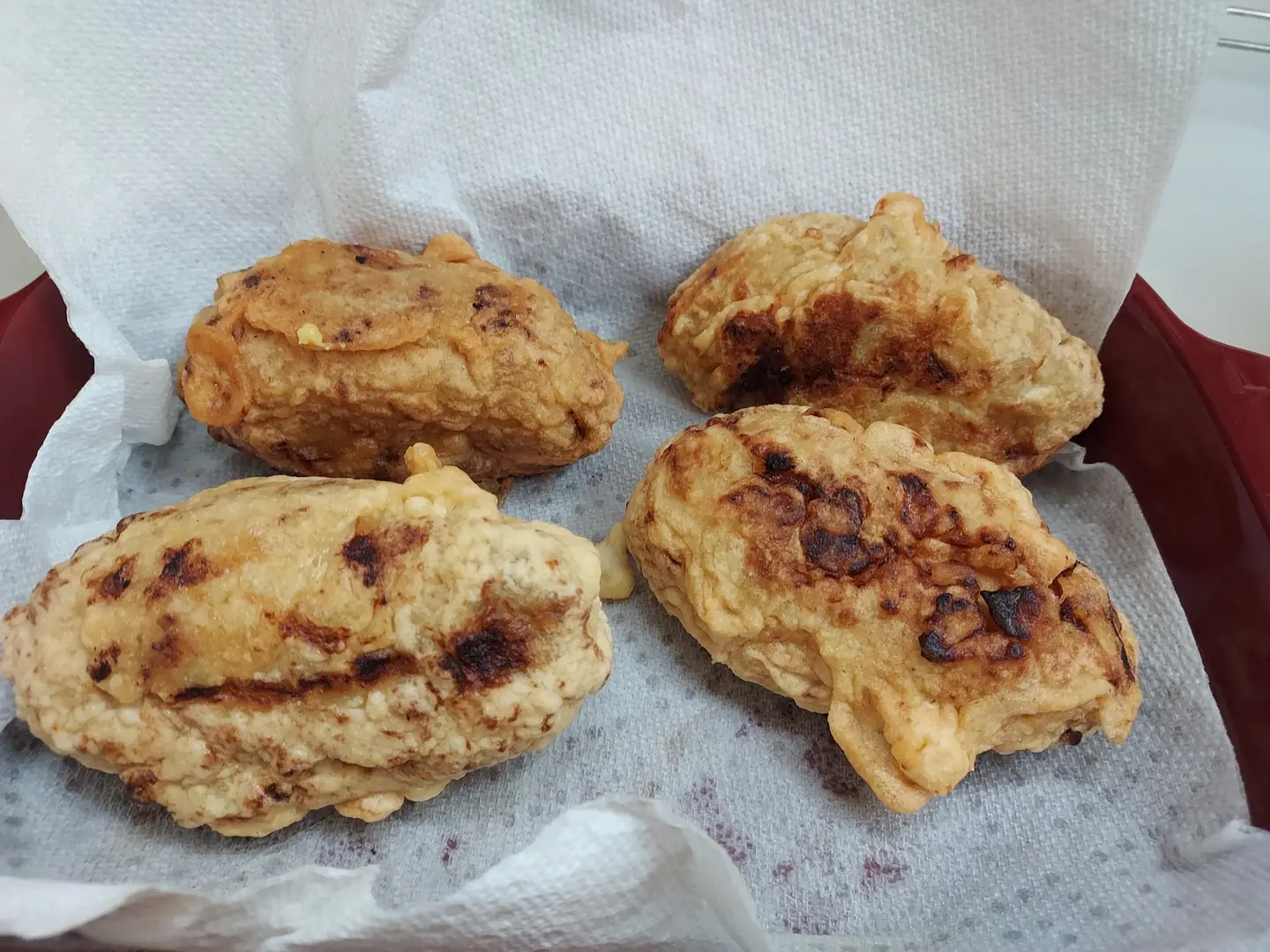
Break open an aborrajado in Cali and you might find a stripe of red beside the cheese. That’s bocadillo, a firm guava paste. Plenty of cooks use just ripe plantain and cheese. Either way, the pleasure is in that first bite through the crisp coating into plantain so soft it almost falls apart.
Sliced or grated cheese?
In Gran libro de la cocina colombiana (The Great Book of Colombian Cooking), Carlos Ordóñez Caicedo builds his fritter like a little sandwich. He cuts a ripe plantain on the diagonal, fries the slices and presses them lightly. He slips a slightly smaller slice of white cheese between two pieces so the plantain covers the edges. A dusting of flour helps the egg batter cling before the fritter goes back into the oil. Find Ordóñez’s recipe on page 158 (opens in a new tab).
Another Colombian cookbook, Paseo de olla (A Picnic Around the Cooking Pot), calls for grated or crumbled queso campesino, a fresh farmer’s cheese, and adds milk to the batter. It also has a tip worth keeping. If the plantain turns to mash when you flatten it, use the soft pulp to wrap the cheese. In both recipes the ripe plantain supplies the sweetness of the filling. See pages 322 and 323 of Paseo de olla (opens in a new tab).
Sometimes the guava goes on the plate
Cali chef Martha Jaramillo found another place for the fruit. In a 2023 interview, she described filling her aborrajados at Ringlete with creamy queso doble crema and scenting the batter with cinnamon. She served them with guava cooked in red wine and a mango sauce. In her kitchen they could open a meal or finish it as dessert. Read Jaramillo’s interview in El País (opens in a new tab).
To try the version in the photograph, ask for an aborrajado con queso y bocadillo. If you’re sharing a plate, a marranita, made with green plantain and pork cracklings, gives you a savory bite alongside it. Both feature in our guide to what to eat in Cali.