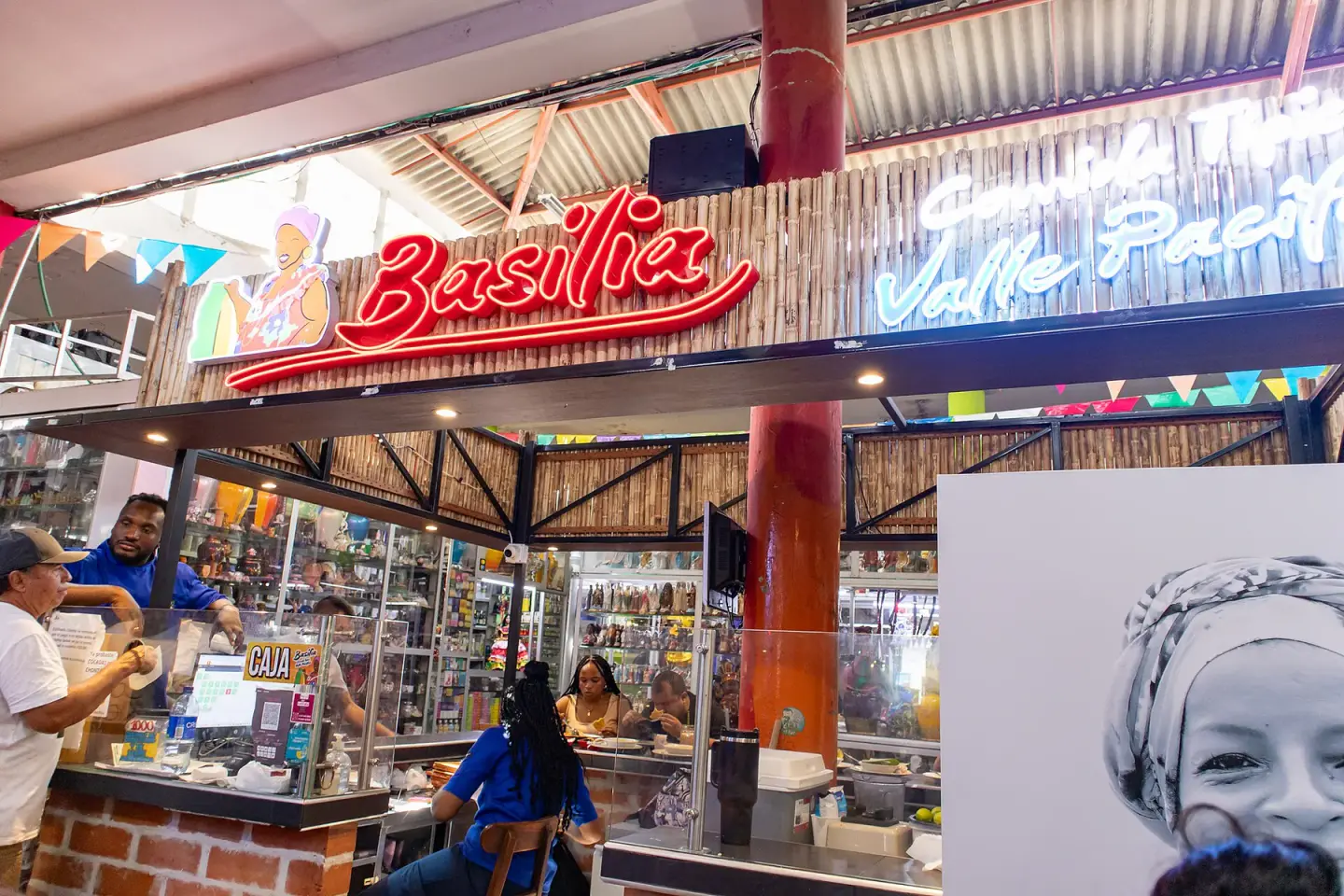
Pandebono, lulada, cholado and chuleta valluna are four of the 13 foods on this list. Here’s what each one is, when locals eat it and where to try it: almost all of them are at the Galería Alameda market, at the cholado stands on Calle 9 or at the nearest bakery.
In Cali, people eat the way they dance: with flavor and without rushing. According to city hall, Cali’s food brings together Indigenous, African and Spanish traditions: the corn, cassava and fruit of the Valle del Cauca, the free-range hen in the sancocho and the cooking of the Pacific coast. Some of these dishes are eaten across the Valle del Cauca region, but caleños, as people from Cali are called, claim them as their own.
For breakfast: pandebono, pandeyuca and tamal valluno
Pandebono
Cali’s signature bread: small, round and cheesy, made with cassava starch, corn and cheese. Locals eat it for breakfast or as an afternoon snack, with a tinto (black coffee), an oat drink or hot chocolate, and almost every bakery in the city sells it. Order it warm, straight from the oven. In 2024, the food guide TasteAtlas ranked it first on its list of the world’s best breads.
Day-old pandebono goes into sopa de pandebono, with milk and hogao, a tomato and onion sauce. In 2025, city hall was still recommending it at Carbones y Parrilla, which has a branch in the Alameda neighborhood.
Pandeyuca
Pandebono’s cousin: made with cassava starch, cheese and egg, it’s lighter and chewier. You order it at the same bakery, and many people order them as a pair: one pandebono, one pandeyuca.
Tamal valluno
Corn dough filled with two or three kinds of meat and wrapped in plantain leaves. Locals eat it on weekends and special occasions, with rice or arepa. The kitchens at the Galería Alameda serve tamales for breakfast, along with the desayuno criollo, a traditional breakfast plate; city hall lists breakfast at the market among Cali’s must-dos.
To drink: lulada, champús and cholado
Lulada
Cali’s signature drink. Lulo, a tart, citrusy fruit, is crushed into pieces with lime, sugar or panela (unrefined cane sugar) and plenty of ice, and you eat it with a spoon. The cholado stands on Calle 9 sell it too.
Champús
A thick, cold drink of Indigenous origin, made with corn, lulo, pineapple and spices. It’s sweet and tart at the same time. Locals drink it at festivals and celebrations, and it’s on the menu at traditional restaurants.
Cholado
Shaved ice, red or yellow syrup, chopped fruit, condensed milk and, depending on the stand, jam, ice cream and a wafer. It was born in Jamundí, just south of Cali, and its home in the city is Calle 9, across from the Canchas Panamericanas sports fields, where more than 20 stands make it in front of you. Sundays are the busiest day. As a reference, city hall set a price of COP 10,000 per cup for the 2022 Cholado Festival. The full story is in our guide to the cholados at the Canchas Panamericanas.
To snack on: aborrajado, marranita and chontaduro
Aborrajado
Ripe plantain stuffed with cheese, sometimes also with guava paste, coated in egg and flour and fried. The sweet plantain against the salty cheese is what gets you hooked. In 2024, TasteAtlas named it Colombia’s best dessert.
Marranita
A crunchy ball of green plantain stuffed with pork crackling and fried. Other regions call it puerquita, and on the Pacific coast it’s Juan Valerio. City hall lists it among Cali’s must-dos: eating a marranita in San Antonio, the city’s historic hillside neighborhood.
Chontaduro with salt or honey
The fruit of a palm tree, sold cooked from carts all over the city. Locals eat it with salt, with honey or with both. Its taste is like nothing else: you’ll either love it or never order it again. City hall calls Cali the “chontaduro capital”: every day, the fruit ships to other Colombian cities from Puerto Chontaduro, at Calle 34 and Carrera 5 Norte.
For lunch: sancocho de gallina, arroz atollado and chuleta valluna
Sancocho de gallina
City hall calls it the Valle’s most representative dish: a hearty soup of free-range hen, cassava, plantain, corn on the cob and cilantro, made in a big pot for celebrations. One of its must-dos is a sancocho in Pance, by the river. If you like Pacific flavors, also try the fish sancocho, one of the most popular dishes in the Galería Alameda’s kitchens.
Arroz atollado
Soupy rice cooked with pork, chicken, longaniza sausage and potato until it’s atollado: neither dry nor soup. It’s served with plantain, arepa or salad. It’s home cooking, made in a big pot to share.
Chuleta valluna
Pork loin pounded thin, breaded and fried until crispy. It’s served with rice, potatoes or salad. It’s one of the most popular dishes at Cali’s neighborhood restaurants.
For dessert: manjar blanco
Manjar blanco
The Valle’s signature sweet: milk, sugar, rice and cinnamon, cooked slowly until thick and creamy. Families bring it to gatherings and it’s sold at fairs. City hall recommends eating it with desamargado, candied fruit peels in syrup.
Off the list: viche from the Pacific
Viche is a sugarcane spirit made by Black communities on Colombia’s Pacific coast. Law 2158 of November 8, 2021, recognizes it as an ancestral drink and the collective heritage of those communities, along with its derivatives, such as tumbacatre, pipilongo and arrechón. In Cali, its big showcase is the Petronio Álvarez Festival, which plans its 30th edition for 2027. Year-round, bars in San Antonio and the Alameda neighborhood mix it into cocktails. Ask where it comes from: the law protects the viche made by Pacific communities.
A day of eating in Cali
- Morning: a desayuno criollo or tamal at the Galería Alameda, an exotic fruit from the stalls and a warm pandebono on the way.
- Midday: fish sancocho at one of the market’s kitchens, or chuleta valluna at a neighborhood restaurant.
- Afternoon: a cholado or lulada on Calle 9, across from the Canchas Panamericanas, less than 1.5 km (1 mile) from the market.
- Sunset: a marranita or aborrajado in San Antonio, as the city lights come on.
If you have more time, our Cali in 3 days itinerary pairs these foods with downtown, Cristo Rey, salsa in Barrio Obrero and Pance.
Where’s the best pandebono in Cali?
That debate never ends, and we want to hear it. Email us at chrisavendano0508@gmail.com with your favorite bakery, your go-to cholado stand or the dish missing from this list. We’ll update the article with readers’ recommendations.
Frequently asked questions
What is Cali’s typical food?
Some of the most representative foods are pandebono, lulada, champús, cholado, aborrajado, marranita, sancocho de gallina, chuleta valluna and manjar blanco.
What is Cali’s typical drink?
Lulada and champús. Cholado, somewhere between a drink and a dessert, is another must.
Where can I try typical food in Cali?
The Galería Alameda market has Pacific, Valle and home-style kitchens. Cholados are on Calle 9, across from the Canchas Panamericanas, and pandebono is at any bakery.
Where does cholado come from?
From Jamundí, just south of Cali. Families of cholado makers brought it to the city and kept adding fruit.
What is viche?
An ancestral sugarcane spirit made by Black communities on Colombia’s Pacific coast, recognized by Law 2158 of 2021 as their collective heritage.
Sources
Most sources are in Spanish.
- Cali City Hall — Cali Provoca: Cali’s food and its must-dos, February 22, 2018 (opens in a new tab).
- Cali City Hall — Cali’s pandebono, “best bread in the world” according to TasteAtlas, May 13, 2024 (opens in a new tab).
- Cali City Hall — four dishes to try in Cali, including sopa de pandebono and viche cocktails, July 14, 2025 (opens in a new tab).
- Cali City Hall — chontaduro, a fruit Cali is proud of, October 4, 2020 (opens in a new tab).
- Cali City Hall — the history of the cholado (opens in a new tab).
- RTVC Noticias — typical food of Cali and the Valle del Cauca, October 19, 2024 (opens in a new tab).
- Colombia.com — typical dishes of Cali, November 1, 2024 (opens in a new tab).
- Publimetro — TasteAtlas names the aborrajado Colombia’s best dessert, December 19, 2024 (opens in a new tab).
- El Universal — chontaduro, the fruit of caleños, July 15, 2018 (opens in a new tab).
- Law 2158 of 2021 (Viche/Biche Law), November 8, 2021 (opens in a new tab).
- Semana — on the viche route: the law and its derivatives, November 9, 2021 (opens in a new tab).
- CaliSucursal: our guides to the Galería Alameda and the cholados at the Canchas Panamericanas, reviewed November 12, 2026.