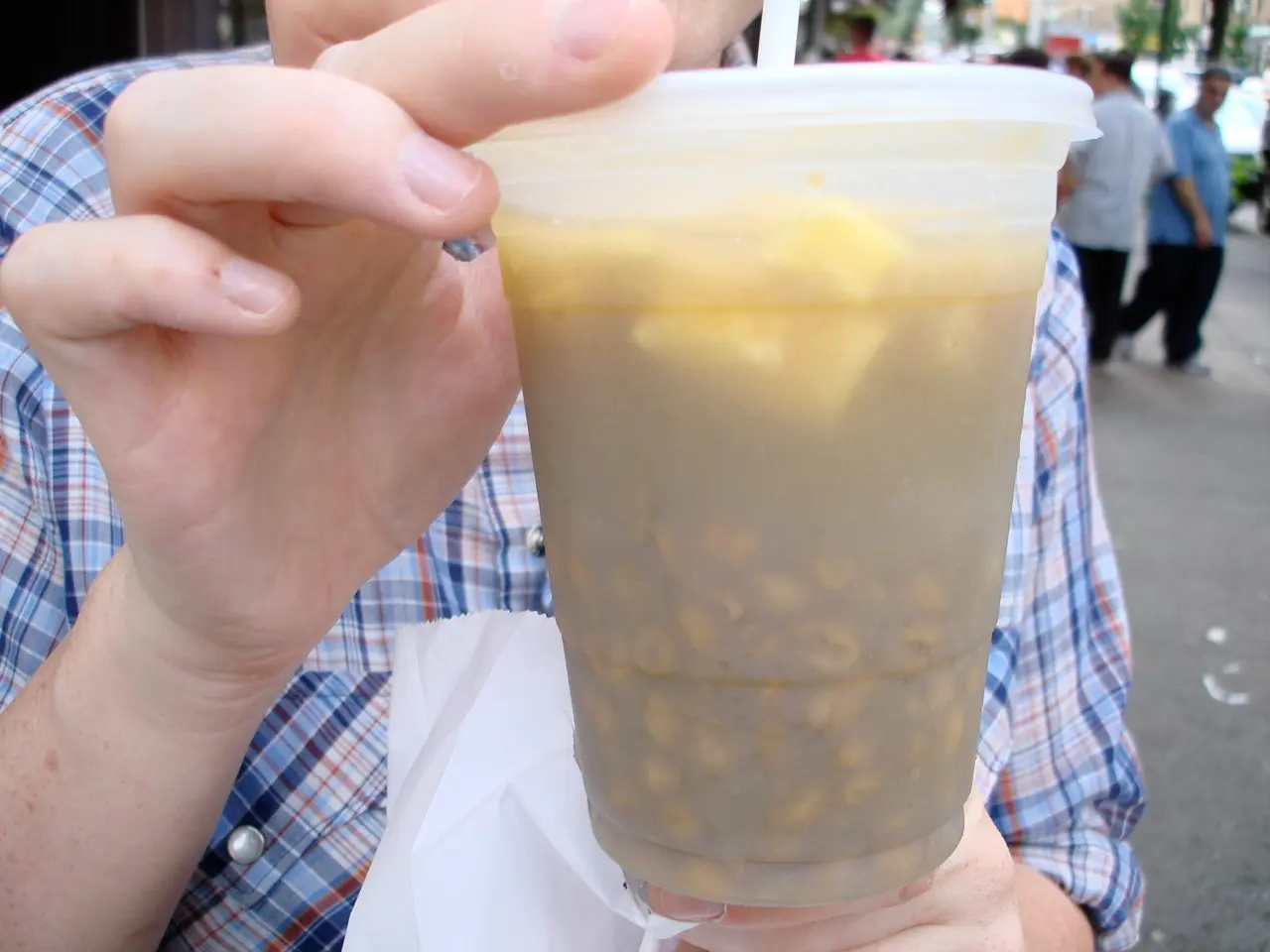
If you spot lulada and champús on a menu in Cali, order a lulada if you like tart limeade with pieces of fruit. For something thicker that you can eat with a spoon, try champús. You’ll find pineapple and tender corn kernels in the same cup. Both drinks are served cold, and both get their tang from a fruit called lulo.
Why a lulada has bits of fruit in it
In Paseo de olla, a collection of Colombian regional recipes, the cook halves each lulo, scoops out the pulp with a spoon and crushes it by hand. The pulp is whisked into sweetened limeade and poured over ice, seeds and all. Give your cup a stir before that last sip to scoop up the fruit that’s settled at the bottom.
Where champús gets its texture and spice
Champús starts on the stove. The cook simmers white corn until the kernels soften, then can grind a handful and stir it back in to thicken the drink. The sweetness comes from melao, a syrup made from unrefined cane sugar called panela. Cinnamon, cloves and orange leaves lend it their fragrance. With chopped pineapple and lulo stirred in, one spoonful can hold a soft kernel, a sweet piece of pineapple and a sharp bite of lulo.
Sunday champús in Barrio Obrero
The cookbook Con cagüinga y con callana recalls that families in the Valle del Cauca used to make champús on Sundays and holidays. In Cali’s Barrio Obrero, Evergista Gómez Balanta learned the recipe from her mother and grandmother. In a 2023 interview with the city’s tourism office, she described selling it from her home on weekends. Some customers had been coming back for more than twenty years.
If you’re sharing an afternoon snack, order one of each to taste what happens to lulo in the two drinks. Empanadas and marranitas, the fried plantain balls, are a good place to start if you’re looking for something to eat alongside your drink in Cali.
Sources
- Colombian Ministry of Culture, Paseo de olla, recipes for champús and lulada, pp. 325–327, 2012 (opens in a new tab).
- Colombian Ministry of Culture, Con cagüinga y con callana, section on champús, 2012 (opens in a new tab).
- Cali tourism office, interview with Evergista Gómez Balanta in Barrio Obrero, July 24, 2023 (opens in a new tab).