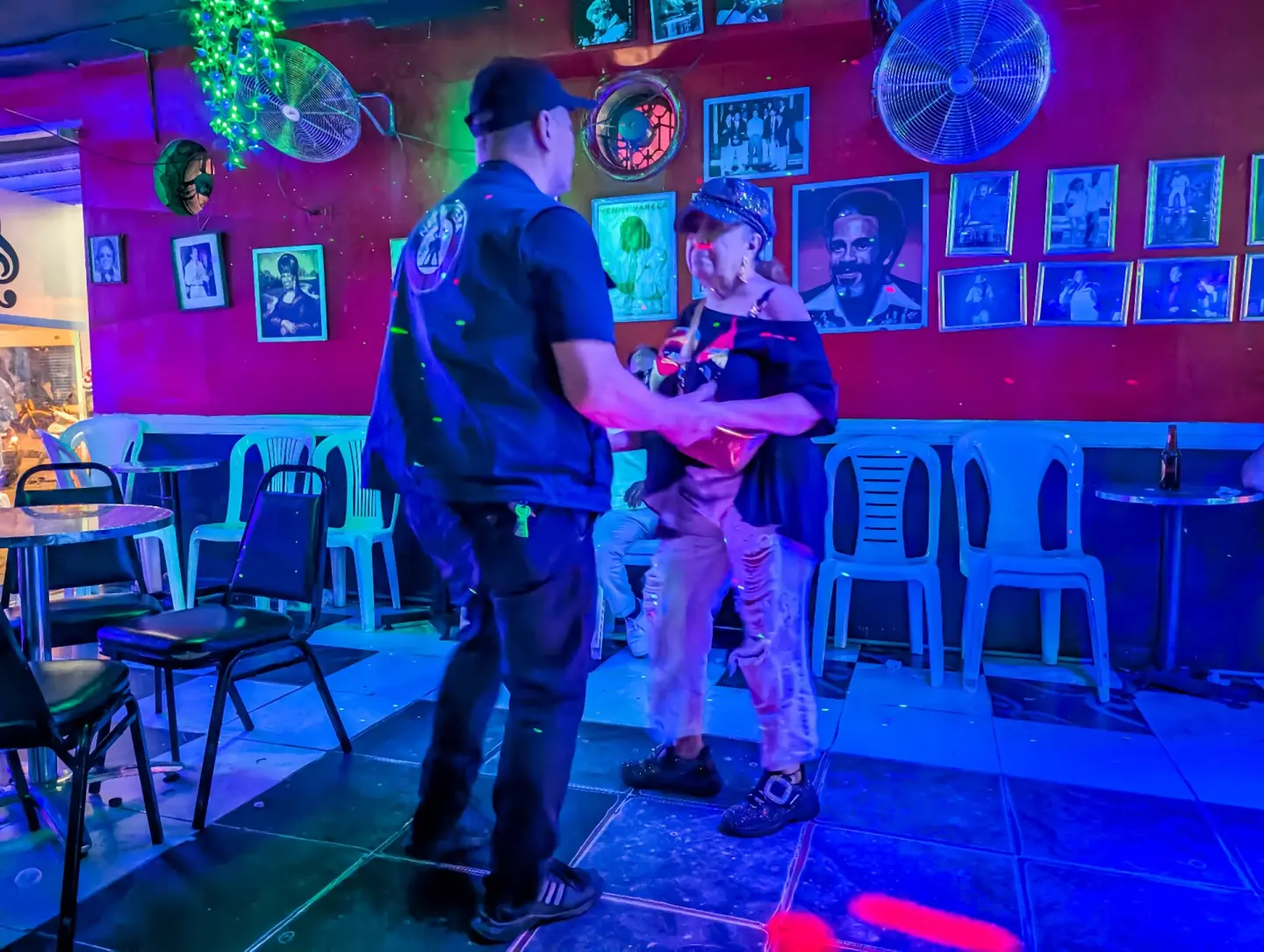
Salsa wasn’t born in Cali. It was born between New York, Puerto Rico and Cuba. But in Cali it found a city willing to dance it faster than anyone, to keep its records like relics and to make it part of its identity. That’s why Cali is called the salsa capital of the world.
This is the story of how it happened, from Richie Ray and Bobby Cruz’s night at the 1968 Feria to the Latin Grammy that Grupo Niche won this November, and the 10 songs any caleño, as people from Cali are called, will sing from the first notes.
How salsa became caleña
Before salsa: pachanga, jala jala and boogaloo
In the 1960s, Cali’s working-class neighborhoods were already dancing pachanga, jala jala and boogaloo, the rhythms that came before salsa. Records arrived from New York, and music lovers hunted for them like treasure. As Cali’s record collectors tell it, merchant sailors ran a side business bringing in the latest LPs from the big New York bands.
December 26, 1968: Richie Ray and Bobby Cruz at the Caseta Panamericana
The date Cali’s salsa fans know by heart is December 26, 1968. That night, during the Feria de Cali, the city’s yearly December festival, Richie Ray and Bobby Cruz played the Caseta Panamericana dance hall. The Feria’s director, Eduardo Lozano Henao, booked them on the recommendation of Tito Puente, who couldn’t make it. Chroniclers agree that the night split the city’s musical history in two: from then on, Cali made salsa its own.
From 33 to 45 rpm: why Cali dances so fast
Before that Feria, something unusual had already happened. According to writer Umberto Valverde, Cali’s DJs, then called discómanos, decided to speed up boogaloo records and play them at 45 rpm instead of 33. The music sounded faster, and dancers answered with quick footwork and less hip and waist movement. That’s where Cali-style salsa comes from, the style you see today at the Feria’s Salsódromo parade and at competitions around the world.
Grupo Niche and Guayacán: Cali went from listening to salsa to making it
In the 1970s and 1980s, Cali went from a city that listened to salsa to one that made it. Grupo Niche, founded in Bogotá in 1979 by Jairo Varela and Alexis Lozano, made Cali its home. Then came Guayacán Orquesta. Their songs proved that great salsa didn’t have to come from Puerto Rico, Cuba or New York.
Record collectors and the Museo de la Salsa
In Cali, salsa is also something you listen to with devotion. Melómanos and collectors keep original records and gather to listen to them and argue about them. In Barrio Obrero, the Museo de la Salsa grew out of the archive of photographer Carlos Alfredo Molina, who began photographing the city’s salsa scene in 1968; his son runs it today. According to Semana, in 2022 some 720 portraits of the musicians who have passed through Cali hung on its walls.
National Intangible Cultural Heritage since 2022
In 2022, Cali salsa, officially the “musical and dance complex of Cali salsa,” was added to Colombia’s Representative List of Intangible Cultural Heritage. The recognition was presented on July 25, Cali’s birthday, and protects exhibition and competition dancing, music-making, record collecting and the crafts that make a living from salsa.
10 songs every caleño knows
“Cali Pachanguero,” Grupo Niche (1984)
The anthem of anthems. Jairo Varela wrote it for the album No hay quinto malo, and that same year it was the official song of the Feria de Cali, with Moncho Santana singing the original. In 2012 it was the Feria song again, as a tribute to Varela, who had died that August. Billboard ranked it 27th on its 2015 list of the 50 greatest Latin songs of all time. It’s so caleña that, in the 1990s, Varela asked José Aguirre not to play it in Medellín: “Play ‘Listo Medellín’ instead.” Niche closes its concerts with it. To celebrate it, head to the Plazoleta Jairo Varela, across from the CAM, Cali’s city hall complex.
“Oiga, mire, vea,” Guayacán Orquesta (1991)
The city’s other calling card; the title means “Hey, look, see.” Nino Caicedo, a founder of Guayacán, wrote it before he had ever been to Cali, building it from a caleño school friend’s stories. The song invites you to the Feria and name-checks Juanchito, Barrio Obrero and Pance. It was on the album Sentimental de punta a punta, became a Feria hit and took Guayacán to international fame. Today it’s danced in salsa schools around the world.
“Las caleñas son como las flores,” The Latin Brothers with Piper Pimienta (1970s)
An ode to the women of Cali: the title means “Cali women are like flowers.” Radio promoter Jorge Arturo Ospina wrote it, and The Latin Brothers recorded it in the mid-1970s with Piper Pimienta Díaz on vocals. According to Radio Nacional, it was the Feria de Cali song in 1976. Piper, the caleño who sang and danced like few others, grew up in Barrio Obrero, and since the 2014 Feria he has had a statue there, in Parque Eloy Alfaro.
“Cali Ají,” Grupo Niche (1990)
Another Niche classic dedicated to the city, from the album Cielo de tambores, which Jairo Varela produced in 1990. It’s one no Feria can do without.
“Del puente pa’ allá,” Grupo Niche (1985)
From the album Triunfo, which Niche recorded in New York after the success of No hay quinto malo. According to José Aguirre, Niche’s musical director, songs like this one, “Cali Ají” and “Mi Valle del Cauca” made many tourists want to visit the Sucursal del Cielo (“branch office of heaven”), as Cali calls itself.
“Sonido bestial,” Richie Ray & Bobby Cruz (1971)
The song that named the sound of the Puerto Rican duo who won over Cali in 1968. It’s the title track of the 1971 album El bestial sonido de Ricardo Ray y Bobby Cruz, with Richie Ray’s dramatic piano in the spotlight. In Cali it’s almost a ritual: when it plays, the dance floor fills up.
“Amparo Arrebato,” Richie Ray & Bobby Cruz (1970)
A song with a caleña inside. Amparo Ramos, a dancer who grew up in the El Hoyo neighborhood, dazzled Richie Ray and Bobby Cruz that 1968 night at the Caseta Panamericana. Her legend inspired this 1970 song, and Richie Ray confirmed she was the inspiration. Amparo died in Cali in 2004, and salsa fans still celebrate her birthday.
“El preso,” Fruko y sus Tesos (1975)
One of the great anthems of Colombian salsa; the title means “The prisoner.” Álvaro Velásquez, the band’s percussionist, wrote it based on the true story of a Colombian imprisoned abroad. The voice belongs to a caleño: Wilson “Saoko” Manyoma, born in 1951 in the Alameda neighborhood, who died in February 2025. Since October 2026, he has been among the salsa figures honored with murals and sculptures in Barrio Obrero.
“Micaela,” Pete Rodríguez (1967)
Proof that boogaloo never left Cali. Pete Rodríguez, “the King of Boogaloo,” recorded it in New York in 1967 on the album I Like It Like That. It was a huge hit in Colombia, and in the late 1990s Sonora Carruseles brought it back to salsa dance floors around the world.
“Realidad-Es,” Grupo Niche (2026)
The newest song on the list, and maybe the next classic. José Aguirre, Niche’s musical director, wrote it, and its music video was shot in Siloé, a hillside neighborhood in western Cali. On November 12 it won the 2026 Latin Grammy for Best Tropical Song, in a tie with Luis Enrique’s “Nombre y Apellido,” three months after the August 10 earthquake. Here’s the story of the award and the video shot in Siloé.
Where to experience salsa in Cali
- Barrio Obrero: the birthplace of Cali salsa, with the Museo de la Salsa, Piper Pimienta’s statue and, since October 2026, 50 murals and 12 sculptures of salsa figures. Check the museum’s hours before you go.
- La Topa Tolondra: to dance among locals on Calle 5. Several nights start with a Cali-style salsa class.
- Plazoleta Jairo Varela: the city’s tribute to the composer of “Cali Pachanguero,” across from the CAM.
- The Feria de Cali: December 25–30, with the Salsódromo parade, the Súper Concierto and Delirio’s shows. See what’s changing at the 2026 Feria de Cali and tickets and prices for each event.
What’s your top 5?
This list is debatable on purpose. Is “Mi Valle del Cauca” missing? Would you make room for Joe Arroyo, another Fruko song or another band? Email us at chrisavendano0508@gmail.com with your five favorite Cali salsa songs. We’ll publish a second version of this list based on readers’ votes.
Frequently asked questions
Why is Cali the salsa capital of the world?
Because it made salsa part of its identity from the late 1960s: it created its own fast dance style, produced bands like Grupo Niche and Guayacán, and keeps a culture of record collectors, melómanos and dance schools alive. In 2022, Cali salsa was declared part of Colombia’s Intangible Cultural Heritage.
When did salsa arrive in Cali?
The rhythms that came before it, like pachanga and boogaloo, were already playing in the 1960s. The key date is December 26, 1968, when Richie Ray and Bobby Cruz played the Feria de Cali.
Why do people dance salsa so fast in Cali?
Because Cali’s DJs played records at 45 rpm instead of 33, and dancers adapted to that speed with quick footwork.
What is the most famous Cali salsa song?
“Cali Pachanguero” by Grupo Niche, from 1984, considered the city’s anthem.
Who wrote “Oiga, mire, vea”?
Nino Caicedo of Guayacán Orquesta, who wrote it before he had ever been to Cali.
Where can you dance salsa in Cali?
In Barrio Obrero, with its viejotecas (old-school dance halls) and the Museo de la Salsa, and at dance spots like La Topa Tolondra on Calle 5. In December, the Feria de Cali fills the city with salsa.
Sources
- El Tiempo — Umberto Valverde: “Que todo el mundo te cante…,” Cali’s musical history (in Spanish), July 11, 2016 (opens in a new tab).
- El Tiempo — Richie and Bobby still enchant Cali with their “sonido bestial” (in Spanish), December 30, 2017 (opens in a new tab).
- El País Cali — The bands that brought salsa to the Feria de Cali, as told by a record collector (in Spanish), November 27, 2025 (opens in a new tab).
- El Espectador — Umberto Valverde: que todo el mundo te cante (in Spanish), October 9, 2024 (opens in a new tab).
- Colombian Ministry of Culture — Musical and dance complex of Cali salsa, Representative List of Intangible Cultural Heritage (in Spanish) (opens in a new tab).
- Valle del Cauca Governor’s Office — Cali salsa, Intangible Cultural Heritage of all Colombians (in Spanish), July 25, 2022 (opens in a new tab).
- Semana — Cali salsa: from the heart of Barrio Obrero to Colombia’s Intangible Cultural Heritage (in Spanish), July 30, 2022 (opens in a new tab).
- Semana — Barrio Obrero changed its history with salsa, murals and a museum (in Spanish), September 26, 2026 (opens in a new tab).
- El País Cali — The milestones of “Cali Pachanguero,” the anthem of Colombian salsa (in Spanish), August 2, 2020 (opens in a new tab).
- El País Cali — 40 years of “Cali Pachanguero”: why it wasn’t sung in Medellín in the 1990s (in Spanish), April 26, 2024 (opens in a new tab).
- Radio Nacional — Grupo Niche’s unforgettable songs (in Spanish), December 15, 2020 (opens in a new tab).
- Cali City Hall — Closing talk with Grupo Niche: “Jairo Varela, the visionary of the ’80s” (in Spanish), September 25, 2019 (opens in a new tab).
- Las2orillas — How a Chocó native who had never been to Cali wrote “Oiga, mire, vea” (in Spanish) (opens in a new tab).
- Infobae — Albums turning 35 in 2026, including Sentimental de punta a punta (in Spanish), April 7, 2026 (opens in a new tab).
- Radio Nacional — Piper Pimienta: the life and work of Edulfamid Molina Díaz (in Spanish), June 5, 2023 (opens in a new tab).
- Wikipedia — El Bestial Sonido de Ricardo Ray y Bobby Cruz (opens in a new tab), Amparo Arrebato (opens in a new tab) and “El Preso” (opens in a new tab).
- El Tiempo — The legacy of “Saoko”: the salsa world mourns Wilson Manyoma (in Spanish), February 20, 2025 (opens in a new tab).
- Fania — Pete Rodríguez, I Like It Like That (opens in a new tab) and Craft Recordings — I Like It Like That reissue (opens in a new tab).
- Latino Life — Top 10 Colombian Salsa Albums (opens in a new tab).
- CaliSucursal: guides to Barrio Obrero, La Topa Tolondra and the Plazoleta Jairo Varela.