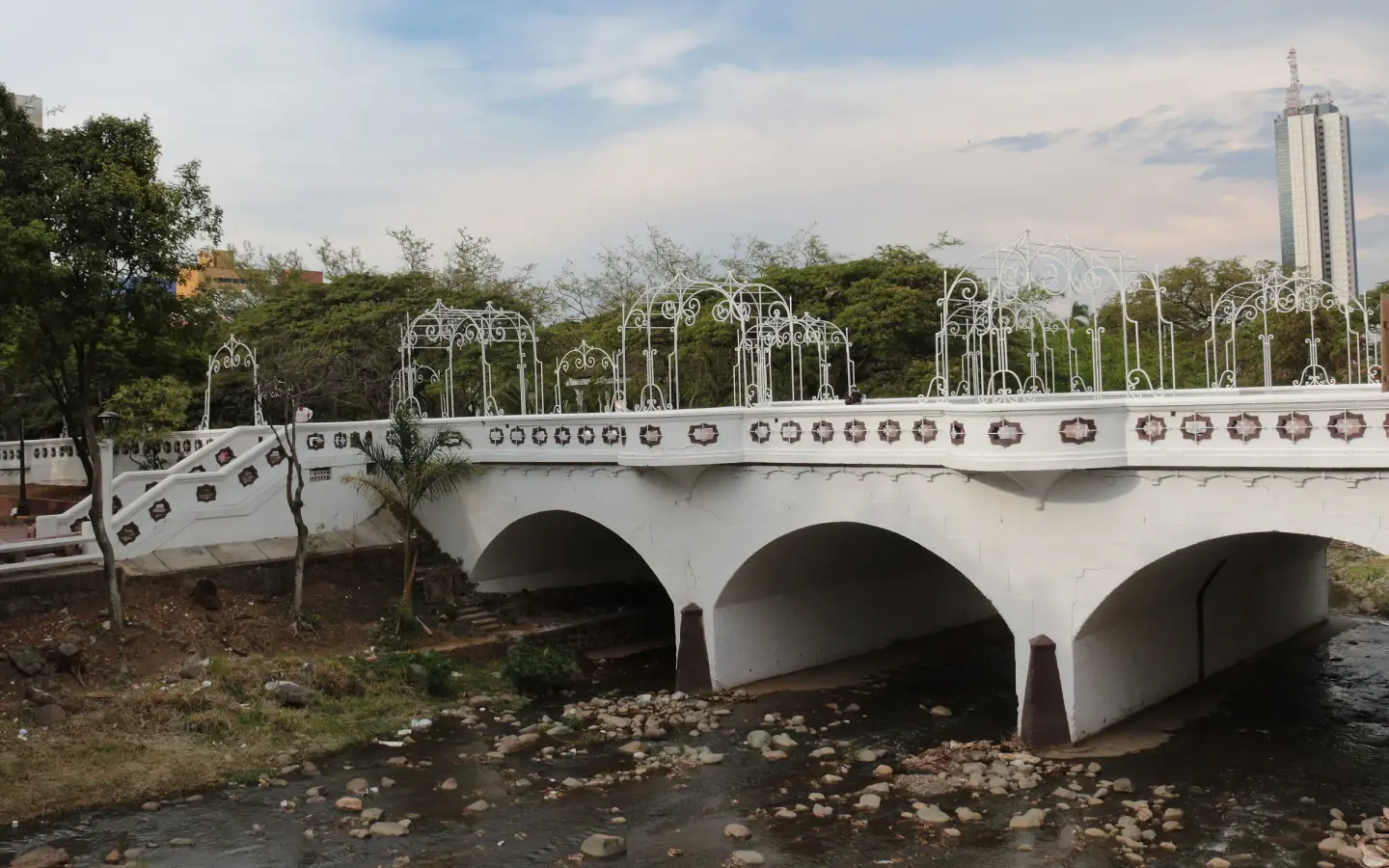
When Franciscan friar José Ignacio Ortiz was asked to build the bridge that now bears his name, part of it was already standing. In 1842, Cali’s council recorded that one abutment, the support that anchors a bridge to the riverbank, was in place. José Montehermoso had been the first to take charge of the works. Ten years passed between his appointment and the day people could cross the Cali River on the new bridge.
The road north began at a wooden bridge
Travelers heading from Cali toward Yumbo, Vijes or Roldanillo crossed the river north of the main square. The wooden bridge was vulnerable when the river flooded. A brick crossing would take money, building supplies and people who knew how to raise arches over water.
On October 21, 1835, the council appointed Montehermoso to direct construction and put him in charge of the funds. By the following June, work had stalled. Officials worried about losing the materials left out in the open. In their study of the council records, Jorge Galindo, Sonia Blanco and Lizeth Robayo also describe who did the early work. The crews included day laborers and prisoners who received food in return for their labor.
The friar took charge in June 1842. One of his assignments was to persuade residents to contribute tools, materials or money. The four-arched bridge opened in 1845. An old postcard of Cali (opens in a new tab) shows the town from across the water. The caption above the arches simply reads El Puente, “the bridge.”
What turned up beneath Avenida Colombia
In 1918, builders used railroad rails to support sidewalks that projected about two meters on each side, giving pedestrians room of their own and leaving the roadway clear. In 1945 the bridge was widened again, this time with concrete arches extending the brickwork.
In January 2011, during work on the Avenida Colombia tunnel, archaeologists found brick walls just 20 centimeters below the asphalt at Carrera 1 and Calle 12. INCIVA, the regional heritage institute, identified them as part of the original approaches to the 1845 bridge. To place the discovery on the riverfront, follow the Bulevar del Río guide to Puente Ortiz.