Before you travel
- Arrival: Alfonso Bonilla Aragón International Airport has operated normally since August 11.
- Open: Cristo Rey (sections 2 and 5), the Bulevar del Río and La Ermita, San Antonio hill, Barrio Obrero and the Ecoparque de la Biodiversidad (Pance).
- Closed or restricted: section 3 of Cristo Rey, the Catedral de San Pedro and demolition zones.
- Key dates: November 13, Colombia vs. Chile at Estadio Pascual Guerrero · December 7, Christmas lights switch-on · December 25–30, Feria de Cali.
November 10 marks three months since the earthquake that shook Cali. The magnitude 7.4 quake, as measured by the Colombian Geological Survey, struck at 7:34 a.m. The city is still grieving and rebuilding: 155 people died and almost 60,000 have sought mental health care, in a city with more than 43,000 households on the register of those affected. Even so, most of the places we recommend on CaliSucursal are welcoming visitors again. If you live elsewhere and are coming home in December, or are planning a first visit, this is what you’ll find.
Cristo Rey: open, except for one trail
The ecopark closed after the earthquake and reopened two of its sections on August 22: section 2, which starts next to the Universidad del Valle’s San Fernando campus, and section 5, where the monument stands. Before the reopening, inspections by Dagma, the city’s environmental agency, had found expansion cracks, fissures and loose material in walls and masonry along section 5.
Section 3, which links the Cristales neighborhood with Plazoleta del Yarumo, was closed as a precaution while its metal walkways are adjusted. It was still closed in late September, and we have found no announcement of its reopening, so check its status with Dagma before planning that route.
- Section 5 (monument): Monday to Thursday, 8:00 a.m. to 7:00 p.m., last entry 6:00 p.m.; Friday to Sunday and public holidays, 8:00 a.m. to 8:00 p.m., last entry 7:00 p.m. Athletes, 6:00 to 8:00 a.m.
- Section 2: daily, 6:00 a.m. to 5:00 p.m., last entry 4:00 p.m.
Admission is free. Some outlets have mentioned an advance booking that the official reopening bulletin does not include; check Dagma’s channels before you go.
Bulevar del Río and La Ermita: open
La Ermita lost the cross that crowned the church, but it has welcomed worshippers and visitors again. According to post-earthquake inspections, it has no structural damage that puts people inside at risk.
The Catedral de San Pedro, a few blocks away, is a different story: its bells had been silent for more than a month by late September. At that point, according to City Hall, 14 Catholic churches in the city remained closed.
Gato de Tejada: outdoors, by the river
The park with El Gato del Río (The River Cat) and its girlfriends, on the banks of the Cali River, is an open-air space. It does not appear among the damaged sites reported by City Hall or the local press. Another work by the artist did suffer: the murals in the former railway station, which will receive emergency conservation.
San Antonio: the hill welcomes visitors, with damaged churches nearby
Some nearby churches were damaged. The roof of La Merced church was left unstable and will have to be replaced, and its structure reinforced. Respect any fences and barriers you come across.
City Hall extended De Borondo, its program of neighborhood outings, through December to support businesses hit by the earthquake. It includes San Antonio, El Peñón, and Obrero. On Friday, November 27, De Borondo comes to Chimisexta in Chiminangos.
Barrio Obrero: the salsa never stopped
The neighborhood has a new look. The renovation added more than 3,000 square meters of murals, more than 80 refurbished facades and 12 new sculptures of salsa figures. The Celia Cruz sculpture was temporarily removed on October 29 for adjustments. The World Salsa Festival came through on November 7.
Visiting also helps: before the earthquake, the Museo de la Salsa received between 4,000 and 4,200 visitors a month, and attendance has fallen by about 70% since.
Pance: the ecopark is open; the river depends on the rain
The Ecoparque de la Biodiversidad COP16, in the Pance River basin, is open Tuesday to Sunday and on Monday holidays, from 6:00 a.m. to 6:00 p.m., with last entry at 4:00 p.m., according to City Hall.
If you plan to swim in the river, check the alerts from the city’s Risk Management Department first. Heavy rain has previously led to red alerts on the river and to the road being closed by landslides.
What’s still under construction
One month after the earthquake, Cali counted more than 12,000 damaged buildings. On October 6, City Hall began demolishing 36 of the 60 most damaged buildings; the other 24 are awaiting authorization. Demolition zones are fenced off to keep pedestrians out. If you come across one, don’t cross the barriers.
If you’re coming in December
The airport resumed commercial flights as normal after inspections found no damage to its infrastructure. The year-end calendar is going ahead:
- November 13: Colombia’s national team plays Chile at Estadio Pascual Guerrero at 7:00 p.m. It is the team’s first match in Cali in 27 years, and it aims to support families affected by the earthquake.
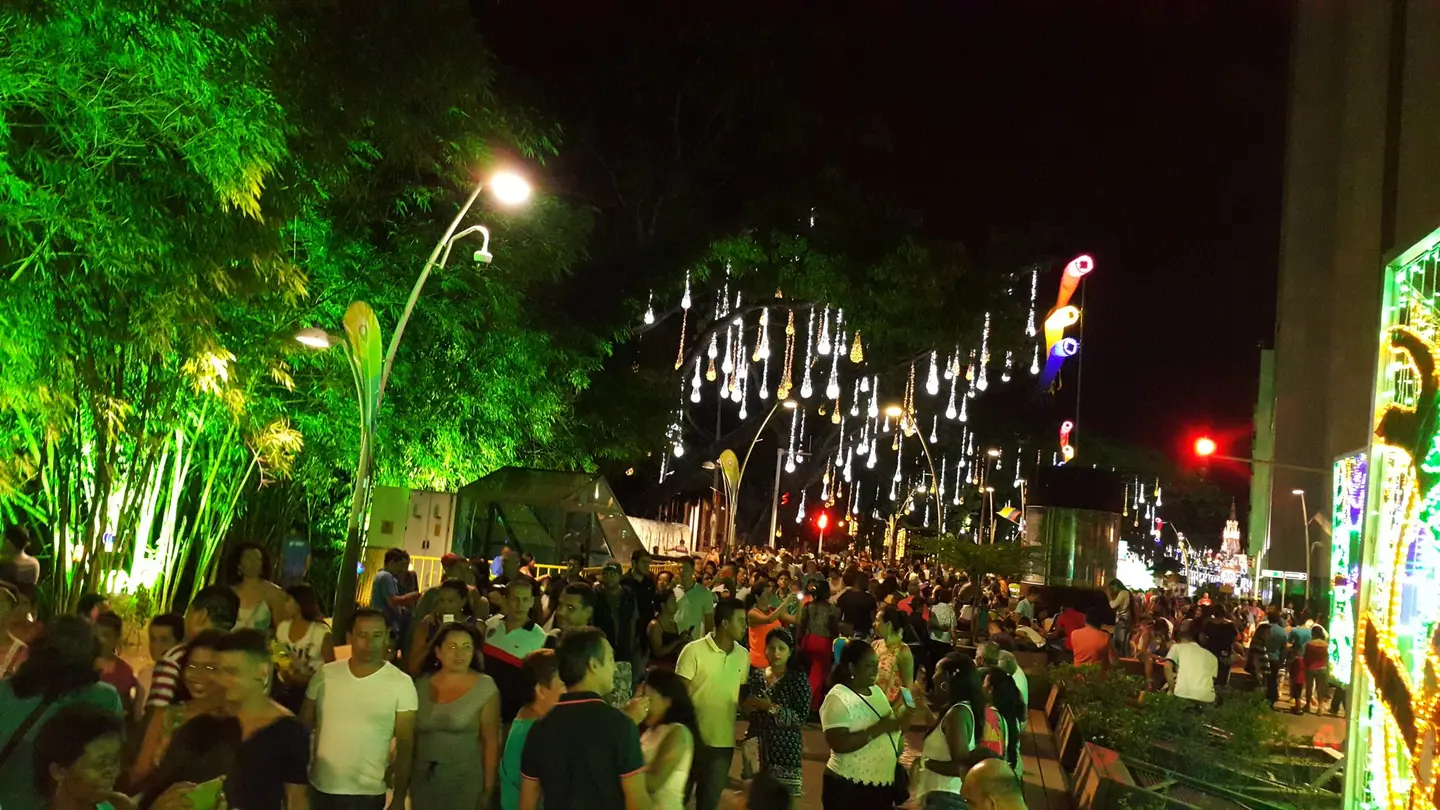
- December 7: the Christmas lights are switched on along the Bulevar del Río, the Bulevar del Oriente and Barrio Obrero’s Ruta de la Salsa (Salsa Route). This year they are dedicated to the victims.
- December 25–30: Feria de Cali, Cali’s year-end festival, presented as a driver of economic recovery and with spaces to remember the victims. We have gathered the confirmed dates, concerts and parades, and our Cali Fair guide helps you plan the visit.
To plan your arrival, where to stay and your first days, see our guides from the airport to Cali, where to stay and Cali in 3 days.
Before you head out, confirm opening hours through official channels. We’ll update this story if the status of any place changes.
Sources
- Cali City Hall: Cristo Rey reopening and hours, August 21, 2026 (opens in a new tab).
- El País: damage found by Dagma at Cristo Rey, August 18, 2026 (opens in a new tab).
- Valle del Cauca Tourism: Cristo Rey hours and admission, accessed September 27, 2026 (opens in a new tab).
- El Espectador: how Cali’s churches are recovering, September 26, 2026 (opens in a new tab).
- El País: damage to La Merced church, August 14, 2026 (opens in a new tab).
- Blu Radio: De Borondo through December, September 16, 2026 (opens in a new tab).
- El País: Barrio Obrero renovation, October 25, 2026 (opens in a new tab).
- Semana: the Museo de la Salsa after the earthquake, September 26, 2026 (opens in a new tab).
- El País: red alert on the Pance and Meléndez rivers and road closure, February 15, 2025 (opens in a new tab).
- El Tiempo: three months after the earthquake, November 7, 2026 (opens in a new tab).
- EFE via Infobae: magnitude and time of the earthquake, August 10, 2026 (opens in a new tab).
- Publimetro: one month after the earthquake, September 10, 2026 (opens in a new tab).
- Forbes Colombia: demolition of 36 buildings begins, October 6, 2026 (opens in a new tab).
- Cali City Hall: demolitions in Los Cámbulos, October 1, 2026 (opens in a new tab).
- Noticias Caracol: airport operations after the earthquake, August 11, 2026 (opens in a new tab).
- CW+: Colombia vs. Chile at Estadio Pascual Guerrero, November 9, 2026 (opens in a new tab).
- Blu Radio: 2026 Christmas lights, October 21, 2026 (opens in a new tab).
- Cali City Hall: 2026 cultural calendar and Feria dates, January 23, 2026 (opens in a new tab).
- Infobae: the Feria de Cali after the earthquake, August 26, 2026 (opens in a new tab).