CaliSucursal · Football and concerts
Estadio Olímpico Pascual Guerrero
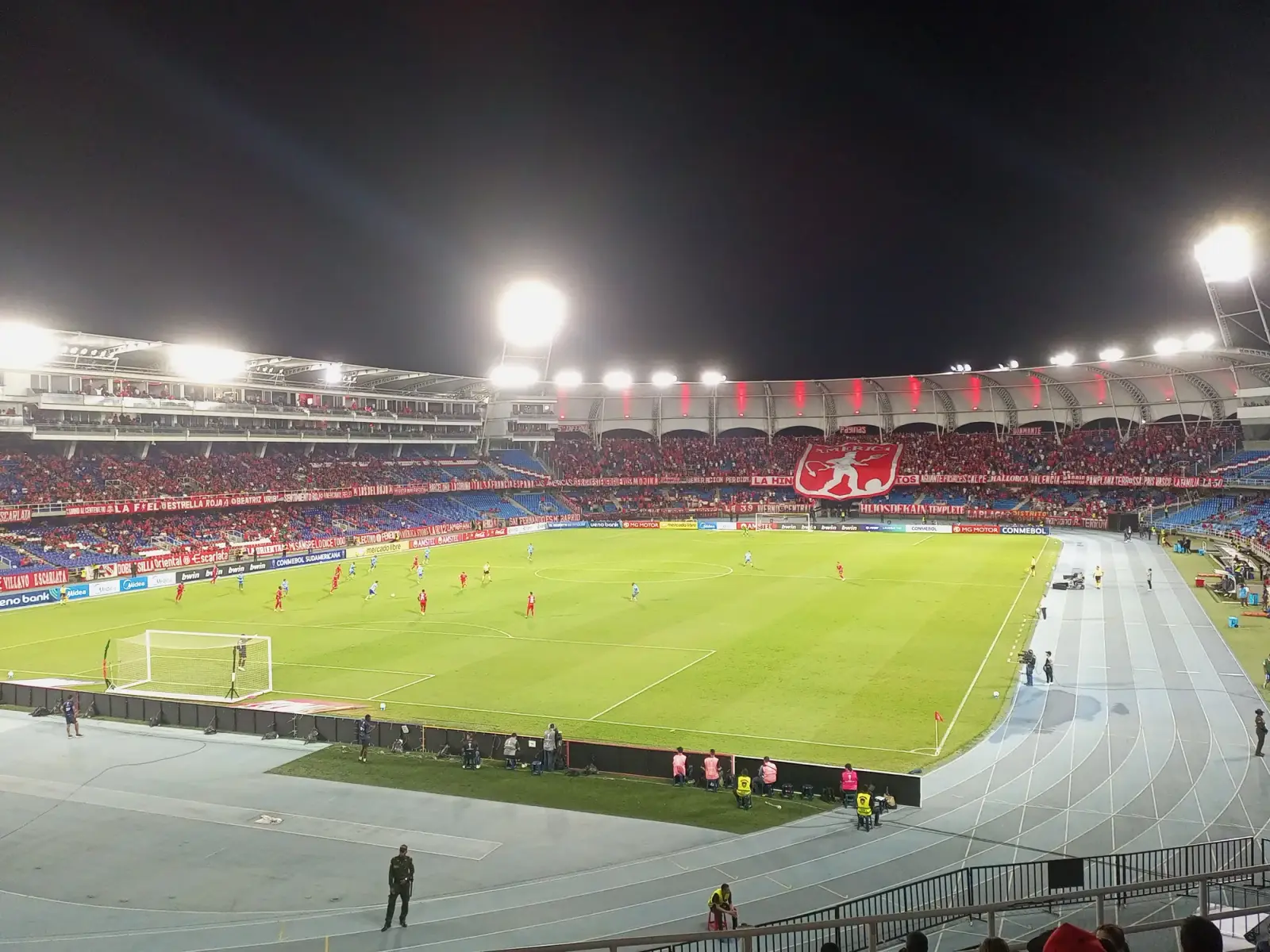
Estadio Olímpico Pascual Guerrero
Football and concerts Cali, Colombia
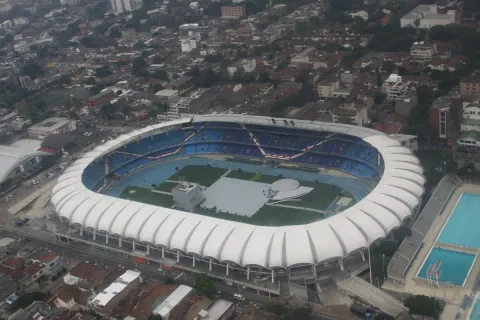
In the San Fernando neighborhood, between Calle 5 and Avenida Roosevelt, the Pascual Guerrero has hosted matches and concerts since 1937. América de Cali plays its home games here, the 1971 Pan American Games opened here, and every December the Feria’s Súper Concierto plays here.
Olympic Stadium · Cali
- Stand
- East, with the full view of the pitch
- Getting there
- MÍO, Estadio station, on Calle 5
- Gates
- Usually open several hours before the event
Open since 1937
Buy only from the official ticket seller
Your visit at a glance
CaliSucursal’s suggested time excludes travel to and from the site.
- Suggested time
- 3–4 h for a match or a concert, including getting in and out.
- Cost and entry
- Entry is by ticket, only on match or concert days. Prices change with each event and stand: for Colombia vs. Chile in 2026 they ran from COP 70,000 in the North and South stands to COP 380,000 in the West stand.
- Hours or availability
- It opens only for events, and the gates usually open several hours early. Check the time on your ticket and on the organizer’s accounts.
- Mobility and accessibility
- Wheelchair users enter with tickets for the section set aside for them: ask for it when you buy. The stands are reached by stairs.
Getting thereDirections in Google Maps (opens in a new tab)Directions in Waze (opens in a new tab)
San Fernando · since 1937
Cali lights up at the Pascual
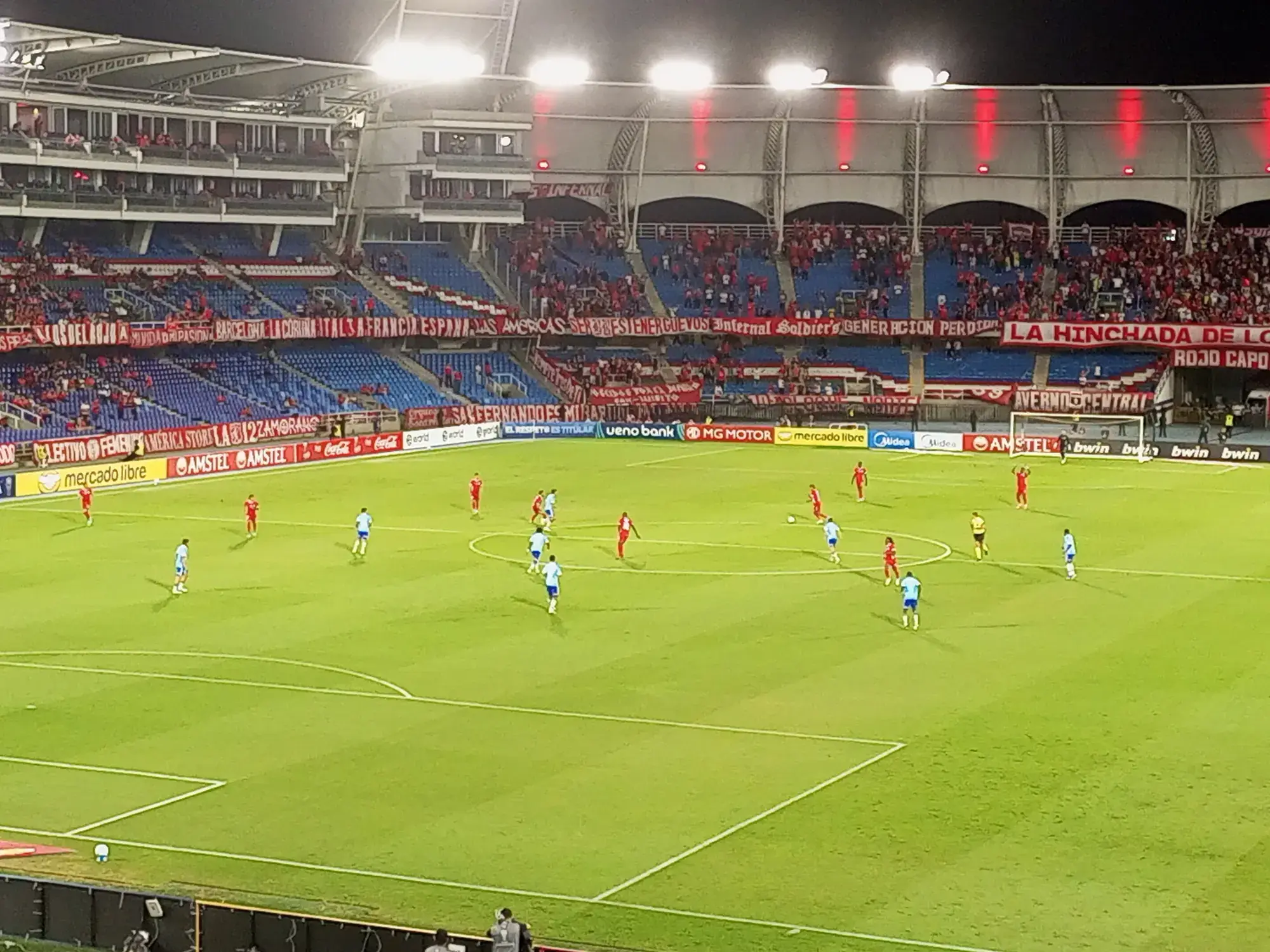
A Pan American Games opened here, two youth World Cups were played here and, every December, the Feria fills the pitch for the Súper Concierto. Come for a night match: arrive early, find your stand and watch the terraces fill as the floodlights come on.
- Opened
- 1937
- Holds more than
- 35.000people
- The pitch
- 110 × 68meters
- Pan American Games
- 1971
From the track
Take a lap of the stadium
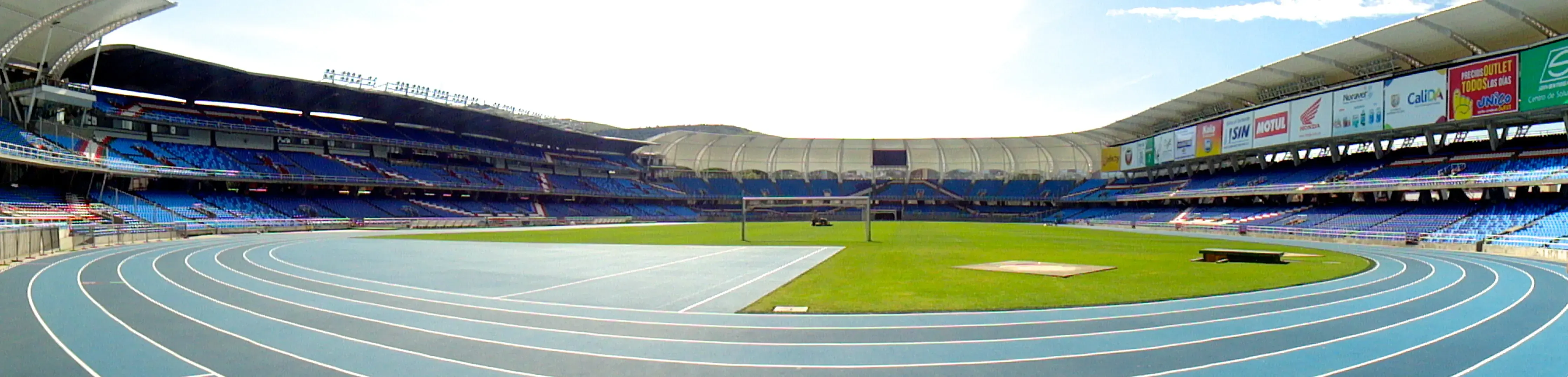
Swipe to look around the panorama. Inside the stadium, 2013. Photo: Gersonparra11 (opens in a new tab) · CC BY-SA 3.0 (opens in a new tab)
Before you buy a ticket
Pick your stand
Each stand feels different. For Colombia vs. Chile in November 2026, tickets ran from COP 70,000 in the North and South stands to COP 380,000 in the West stand; prices change with every event.
The most popular
East
Facing the whole pitch. It has two tiers: the busy lower one and the upper one, with a preferred view.
The priciest
West
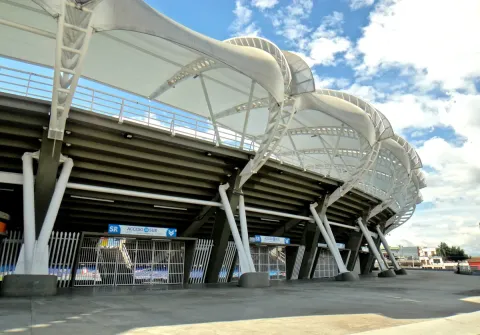
Boxes, radio and TV booths and, at pitch level, the dressing rooms and the team benches. Its vaulted roof dates from 1971.
The supporters’ end
South
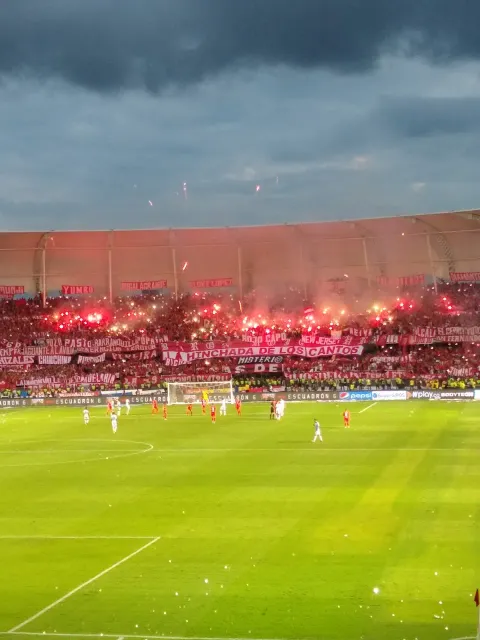
Behind one goal, the cheapest stand and home to the supporters’ groups. For chants, flags and flares, this is the place.
Under the big screen
North
Behind the other goal, under the giant screen added in the 2011 renovation. Along with the South stand, the cheapest ticket.
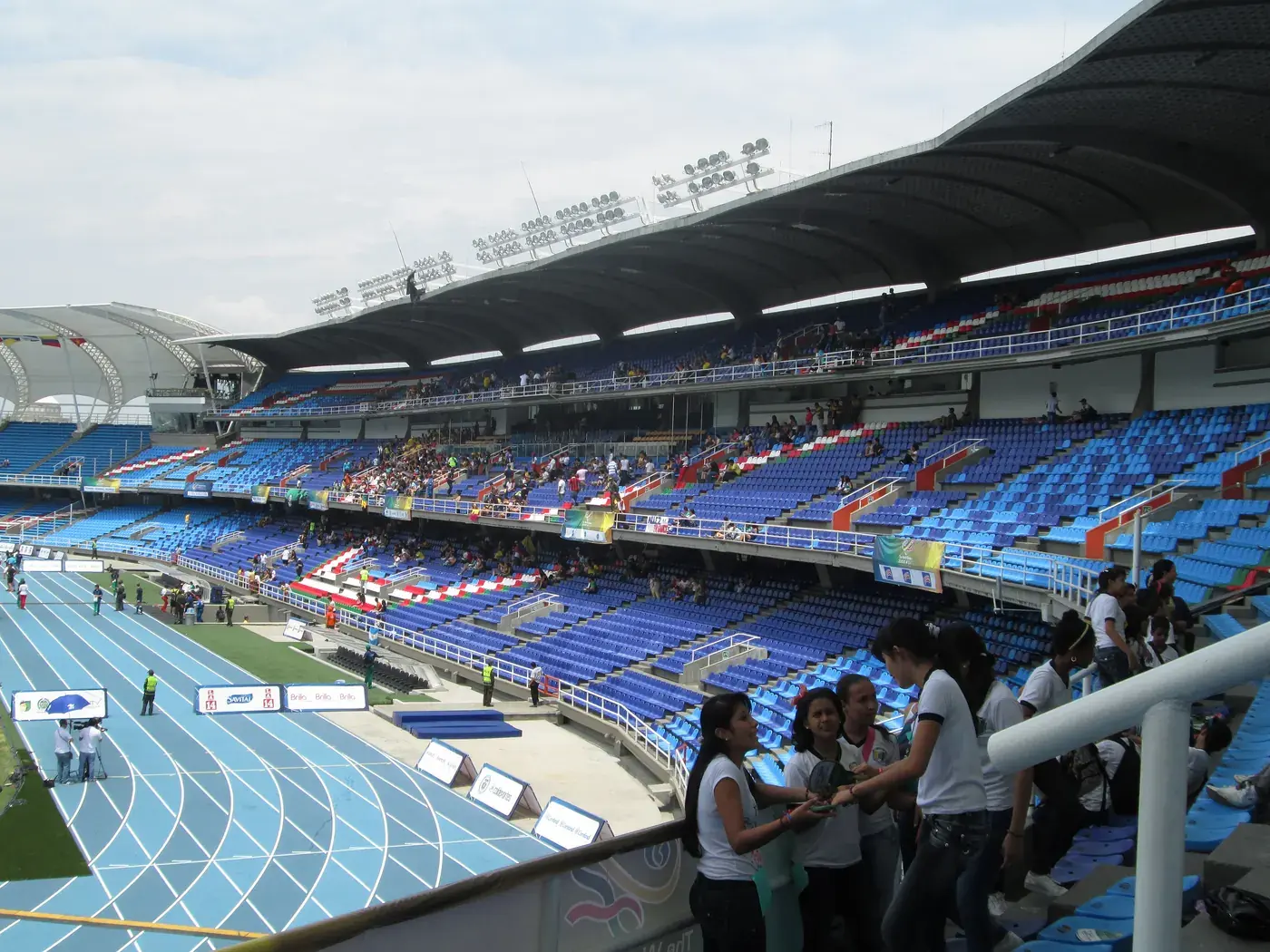
On the scoreboard
Almost ninety years of history
A stadium for the 400th anniversary
It was built on land donated by writer Pascual Guerrero and opened on July 20 with a tournament between Colombia, Argentina, Mexico and Cuba. It held 6,500 people.
The Pan American Games
Engineer Guillermo González Zuleta rebuilt it for the 6th Pan American Games: an eight-lane synthetic track, a new three-tier West stand and room for 61,000 people.
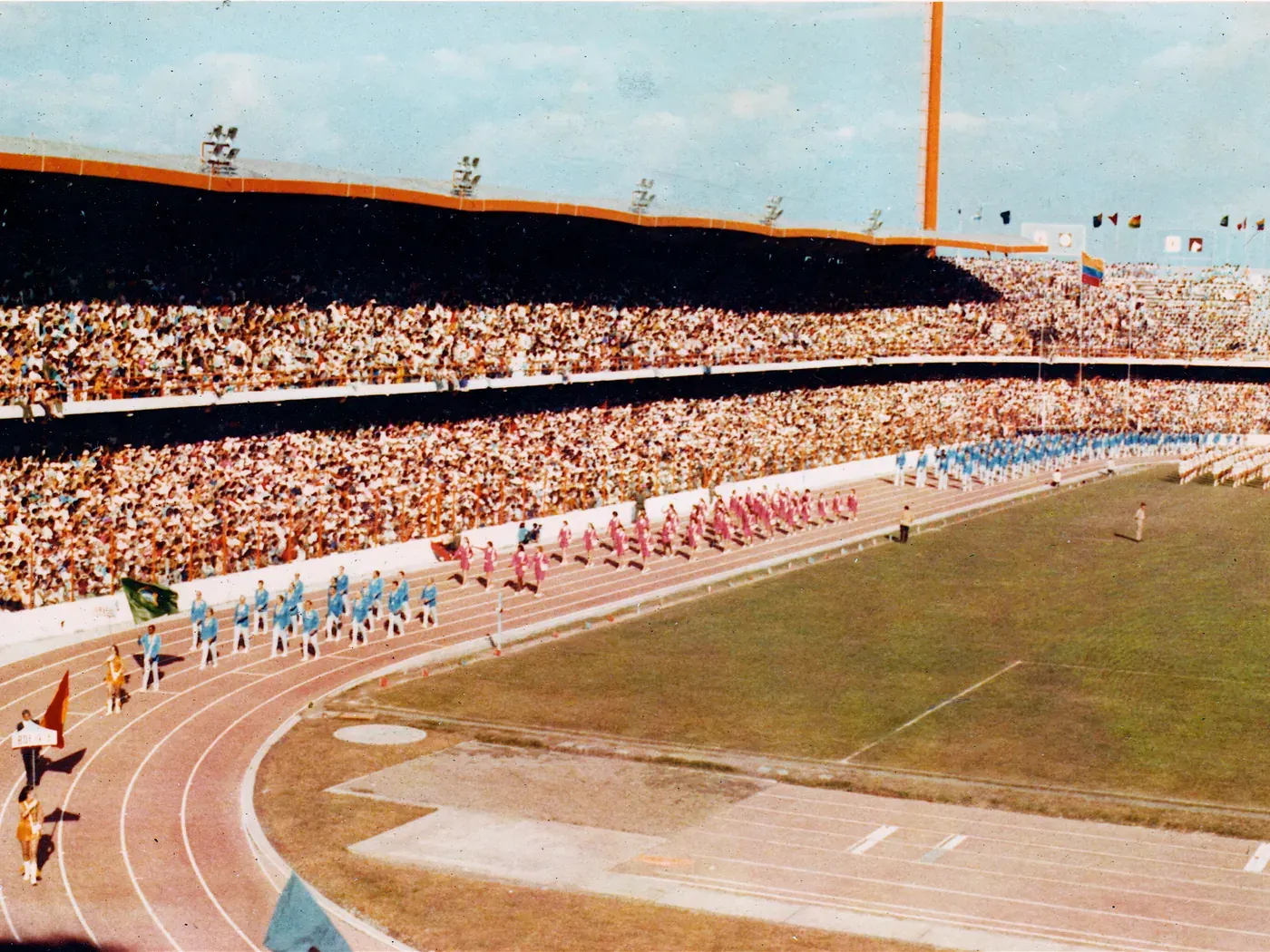
The opening ceremony of the Games, 1971. Photo: Iain Ritchie (opens in a new tab) · CC BY-SA 2.0 (opens in a new tab) The Copa América
After the North stand was rebuilt and the pitch relaid, the stadium hosted the Group B matches of the Copa América.
The U-20 World Cup
The renovation brought seats to every stand, the North stand’s giant screen and underground parking. Eight of the tournament’s matches were played here.
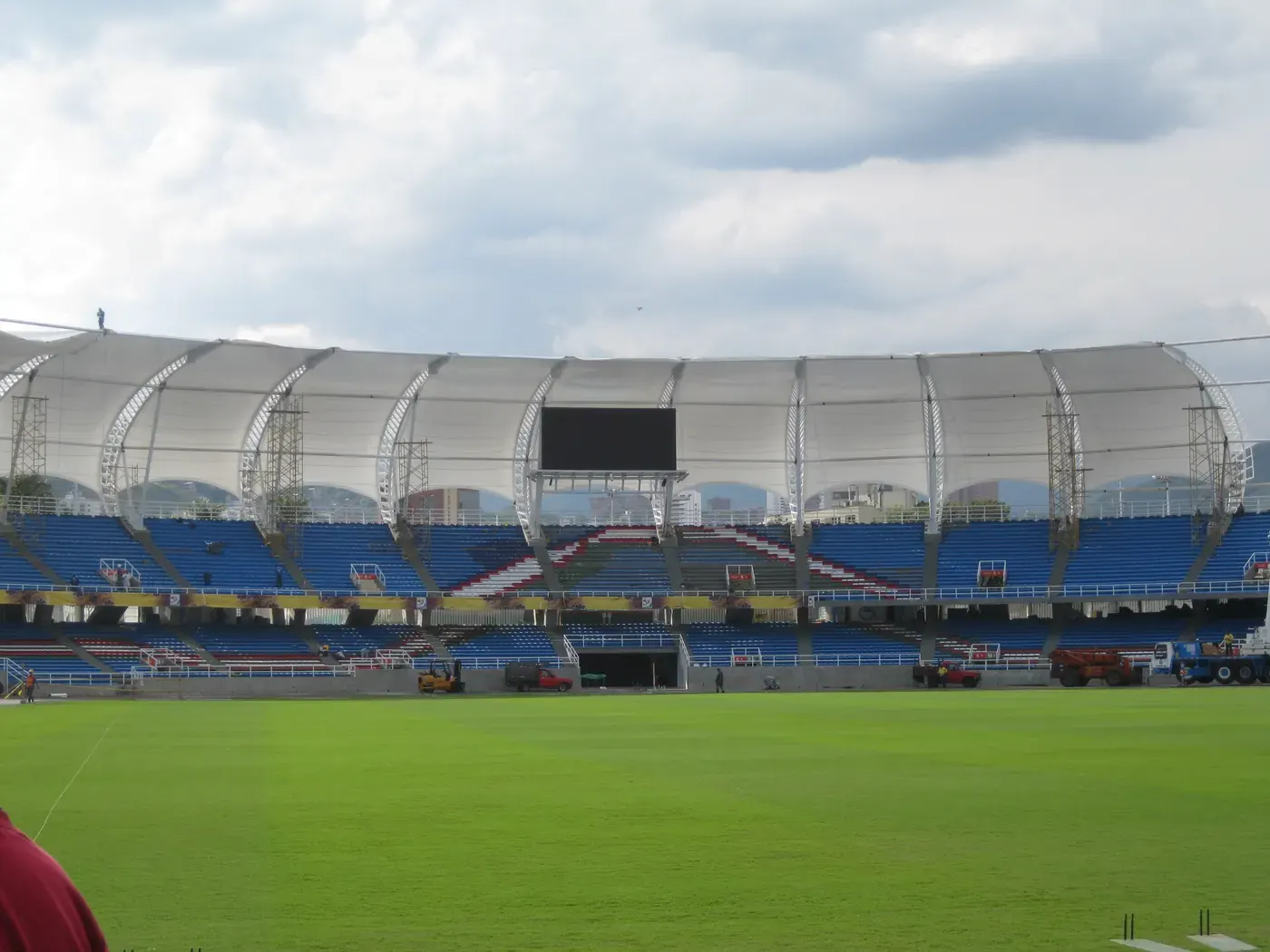
The North stand, days before the World Cup. Photo: Nomadali (opens in a new tab) · CC BY-SA 4.0 (opens in a new tab) The U-20 Women’s World Cup
Two years after the Women’s Copa América, the Pascual hosted the FIFA U-20 Women’s World Cup. One of its nicknames is “the home of the women’s national team”.
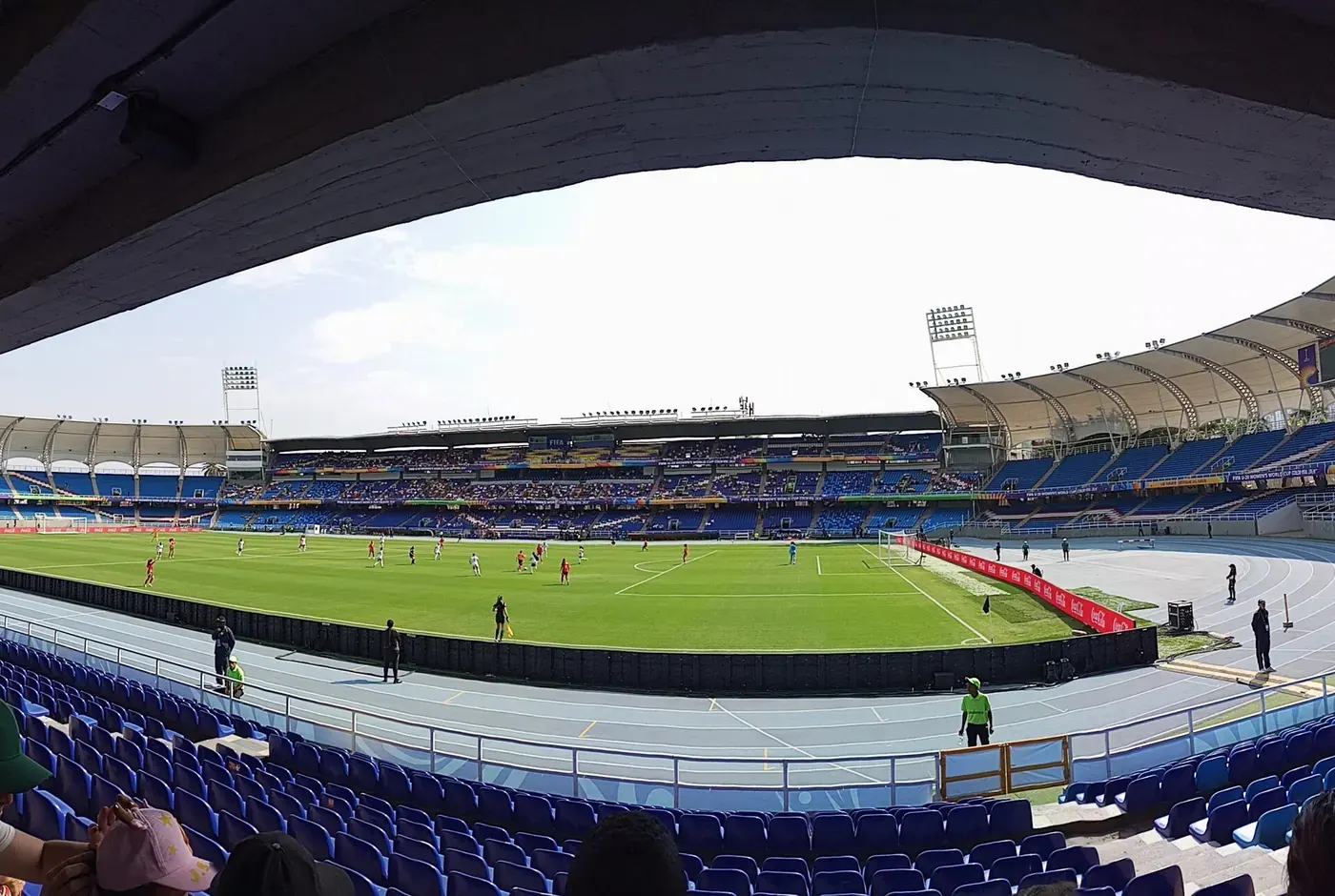
Spain and the USA warm up, 2024. Photo: CalinkaPF (opens in a new tab) · CC0 1.0 (opens in a new tab) Colombia comes back
On November 13, Colombia’s senior men’s team plays at the Pascual for the first time in 27 years, against Chile. Ticket proceeds go to families hit by the August 10 earthquake.
Getting there and what to know about Colombia vs. Chile
More than football
No match tonight? Then there’s a concert
Every December, between the 25th and the 30th, the Feria de Cali’s Súper Concierto fills the pitch and the stands. Shakira, Juanes, Marc Anthony and Gustavo Cerati have played this stage, and in 1992 an ecological festival brought together Pink Floyd’s David Gilmour and The Who’s Roger Daltrey.
See the Feria de Cali programA stop worth discovering
Discover Estadio Olímpico Pascual Guerrero
It is named after Pascual Guerrero, a writer and politician from Palmira who donated the land. It opened on July 20, 1937, with a four-team tournament between Colombia, Argentina, Mexico and Cuba, and held 6,500 people. For the 1971 Pan American Games, engineer Guillermo González Zuleta rebuilt it with a synthetic track and a new West stand, raising capacity to 61,000.
Keep reading
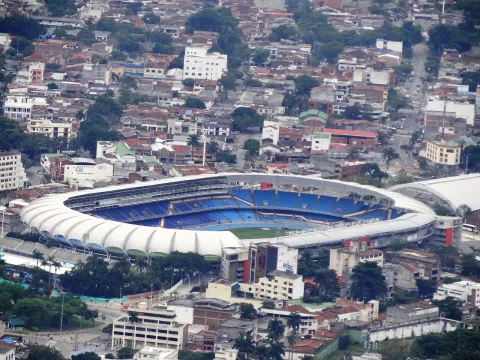
The renovation for the 2011 U-20 World Cup put seats in every stand and a giant screen in the North stand. Then came the 2013 World Games, the 2022 Women’s Copa América and the 2024 FIFA U-20 Women’s World Cup. Today it holds more than 35,000 people.
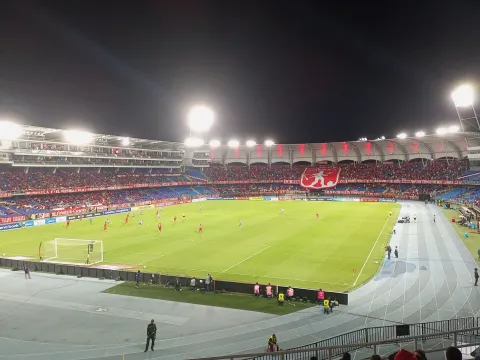
- A night match of América de Cali under the floodlights
- The West stand’s 1971 roof
- The Feria de Cali’s Súper Concierto, every December
Travel notebook
Stories for the road
History
Look up at the West stand
The West stand’s roof dates from 1971: double-curved vaults just 5 cm thick on 18-meter cantilevers, designed by engineer Guillermo González Zuleta.
Read the source (opens in a new tab)What to look for
Give the ride a soundtrack
In “Cali Pachanguero”, Grupo Niche sings about a derby at the Pascual. It sounds different on the MÍO bus, heading for Estadio station.
Visiting tip
Leave without rushing
When the match ends, thousands of people head for Calle 5 at once. Wait a few minutes in the stand, agree on a meeting point and keep your phone away in the crowd.
Best time to go
A night match or a concert, when the floodlights come on and the stands fill up. In December, during the Feria de Cali, the stadium hosts the Súper Concierto.
Before you go
Buy your ticket only from the event’s official ticket seller and be wary of resale on social media or outside the stadium. Bring your ID and a charged phone, since many tickets are digital. Arrive early: with a full stadium, the lines to get in are long.
Getting there
How to get there
On the MÍO
Get off at Estadio station, on Calle 5 at Carrera 34, opposite Parque Panamericano. For big events the MÍO has run extended hours: check Metrocali’s accounts before you leave.
By car or taxi
During events, Avenida Roosevelt and Carrera 34 between Calle 9 and Roosevelt close to traffic. Leave early and park a few blocks from the stadium.
From the MÍO to your seat
Schematic, not to scale, north up. MÍO routes change: check Metrocali before you leave.
Frequently asked questions
Where is Pascual Guerrero stadium?
In the San Fernando neighborhood, in south-central Cali, between Calle 5 and Avenida Roosevelt. The MÍO’s Estadio station is on Calle 5, opposite Parque Panamericano.
How many people does Pascual Guerrero hold?
More than 35,000; published figures vary by source. In 1937 it held 6,500 and, after the renovation for the 1971 Pan American Games, up to 61,000.
Which team plays at Pascual Guerrero?
América de Cali plays its home games there, as does its women’s team. Deportivo Cali also used it for decades before moving to its own stadium.
Which stand should I buy?
The East stand is the most popular, with a full view of the pitch. The West stand is the most expensive and has the boxes. North and South are the cheapest; the South stand is home to the supporters’ groups.