CaliSucursal · Hikes
Las Tres Cruces
Hikes Cali, Colombia
They have watched over Cali since 1938. Climb up and look back.
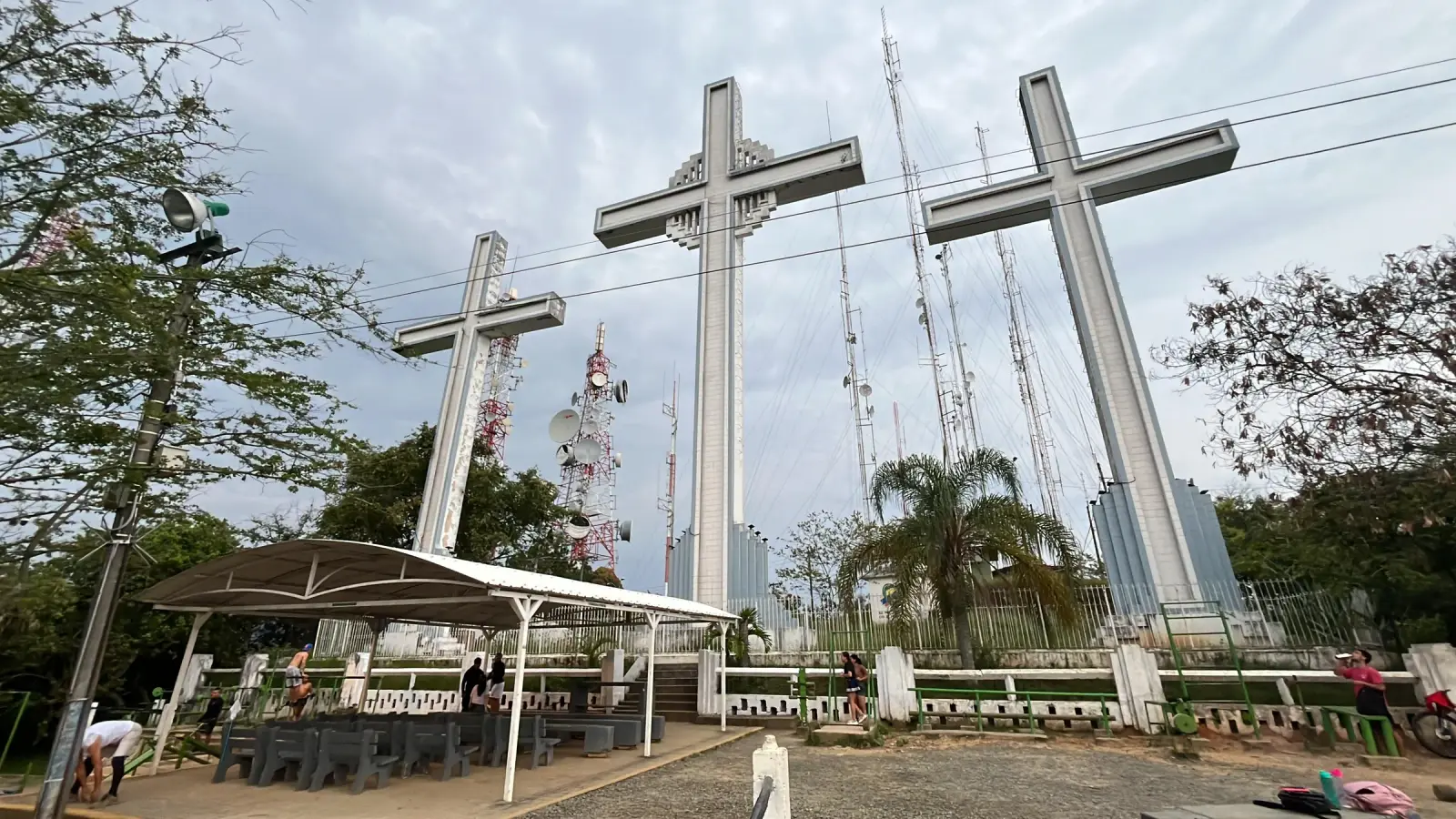
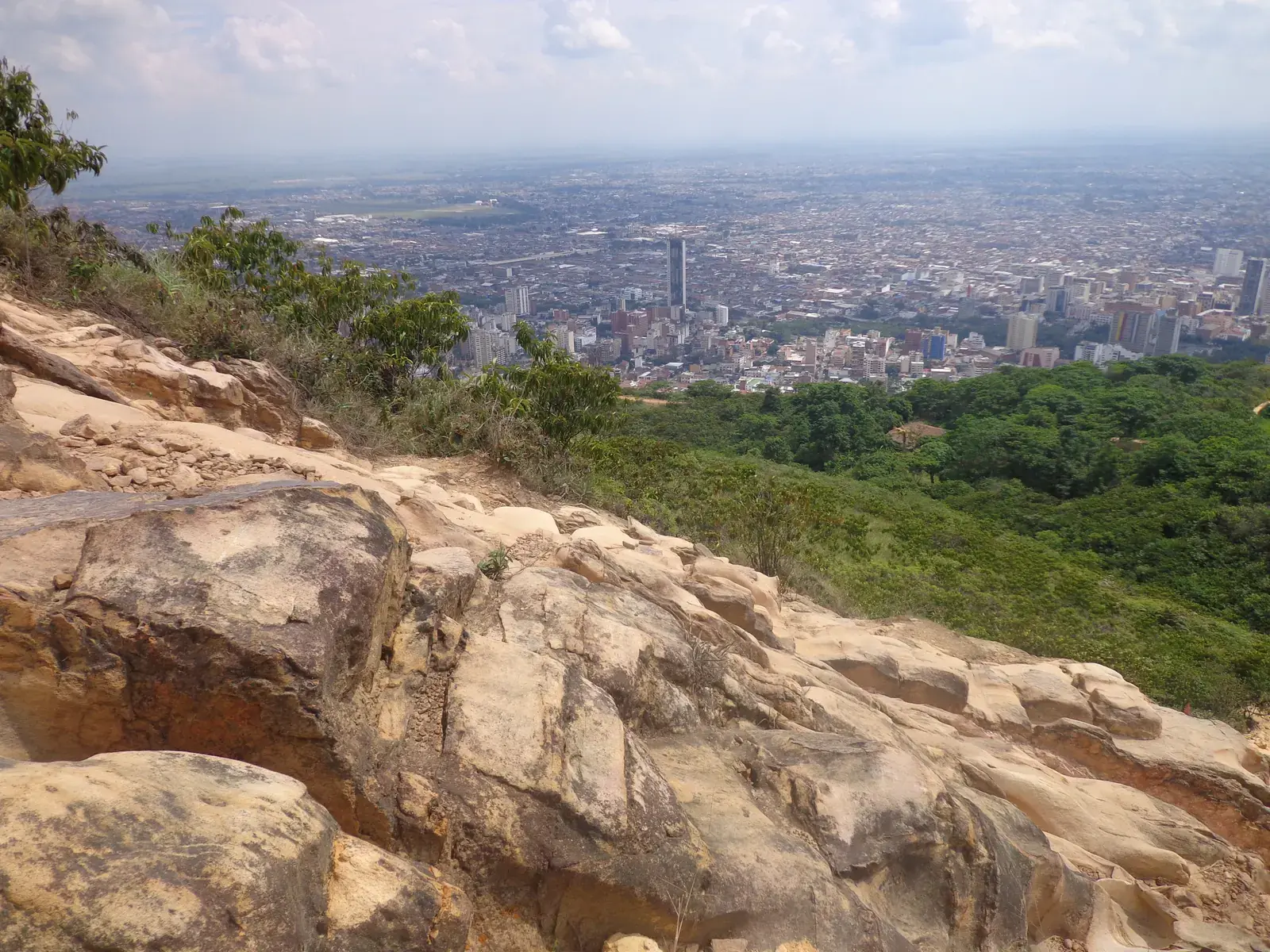
Three concrete crosses, the central one 26 meters tall, crown this hill in northwestern Cali. You reach them on foot: about 480 meters of hard climbing on dirt and rock trails, and at the top, 1,465 meters up, downtown, the north and the Cauca valley lie at your feet.
- Summit at 1,465 m
- About 480 m of climbing
- Free · go in a group, by day
Your visit at a glance
CaliSucursal’s suggested time excludes travel to and from the site.
- Suggested time
- 2–3 h to climb via Bataclán or Normandía, rest at the top and come back down.
- Cost and entry
- The trails are free to hike. During Holy Week the city opens a single entrance, in Chipichape next to Hotel Spiwak.
- Hours or availability
- There are no published hours for the rest of the year: climb in daylight and come down before dark. During Holy Week the city sets hours; in 2025 they were 6:00 a.m. to 1:00 p.m.
- Mobility and accessibility
- A steep dirt-and-rock trail with about 480 m of ascent from Altos de Normandía. No step-free or level route is confirmed. During Holy Week the city asks visitors not to bring children under 7.
Getting thereDirections in Google Maps (opens in a new tab)Directions in Waze (opens in a new tab)
From guadua to concrete
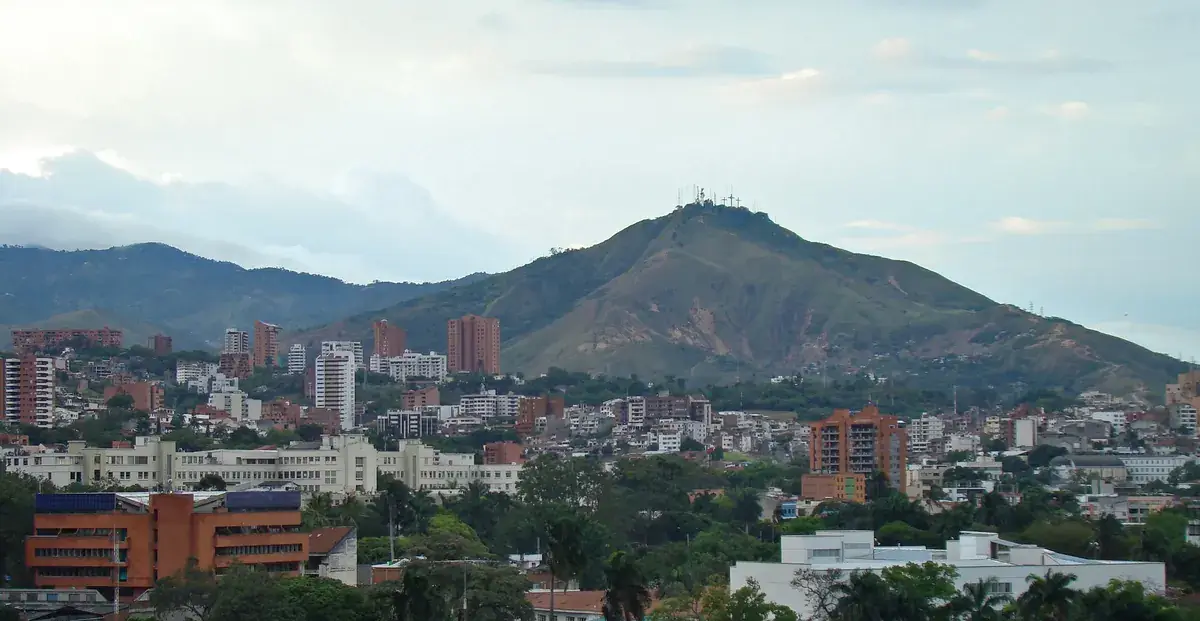
In 1837, three crosses made of guadua bamboo were carried up the hill. A century later, the city replaced them with the concrete crosses you can see from almost anywhere in Cali.
The hill seen from the city. Photo: David (opens in a new tab) · CC BY 2.0 (opens in a new tab)
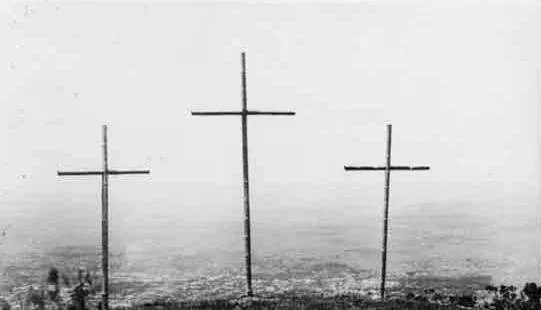
The guadua crosses, before the monument. Photo: Sahaquiel9102 (opens in a new tab) · Public domain Three bamboo crosses
According to tradition, friars Vicente and Juan Cuesta placed three guadua bamboo crosses on the summit to rid Cali of the Buziraco, the demon that, legend says, had cursed the city. Ever since, people in Cali have climbed the hill every May 3.
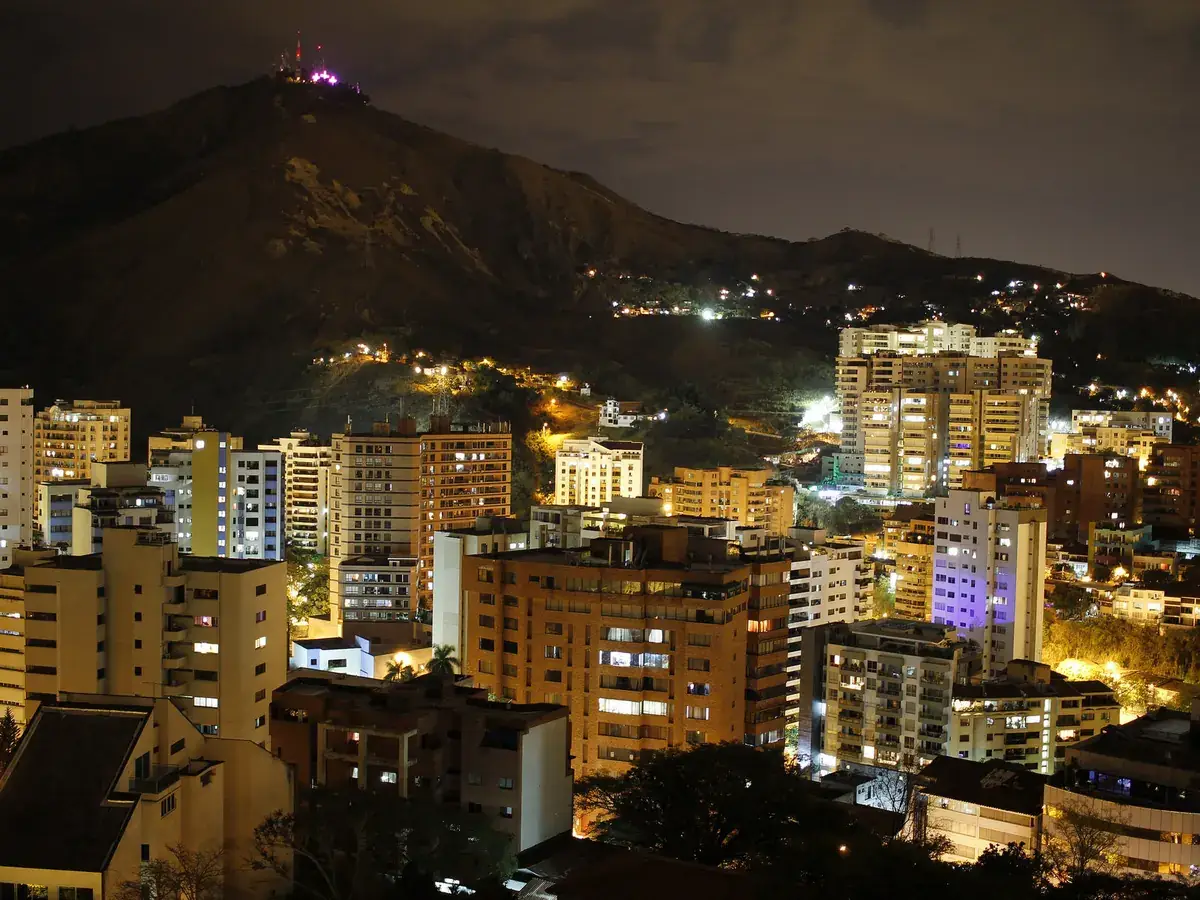
The hill at night, with lights on the summit. Photo: Johanfnix (opens in a new tab) · CC BY-SA 4.0 (opens in a new tab)
The earthquake that brought them down
An earthquake shook Cali and knocked down the guadua crosses. In the legend, it was the Buziraco breaking free once more.
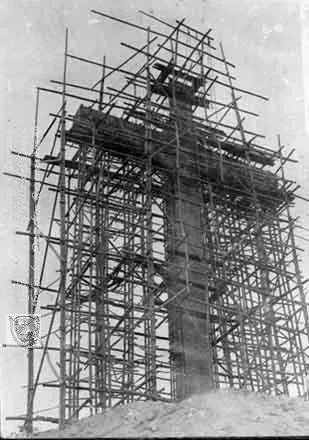
The central cross in scaffolding. Icesi Digital Library. Photo: Gerardo Perez (opens in a new tab) · CC BY 4.0 (opens in a new tab) A concrete monument
Father Marco Tulio Collazos championed a permanent monument. Engineer Argemiro Escobar drew up the plans and led the work with master builder Luis Felipe Perea.
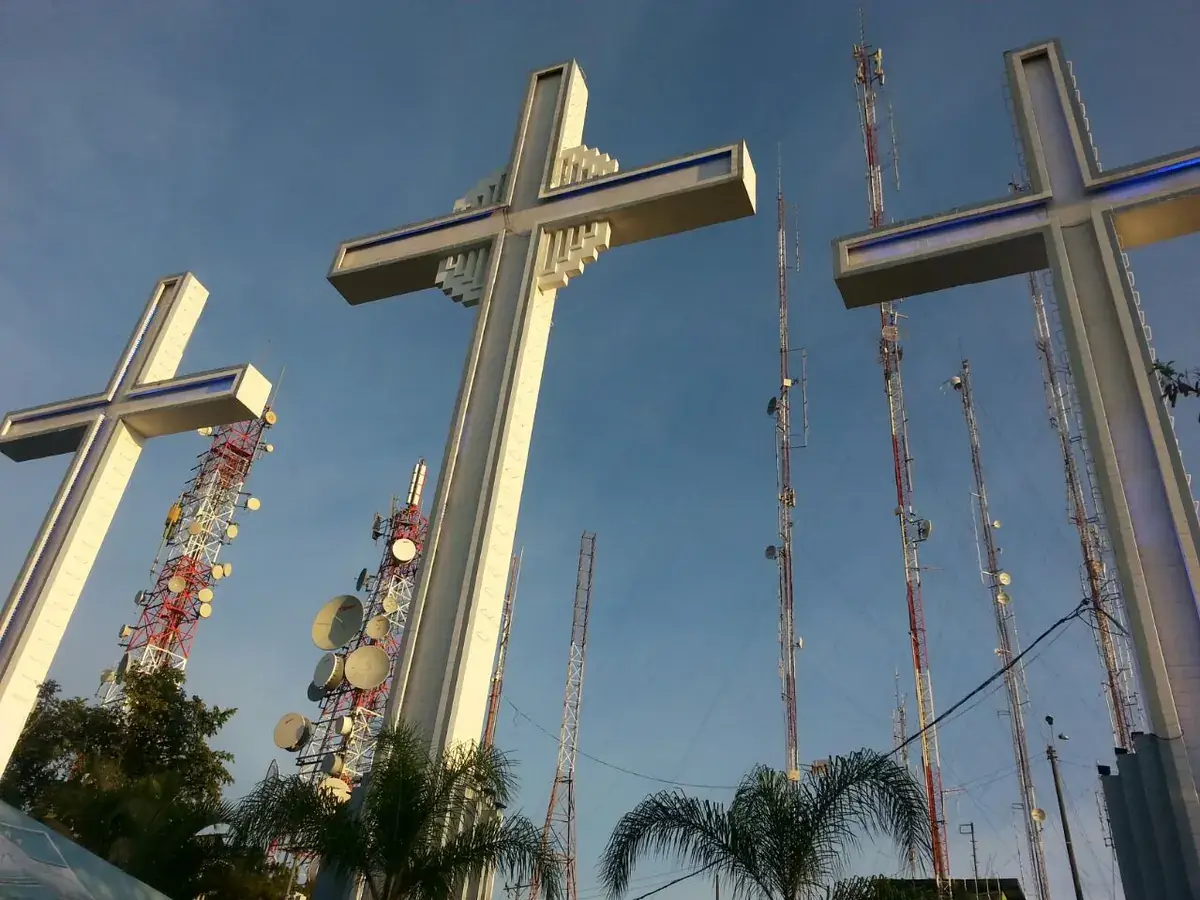
The three concrete crosses, seen from below. Photo: Ofirmeister (opens in a new tab) · CC BY-SA 4.0 (opens in a new tab)
Handed over on January 6
The monument was handed over to the city on January 6, 1938: the central cross, 26 meters tall and 11 wide, and two side crosses of 22 by 8, on a 420-square-meter base.
Today
A hill of pilgrims and hikers
During Holy Week the climb becomes a pilgrimage: in 2026, more than 8,000 people reached the summit on Holy Thursday and Good Friday, according to the city. The rest of the year, locals and visitors hike up for exercise and the view.
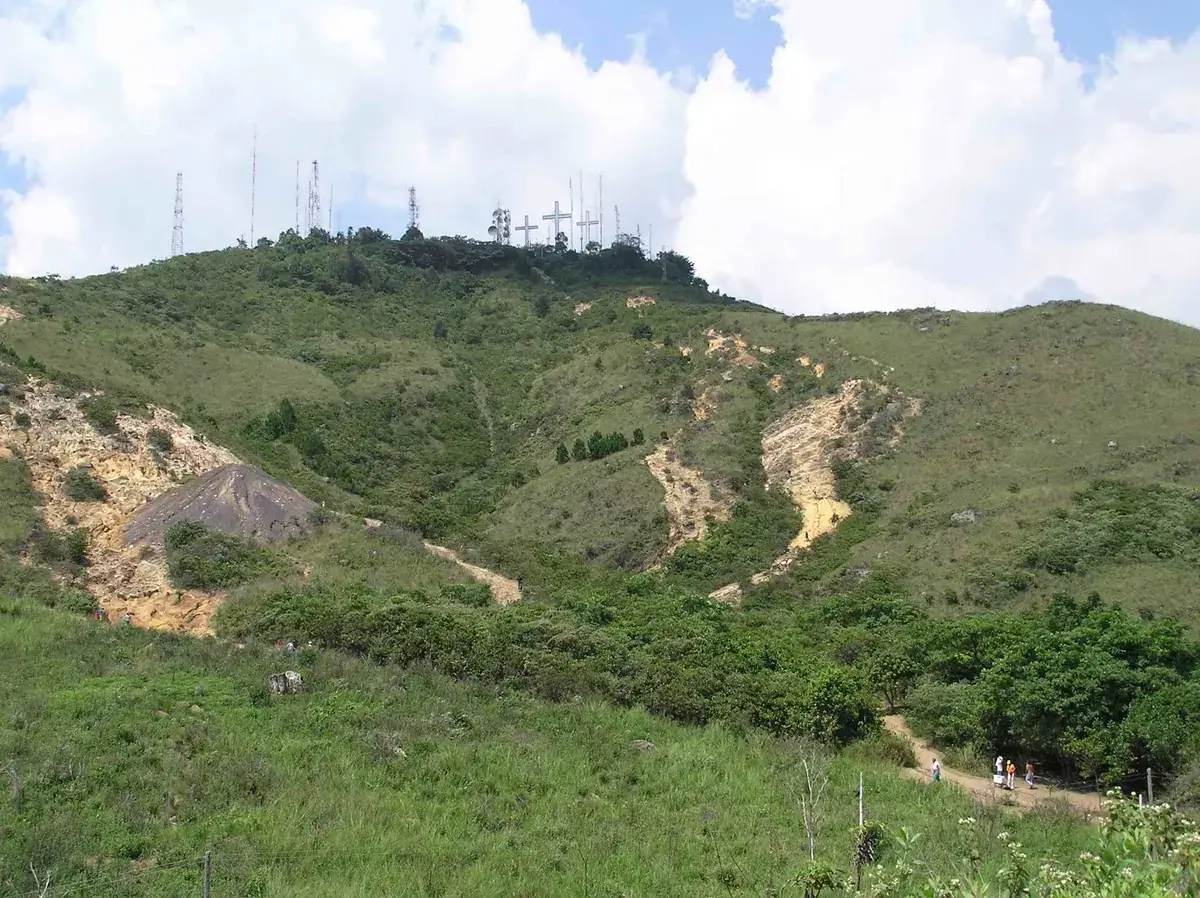
The hillside and the trail up to the summit. Photo: C arango (opens in a new tab) · Public domain
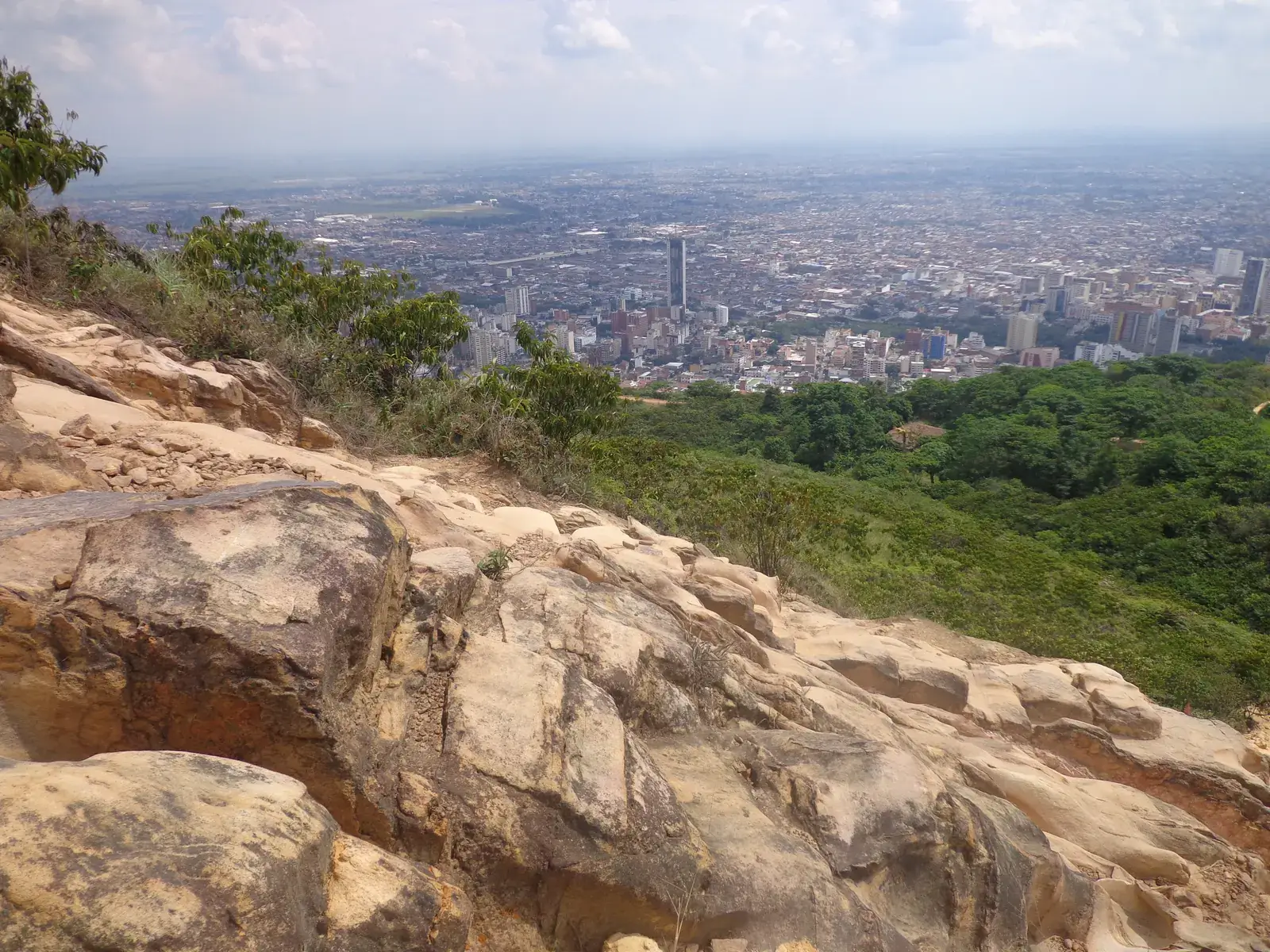
From the trailDowntown Cali, below. Photo: Hectorangelazul (opens in a new tab) · CC BY-SA 4.0 (opens in a new tab)
A stop worth discovering
Discover Las Tres Cruces
It is one of Cali’s guardian hills and can be seen from much of the city. On the summit, 1,465 meters above sea level, the central cross stands 26 meters tall and the side crosses 22. Telecommunication antennas and a police station sit next to the monument.
Keep reading
Reaching the crosses is above all a hike: dirt-and-rock trails with steep stretches exposed to the sun. At the top, the monument’s plaza is the place to catch your breath and look out over downtown, the north of the city and the Cauca River valley.
- The three crosses, 26 and 22 meters tall
- Views over downtown and northern Cali
- One of the city’s most traditional hikes
Travel notebook
Stories for the road
History
Concrete crosses since 1938
The city received the monument on January 6, 1938. It replaced the three guadua bamboo crosses that, according to tradition, friars Vicente and Juan Cuesta carried up the hill in 1837.
Read the source (opens in a new tab)What to look for
Look where the arms meet
Up close, notice the stepped blocks around the crossing of each cross and the fins at the base. From the city, you can tell the three apart by their height: the middle one is the tallest.
Visiting tip
Go early and in a group
Set off early to avoid the midday heat, bring water and sunscreen, and come down before dark. Carry only what you need and keep your phone away on quiet stretches.
Best time to go
Early in the morning, when it is cooler and more hikers are on the trails, ideally at the weekend, when more groups go up. Do not come down after dark. During Holy Week, check the hours and entrance set by the city first.
Before you go
The police advise climbing in a group: people hiking alone or in pairs are more exposed to robbery. Carry only what you need, plus water and sunscreen, and tell someone which route you are taking.
Getting there
How to get there
To the trailhead
Take a taxi or get directions to Altos de Normandía, in the Normandía neighborhood, where the best-known ascent begins. The Bataclán route starts in the sector of the same name, in the Golondrinas rural district.
The climb on foot
From Altos de Normandía you climb about 480 meters. Go in a group, start early and come down before dark. During Holy Week the city usually opens a single entrance, in Chipichape, with its own hours.
Three ways to the top
The city describes three routes. From Altos de Normandía you climb about 480 meters to the summit, 1,465 meters above sea level.
- Bataclán1.3 kmThe shortest. It starts in the Bataclán sector, in Golondrinas.
- Normandía1.8 kmIt starts in Altos de Normandía, in the Normandía neighborhood.
- La Tripleta4.3 kmThe longest and the steepest.
During Holy Week the city usually opens a single entrance, in Chipichape next to Hotel Spiwak, with its own hours.
Frequently asked questions
How long does it take to hike up to Tres Cruces?
It depends on the route and your pace. The Bataclán route is 1.3 km and the Normandía route 1.8 km, with about 480 meters of ascent. Allow 2 to 3 hours to climb, rest at the top and come back down.
Is it safe to hike Cerro de las Tres Cruces?
There have been robberies on the trails. The police advise hiking in a group and staying in touch with them. Go in daylight, carry the bare minimum and avoid quiet stretches.
Do you have to pay to hike up to Tres Cruces?
No. Hiking the hill’s trails is free. During Holy Week the city runs the climb through a single entrance.
When are the pilgrimages?
Every May 3, to honor the Holy Cross, and during Holy Week. On those dates the city runs the climb through a single entrance, in Chipichape next to Hotel Spiwak; in 2025 it was open from 6:00 a.m. to 1:00 p.m.