CaliSucursal · Outdoor art
Monumento a la Solidaridad
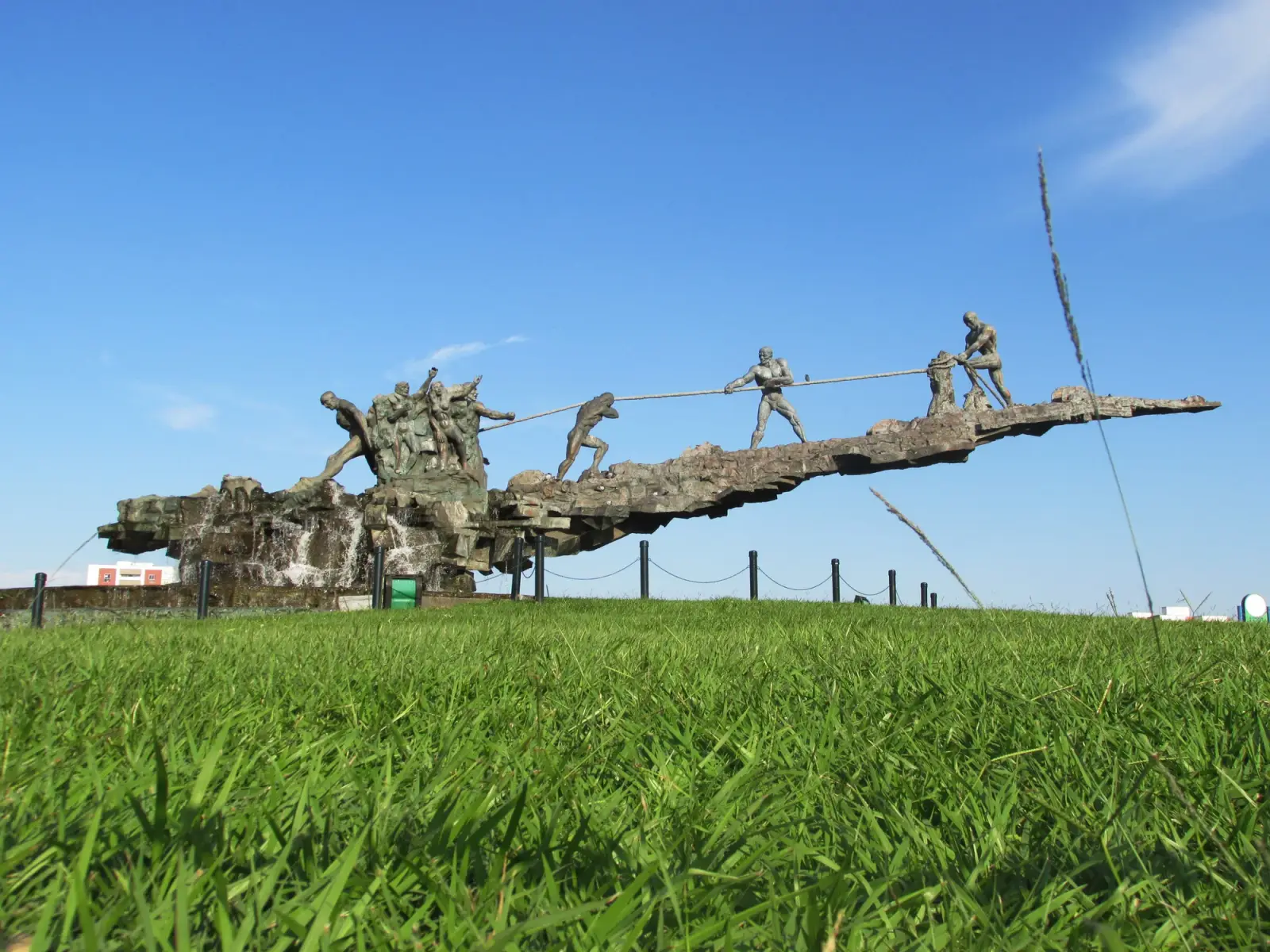
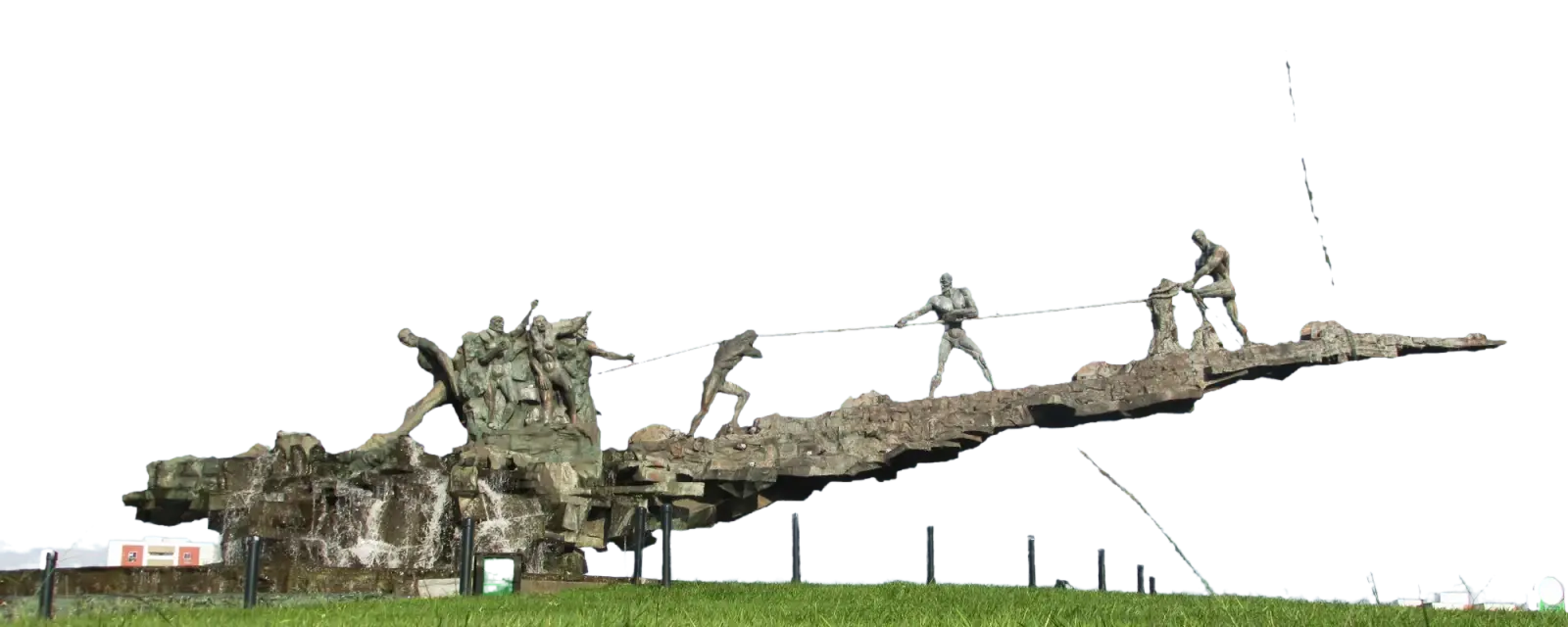
About 53 meters long, with its tip in midair
Outdoor art Cali, Colombia Héctor Lombana · 1995
On the roundabout where Avenida 3 Norte meets Calle 34, in northern Cali, a rock ramp about 53 meters long rises at an angle and ends in midair. Along it, a line of figures pulls on the same rope: sculptor Héctor Lombana’s tribute to the civic spirit of the people of Cali and, since the 2026 earthquake, the symbol of a city that looks after its own.
- Roundabout at Avenida 3 Norte and Calle 34
- About 700 m from the bus terminal
- At dusk the fountain’s lights come on
Your visit at a glance
CaliSucursal’s suggested time excludes travel to and from the site.
- Suggested time
- 15–30 min to walk around the roundabout and see the fountain.
- Cost and entry
- A public space with no ticket office: you see it from the sidewalks around the roundabout.
- Hours or availability
- No published hours: it is a city roundabout. At dusk the lighting and the fountain’s lights come on.
- Mobility and accessibility
- The sidewalks around the roundabout are on flat ground. A step-free route onto the monument’s lawn is unconfirmed.
Getting thereDirections in Google Maps (opens in a new tab)Directions in Waze (opens in a new tab)
Roundabout at Avenida 3 Norte and Calle 34
Everyone pulls onthe same rope
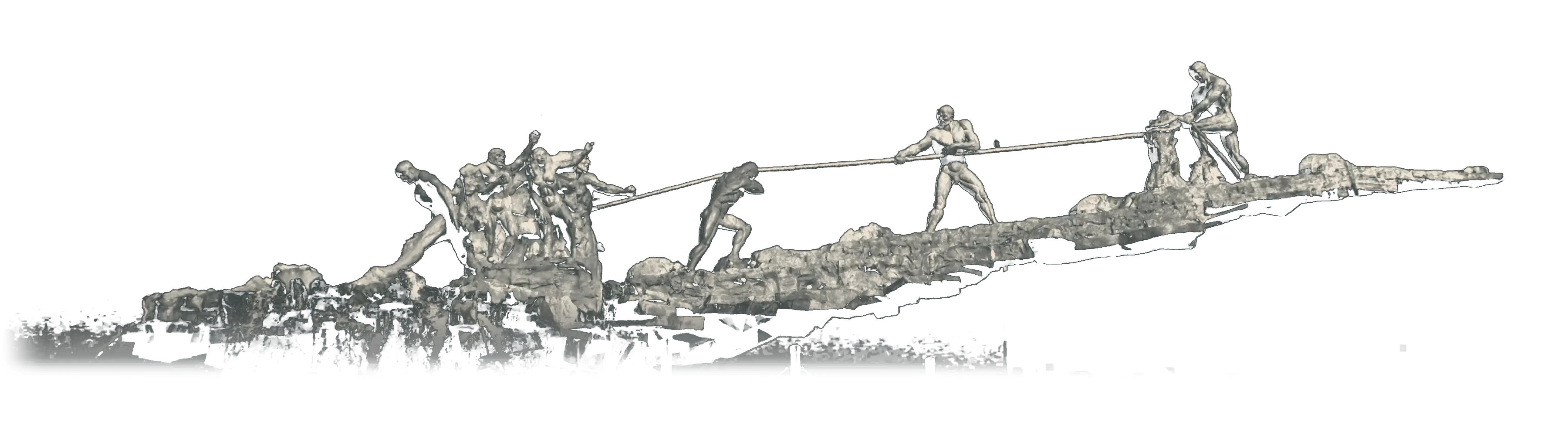
A ramp of rock about 53 meters long rises at an angle over the roundabout and ends in midair. Along it, a line of figures pulls on a single rope, from the crowd surging among the waterfalls to the man tying it off at the top. Héctor Lombana, the sculptor of Cartagena’s Zapatos Viejos, raised it in 1995 as a tribute to the civic spirit of the people of Cali, and since the 2026 earthquake it has also stood for a city that looks after its own.
20 m
tall
53 m
long, approximately
7 thousand
runners, approx., finished here in the 2026 charity race
- Sculptor
- Héctor Lombana Piñeres
- Unveiled
- March 24, 1995
- Materials
- Iron, resin, quartz and slate
- Gift of
- Ibero-American Association of Chambers of Commerce
From the fountain to the tip
Follow the rope
Below, the crowd
Among the fountain’s waterfalls, men and women raise their arms. One lunges forward; another holds the end of the rope.
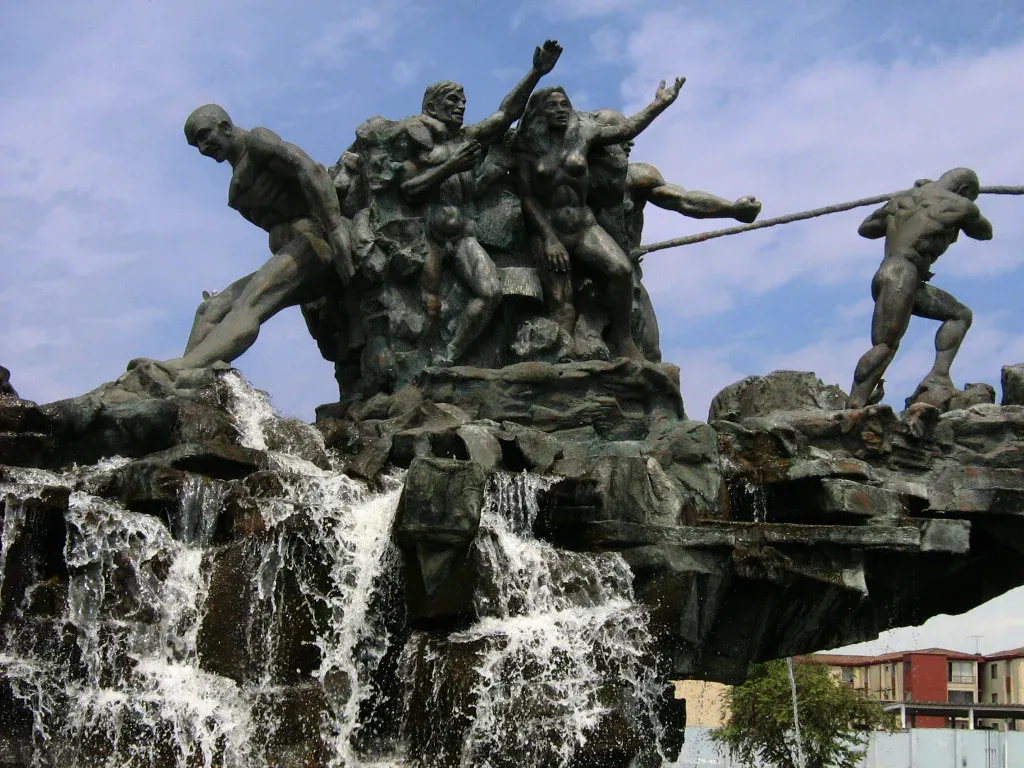
Photo: Juanadearcolaloca (opens in a new tab) · CC BY-SA 4.0 (opens in a new tab) Uphill, the pullers
One carries the rope over his shoulder, bent double; another hauls it with both hands, feet planted. According to the city, each figure stands for a trade.
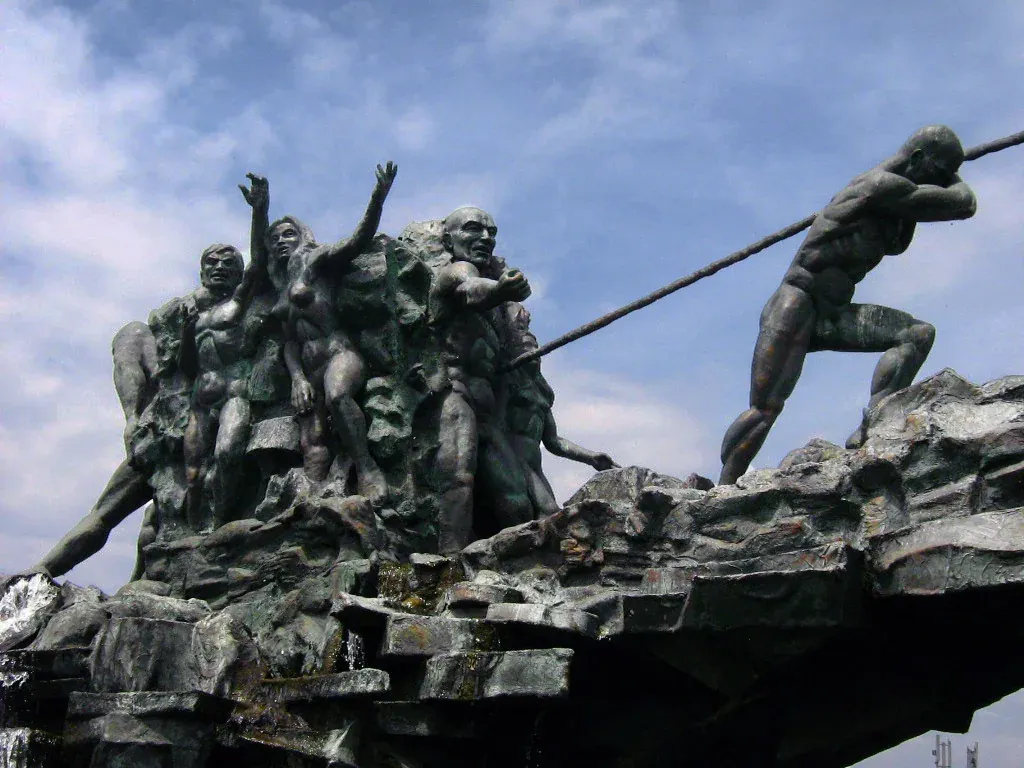
Photo: Juanadearcolaloca (opens in a new tab) · CC BY-SA 4.0 (opens in a new tab) At the top, the knot
The last man wraps the rope around a rock to make it fast and leans back with all his weight.
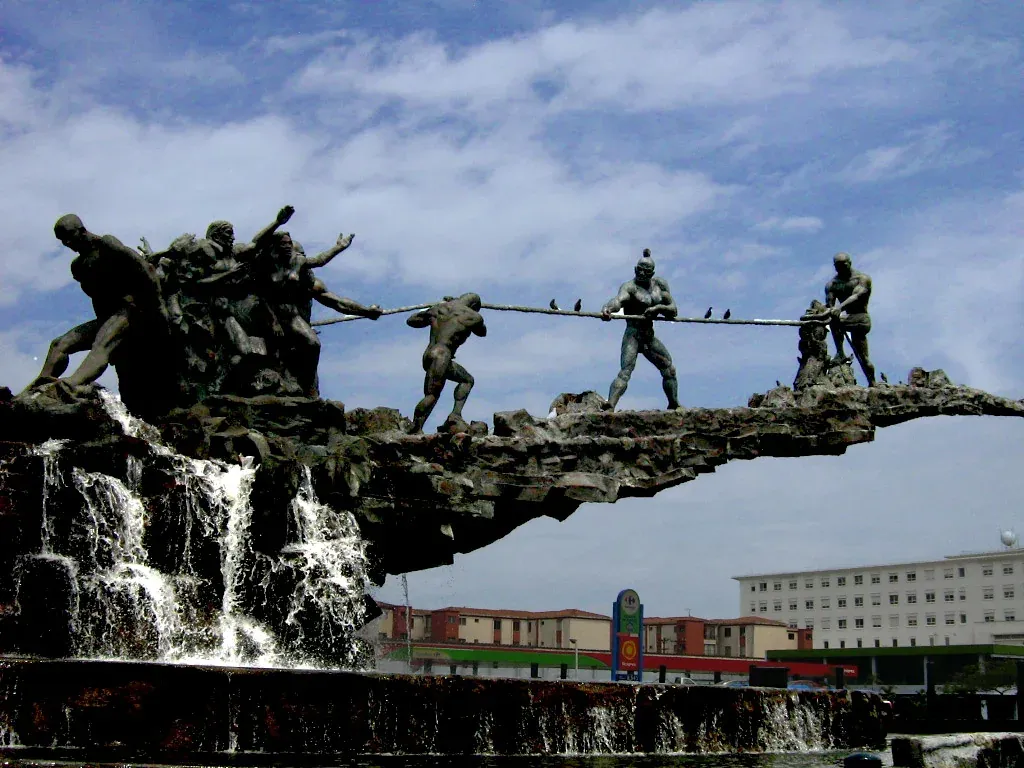
Photo: Juanadearcolaloca (opens in a new tab) · CC BY-SA 4.0 (opens in a new tab) The tip, in midair
Past the knot, the ramp carries on alone and hangs in midair, with no columns below: according to the city, the whole design rests on a single point of support.
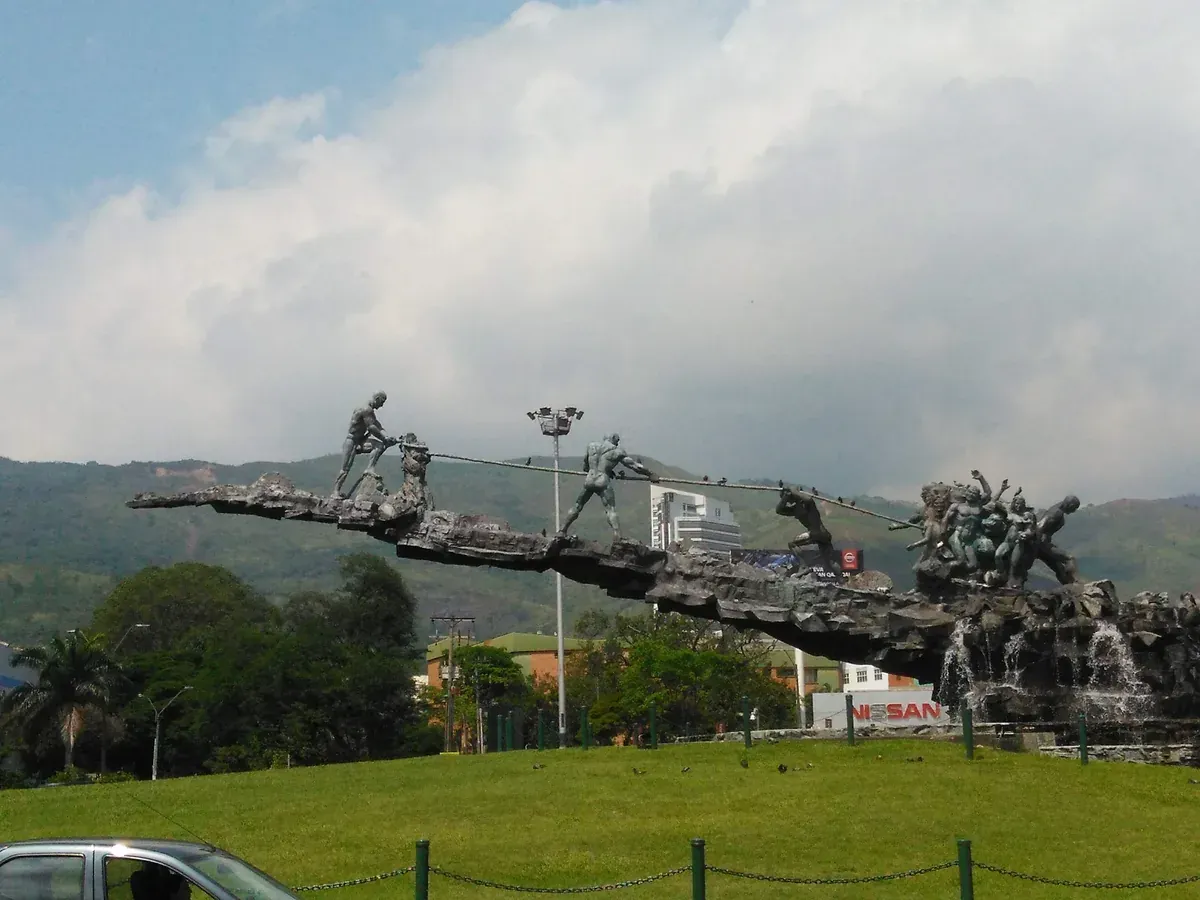
Photo: Tefita228 (opens in a new tab) · CC BY-SA 4.0 (opens in a new tab)
Knot by knot
When the ground shook, Cali pulled on the same rope
March
A gift for the host city
The Ibero-American Association of Chambers of Commerce held its annual assembly in Cali and, as it does with every city that hosts it, gave it a work of art. It was unveiled on March 24.
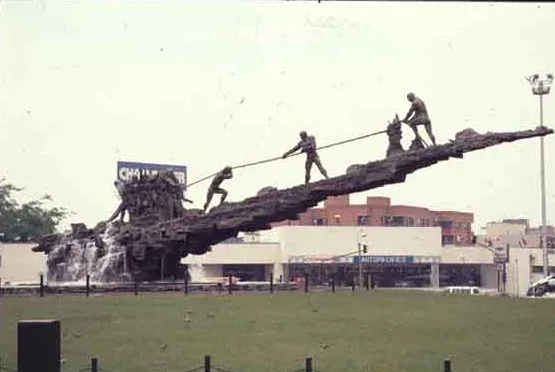
The monument around 1995. Photo: Fondo Archivo del Patrimonio Fotográfico y Fílmico del Valle del Cauca (opens in a new tab) · CC BY 4.0 (opens in a new tab) August 10
The ground shakes
At 7:34 in the morning, a magnitude 7.4 earthquake shook Cali. It was one of the hardest days in the city’s history, and Cali still remembers its victims.
The days after
A chain of hands
Where buildings fell, neighbors formed human chains to clear the rubble. Others showed up with gloves and buckets to help the rescuers, and fell silent whenever they asked to listen for signs of life. Hundreds of people brought donations to the Plazoleta Jairo Varela and the old Industria de Licores del Valle, and on social media many compared those scenes with Lombana’s figures.
September 13
Seven thousand runners to the monument
About 7,000 people ran the Cali Somos Todos 5K, from the Plazoleta Jairo Varela to this monument. They set off after a minute of silence for the victims and could bring roof tiles, faucets and tools for families who lost their homes.
“That little piece from each of us, for those who need us today.”
Alexander Camacho, Cali’s Sports Secretary (translated) October
A day for Cali’s solidarity
Beside the monument, city councilman Henry Peláez presented a proposal to make every August 10 the Day of Cali’s Solidarity. It recognizes this work as a place of solidarity and remembrance.
“We are not building an identity; we are rebuilding what we were, what we were known for.”
Henry Peláez, Cali city councilman (translated)
Every one of the figures is tied to the common thread of solidarity.
A stop worth discovering
Discover Monumento a la Solidaridad
The Ibero-American Association of Chambers of Commerce gave it to Cali when it held its annual assembly here, as it does with every host city. It is the work of Héctor Lombana Piñeres, the sculptor of Cartagena’s Zapatos Viejos (the giant old shoes), built on an iron frame covered in resin, quartz and slate. It was unveiled on March 24, 1995. It stands about 20 meters tall, and at its base it forms a fountain with waterfalls and colored lights.
Keep reading
On August 10, 2026, a magnitude 7.4 earthquake shook Cali. It was a hard blow, and the city answered like the figures on the monument: neighbors formed human chains to clear rubble, volunteers with gloves and buckets worked beside the rescuers, and hundreds of people brought donations to the collection centers. In September, about 7,000 runners finished here in the Cali Somos Todos 5K charity race, and in October, beside the monument, a proposal was made to declare every August 10 the Day of Cali’s Solidarity.
- The rock ramp that ends in midair
- The figures pulling together on one rope
- The symbol of Cali’s solidarity after the 2026 earthquake
Travel notebook
Stories for the road
History
The symbol of a city that helps itself
After the August 10, 2026 earthquake, the people of Cali formed human chains, cleared rubble and filled the collection centers. The September charity race finished here, and the Day of Cali’s Solidarity was proposed here.
Read the source (opens in a new tab)What to look for
Follow the rope with your eyes
Start at the bottom, with the group raising their arms among the waterfalls, and work your way up the ramp: each figure carries, hauls or ties off the same rope, up to the rock at the top.
Visiting tip
Come back at dusk
At night the monument is lit up and the fountain glows with colored lights. Watch from the sidewalk and cross only at the crosswalks.
Best time to go
A clear day, to see the ramp against the sky with the western hills behind. At dusk, the monument’s lighting and the fountain’s lights come on.
Before you go
The roundabout carries heavy traffic: look at the monument from the sidewalks around it and cross only at the crosswalks with traffic lights.
Getting there
How to get there
From the bus terminal
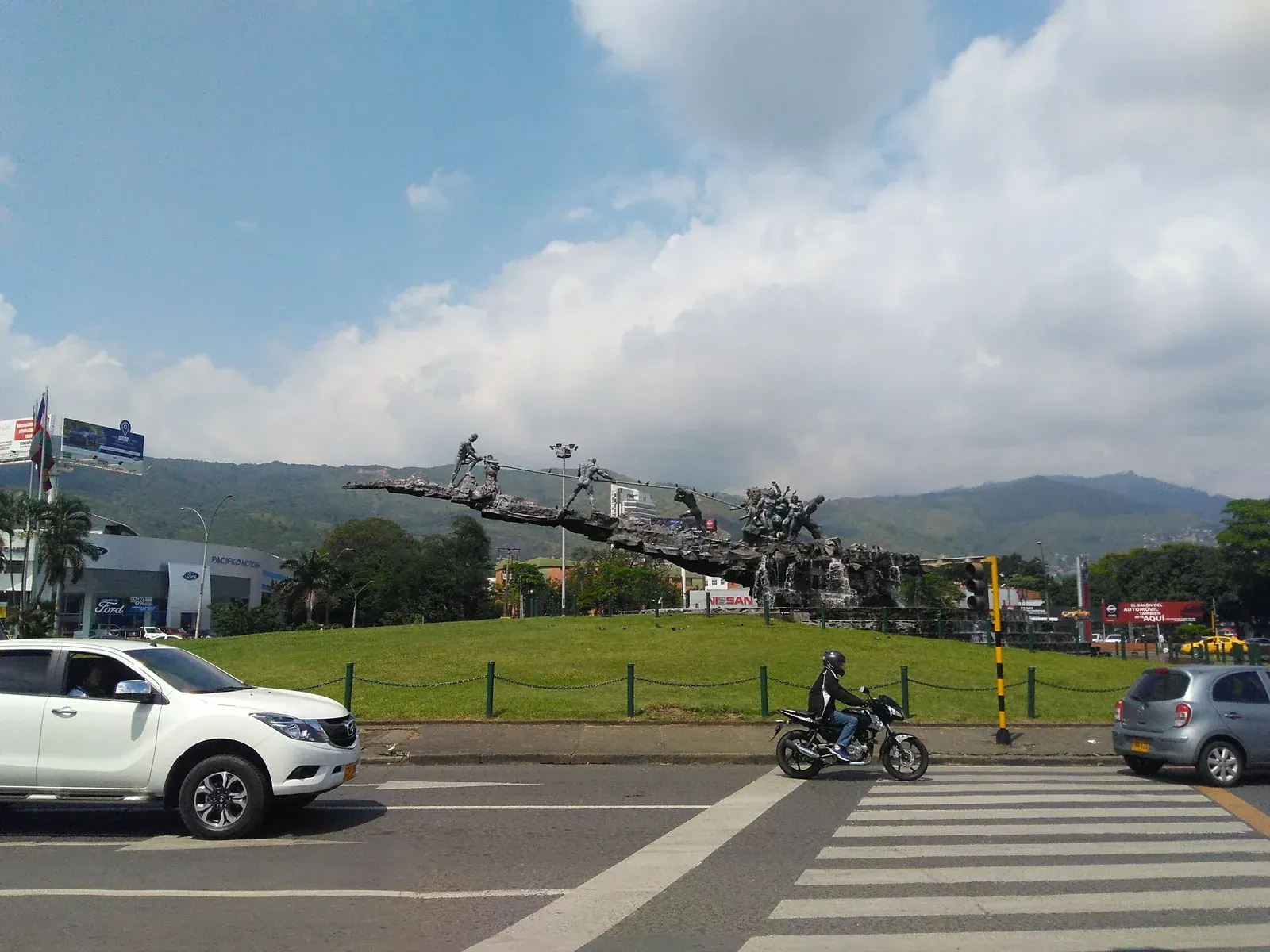
The monument is about 700 meters north along Avenida 3 Norte: a 10-minute walk. It makes a good first stop if you arrive in Cali by bus.
By MÍO bus, taxi or car
There are MÍO bus stops a block or two away, on Avenida 3 Norte and on Calle 34 Norte. By taxi or car, ask to be dropped at one of the corners of the roundabout, not on it.
The roundabout at a glance
- Avenida 3 Norte
- Calle 34 Norte
- Monument
- MÍO bus stops
- Bus terminalAbout 700 m south, a 10-min walk
- N
Not to scale
Frequently asked questions
Where is the Monumento a la Solidaridad?
On the roundabout of Avenida 3 Norte and Calle 34 Norte, in the Prados del Norte neighborhood, about 700 meters north of Cali’s bus terminal.
Who made the Monumento a la Solidaridad?
Sculptor Héctor Lombana Piñeres, who also made Cartagena’s Zapatos Viejos. It was a gift of the Ibero-American Association of Chambers of Commerce and was unveiled on March 24, 1995.
What does the monument stand for?
According to the city, the civic spirit, cooperation, mutual help and optimism of the people of Cali. All the figures are joined by the same rope.
Why is the monument a symbol of the 2026 earthquake?
Because the people of Cali lived out its idea: after the August 10, 2026 earthquake, neighbors and volunteers organized to clear rubble and bring donations. In September, a charity race of about 7,000 people finished here, and in October, beside the work, a Day of Cali’s Solidarity was proposed.