CaliSucursal · Forest and gardens
Jardín Botánico de Cali
Forest and gardens Cali, Colombia
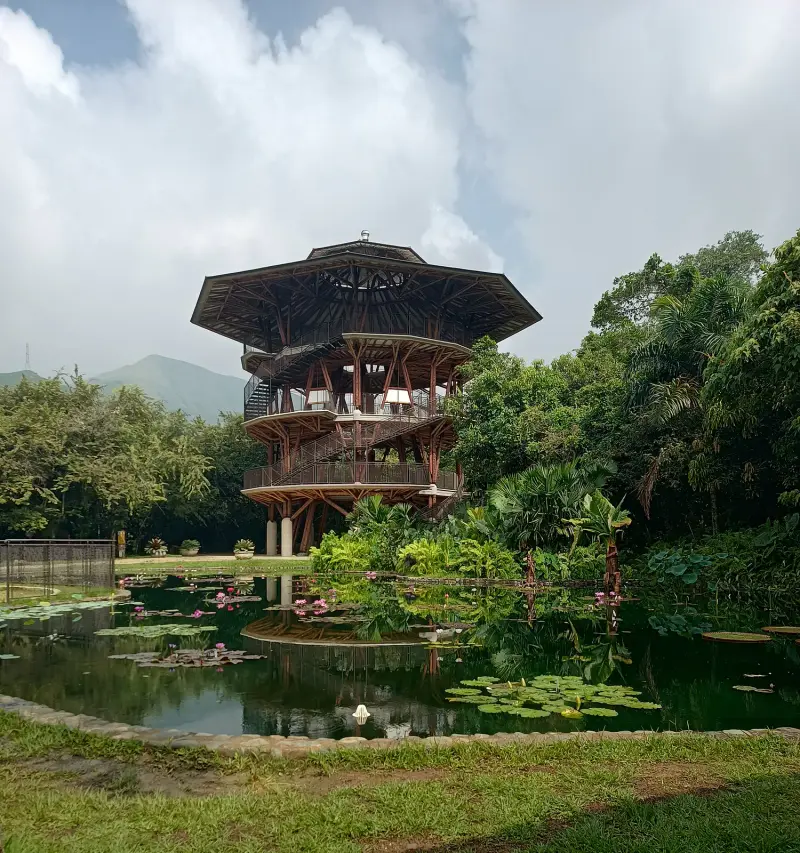
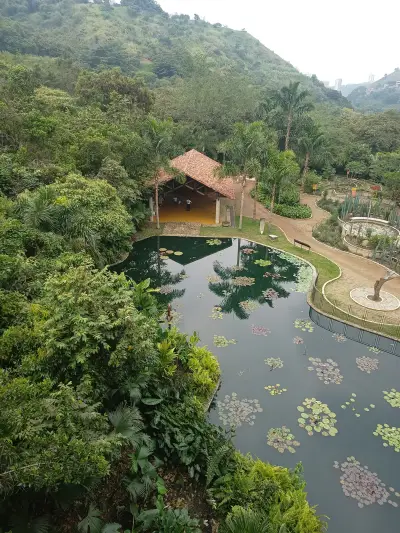
On the banks of the Cali River, in the west of the city, the Botanical Garden protects 14 hectares of tropical dry forest, one of Colombia’s most threatened ecosystems. You explore it on foot, along dirt trails, past a pond of water lilies and up a 24-meter tower.
The essentials for your visit
- Open
- Thursday to Sunday, 9 a.m. to 3 p.m.
- The walk
- 2 to 3 hours on foot
- Admission
- Foreign adult COP 44,000 · Colombian COP 23,000
Your visit at a glance
CaliSucursal’s suggested time excludes travel to and from the site.
- Suggested time
- 2–3 h to walk the trails, the pond and the lookout tower.
- Cost and entry
- Paid admission: foreign visitors COP 44,000 (over 12) and 33,000 (ages 2 to 12); Colombians 23,000 and 17,500. Buy online or at the ticket office by the parking lot.
- Hours or availability
- Thursday to Sunday, 9 a.m. to 3 p.m., according to the official website. Check before going on a public holiday.
- Mobility and accessibility
- Uneven dirt trails and steps. Strollers are not allowed, and the garden warns that the walk is not fully suitable for people with reduced mobility.
Getting thereDirections in Google Maps (opens in a new tab)Directions in Waze (opens in a new tab)
Tropical dry forest · Cali River
The forest Cali almost lost
One of the valley’s last remnants of tropical dry forest survives here: 14 hectares on the banks of the Cali River, with dirt trails, ravines and 3,378 plants recorded in its living collection.
- of tropical dry forest
- 14ha
- species in the living collection
- 469
- plant families
- 69
- high at the lookout tower
- 24m
The lookout tower
Climb 24 meters among the trees
At water level
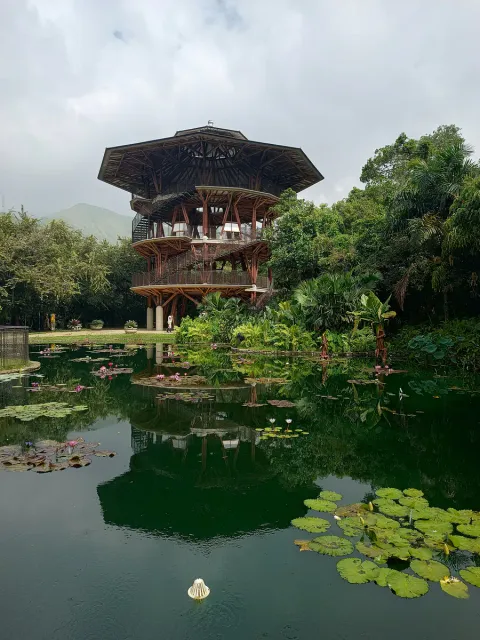
The tower rises in the central plaza, facing the pond of aquatic plants. Down here, water lilies, reeds and their reflection rule the view.
Among trunks and branches
Simón Vélez designed it to look at the forest rather than the landscape: as you climb, the treetops meet you at a different height.
Wood, bamboo and steel
Four floors of eucalyptus wood, guadua bamboo, concrete and steel hold up the lookout, with round balconies that circle the tower.
At the top, the city
From the top you can see Cristo Rey hill, the Virgen de Yanaconas statue, the Cali River and, in the distance, the city.
Living collection
What grows along the trail
The garden’s collection focuses on the dry-forest flora of the Cauca River valley, along with plants from other regions of Colombia.
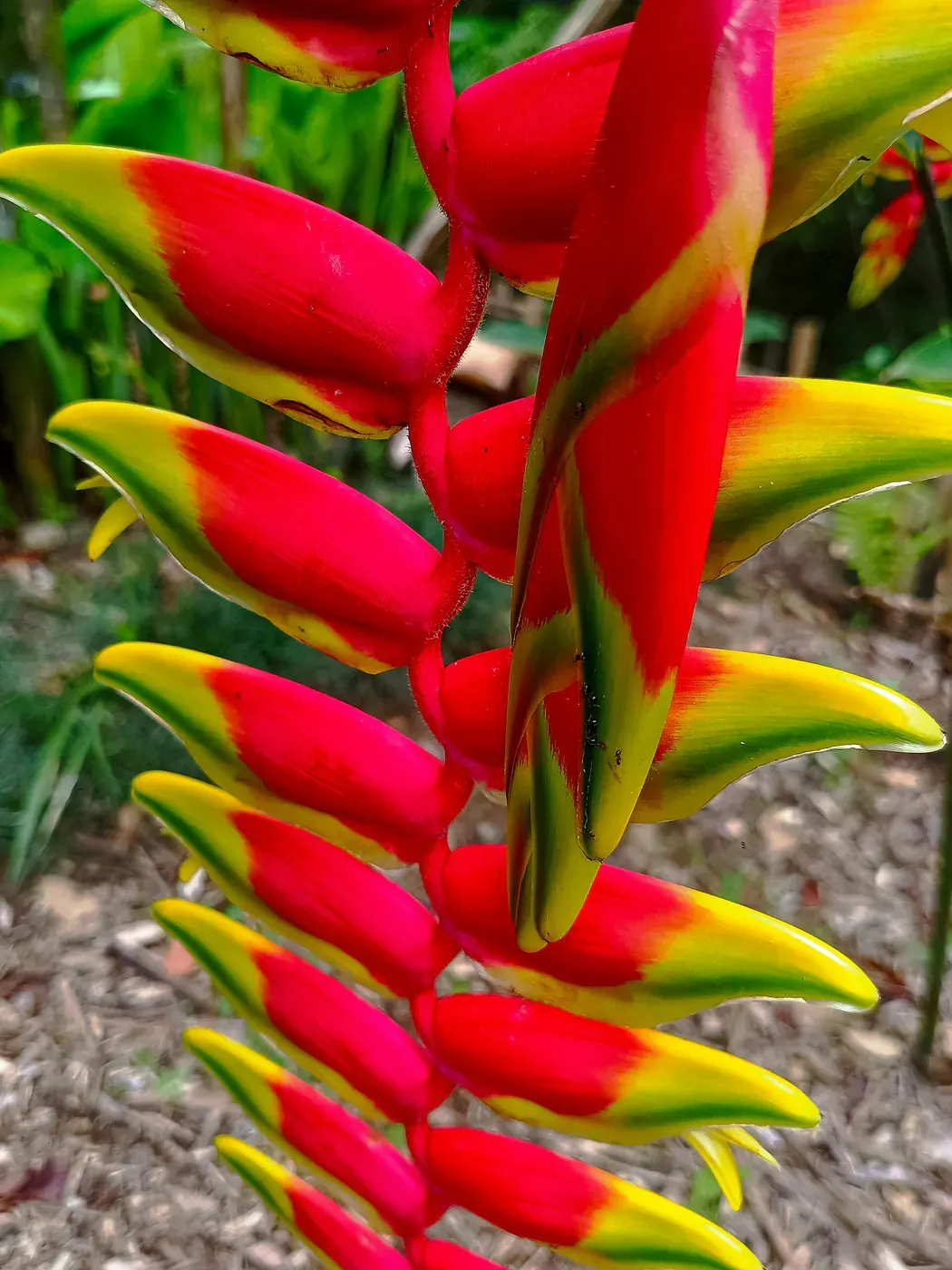
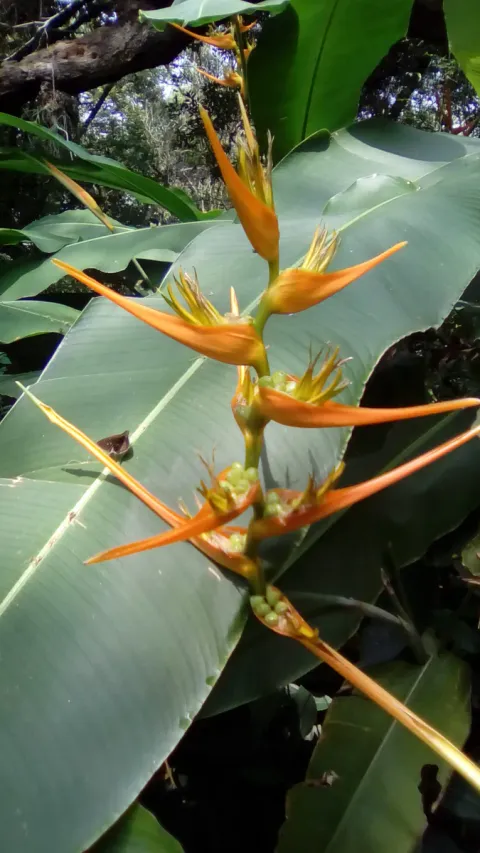
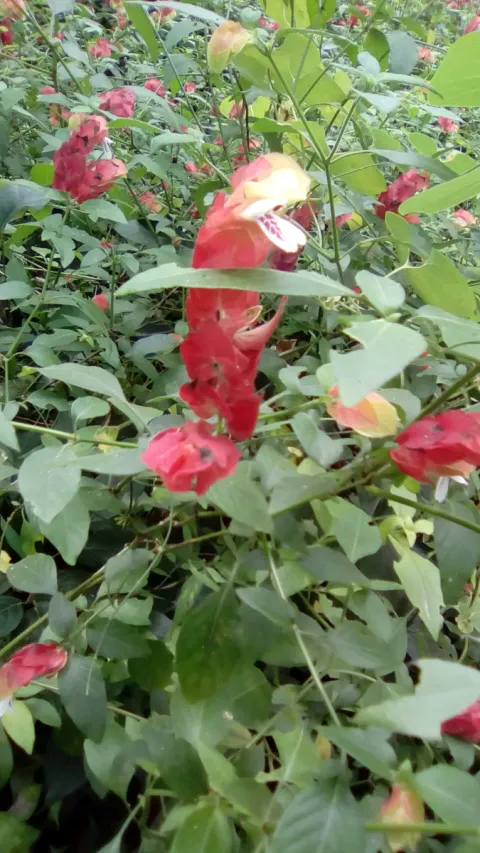
Heliconiaceae · ZingiberalesHeliconia rostrataLobster-claw heliconiaIts red, yellow-tipped bracts hang in a zigzag from a single stem.Photo: AnaPereaRo (opens in a new tab) · CC BY-SA 4.0 (opens in a new tab) 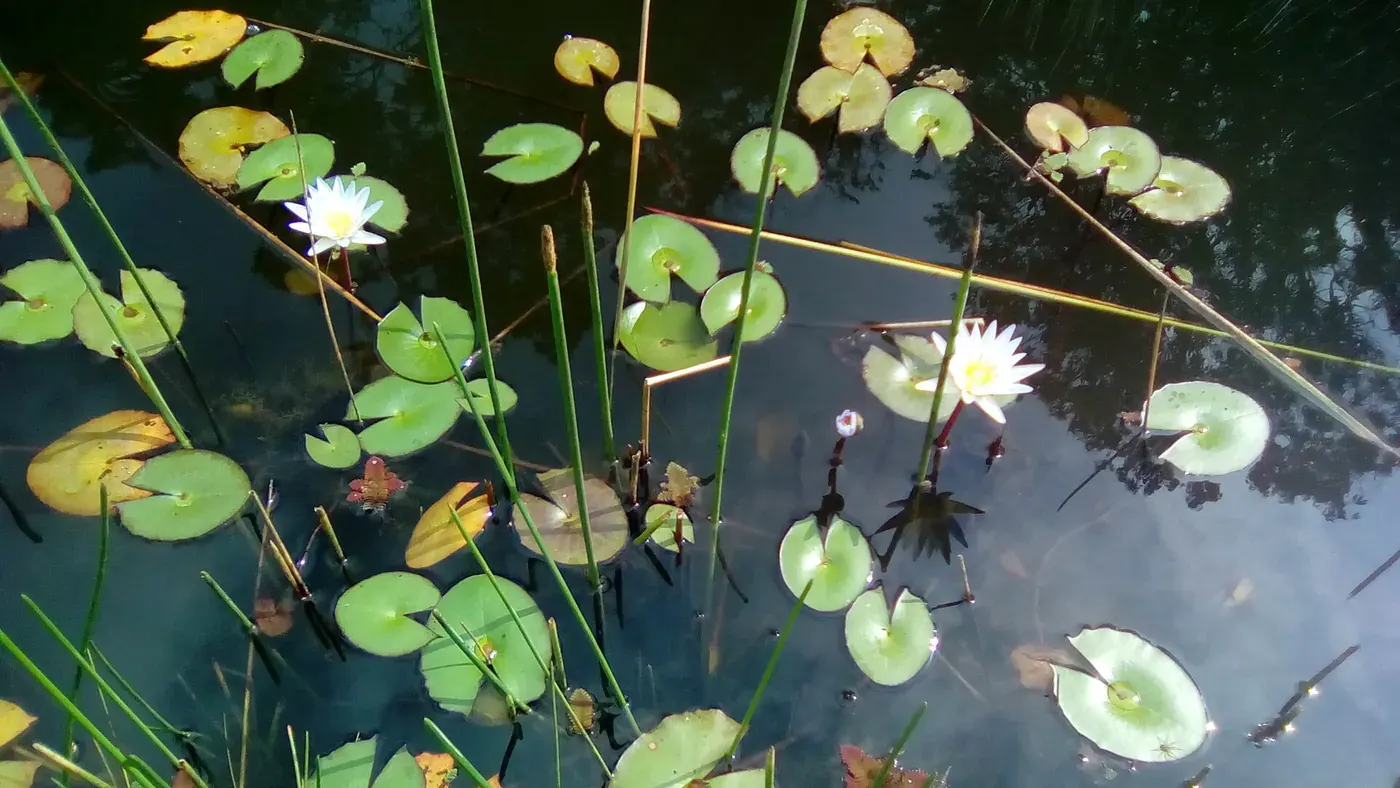
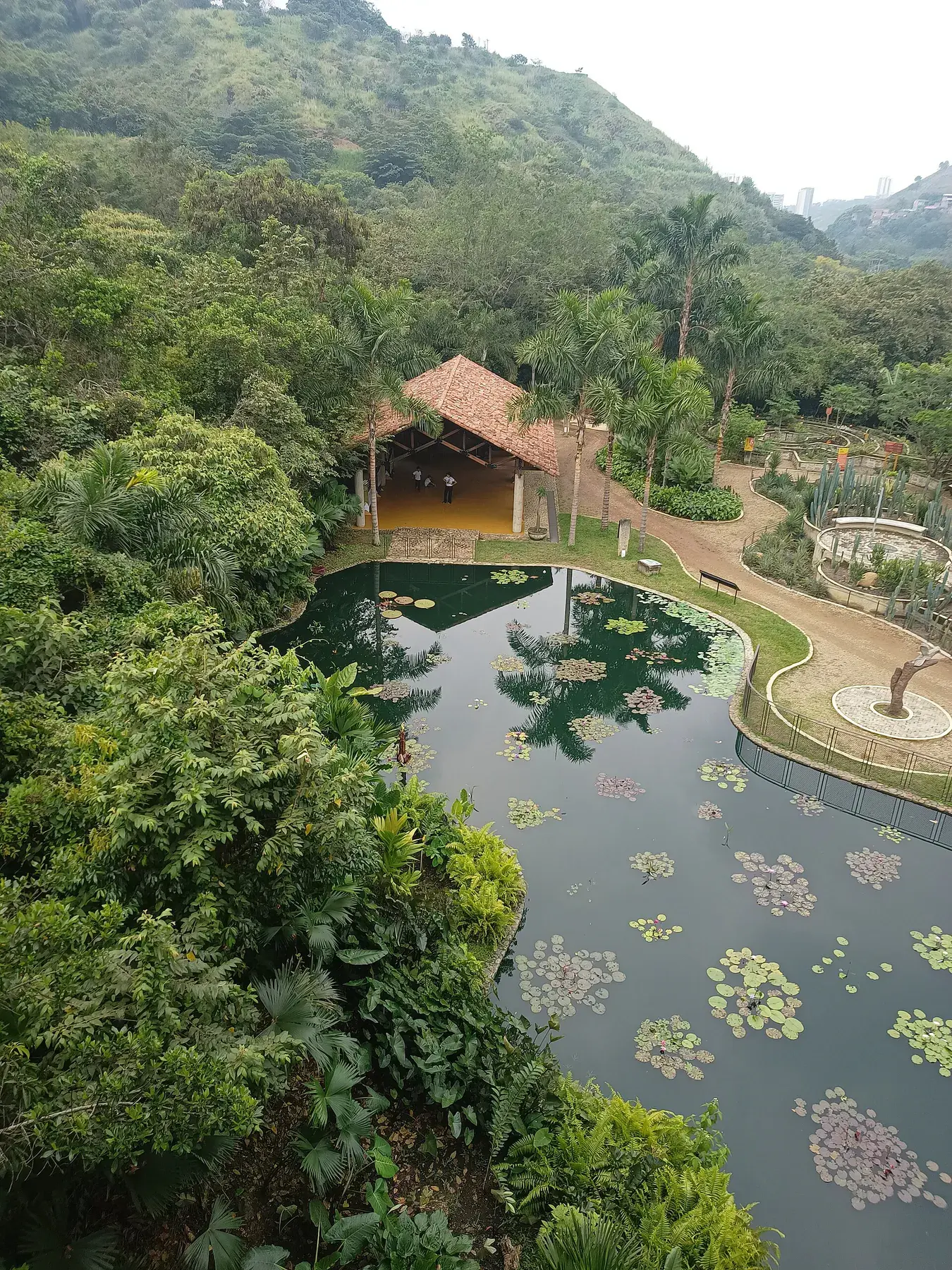
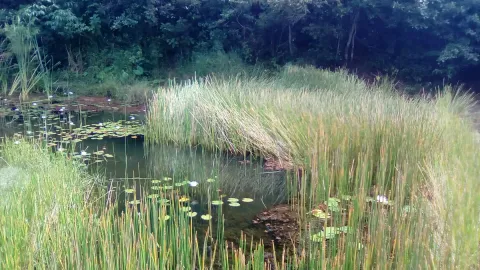
Aquatic plantsNymphaealesPond water liliesThe pond in the central plaza holds the aquatic plant collection, at the foot of the tower.Photo: Remux (opens in a new tab) · CC BY-SA 4.0 (opens in a new tab) 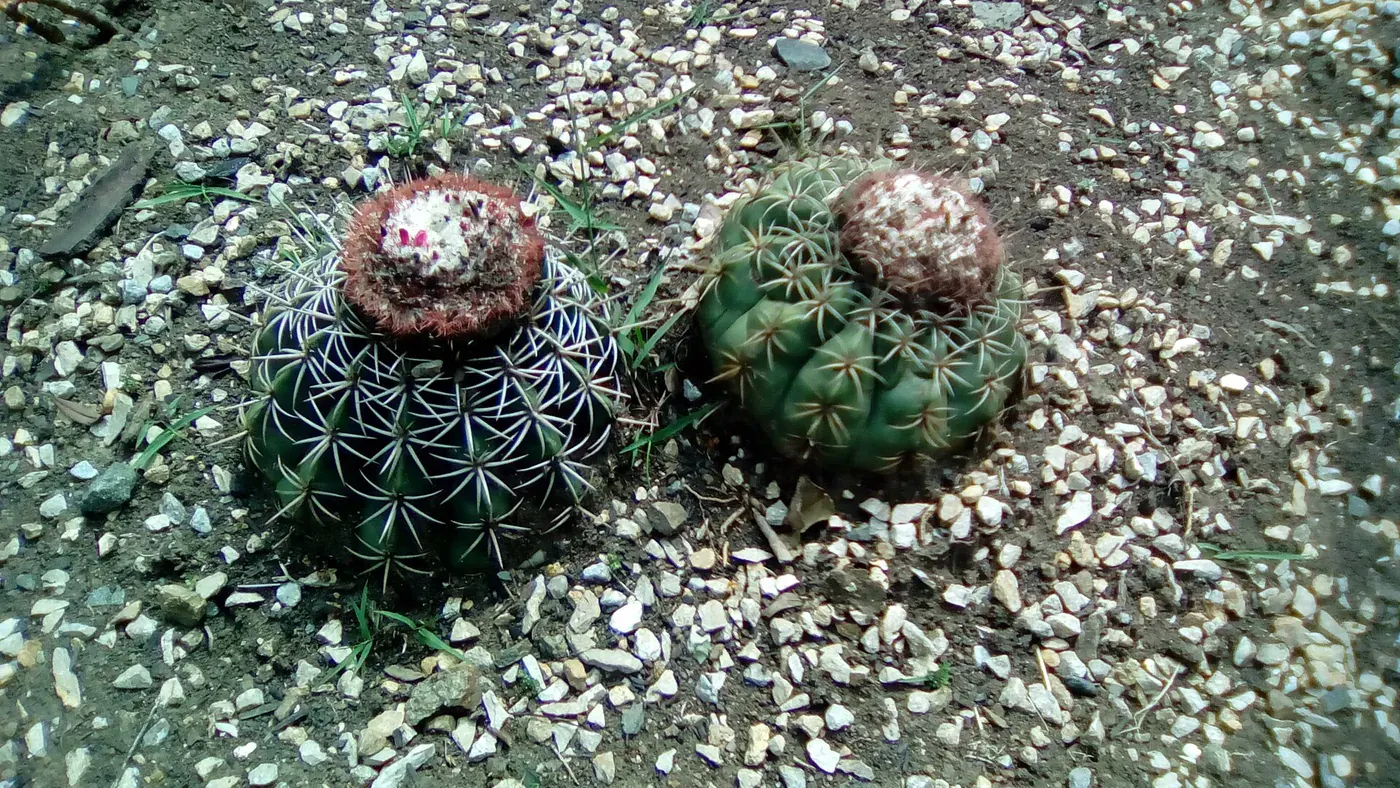
Dryland plantsCactaceaeCactus gardenOne of the gardens of the central plaza, beside the pond, the food garden and the maloca.Photo: Remux (opens in a new tab) · CC BY-SA 4.0 (opens in a new tab) 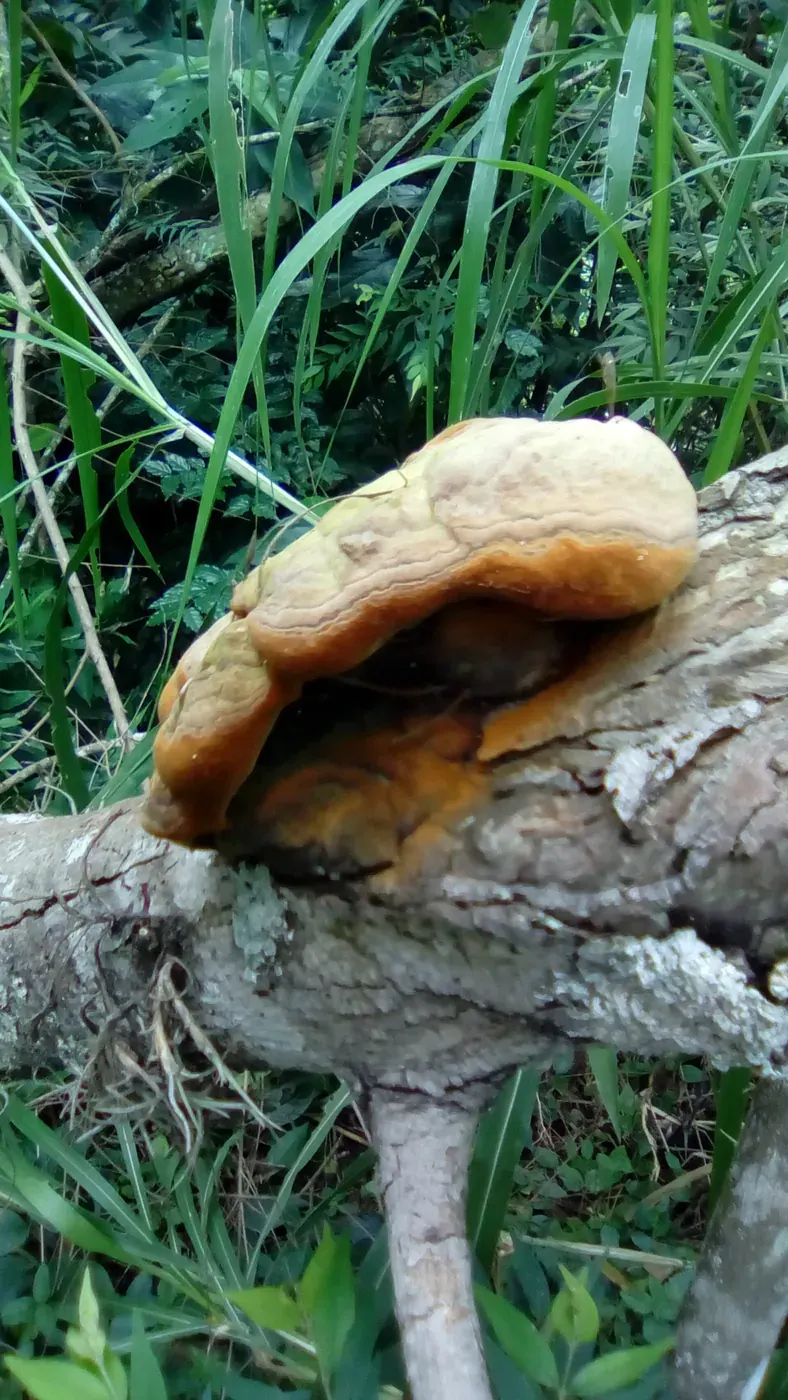
“The forest’s internet” stationFungiForest fungiA whole station is devoted to fungi, which connect and break down life in the soil.Photo: Remux (opens in a new tab) · CC BY-SA 4.0 (opens in a new tab) 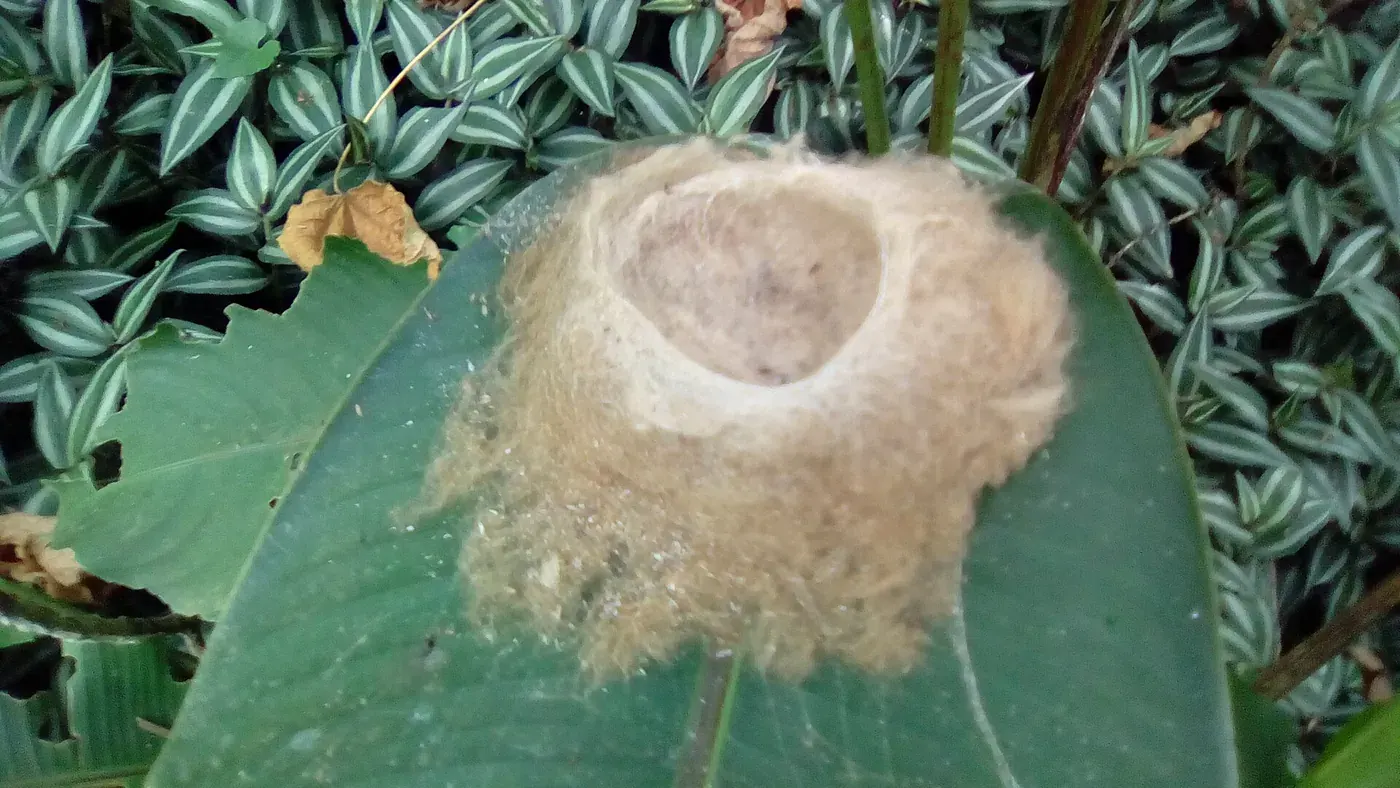
The garden’s wildlifeTrochilidaeHummingbird nestA tiny nest of plant fibers resting on a broad understory leaf.Photo: Remux (opens in a new tab) · CC BY-SA 4.0 (opens in a new tab)
The walk
Fourteen stations for reading the forest
Each station brings you closer to the plant world from a different angle. Allow 2 to 3 hours to walk them at your own pace.
- Entrance
- Central plaza
- Food gardens
- Cacti
- Lookout tower
- Aquatic plants
- Maloca
- Nectar garden
- Sun reservoir
- Sounds of the forest
- Barefoot
- The forest’s internet
- Beyond beaches and coconuts
- Living well
A stop worth discovering
Discover Jardín Botánico de Cali
The garden began in 2001, when biologist Jorge Enrique Orejuela and others joined forces to restore the Cali River watershed. After years of financial trouble it closed in 2018; the Cali Zoo Foundation renovated it and reopened it on September 1, 2023.
Keep reading
The walk passes themed stations: a garden of food, aromatic and medicinal plants, a cactus garden, a pond of aquatic plants, a maloca (a traditional communal hut) and the lookout tower by architect Simón Vélez. The living collection holds 469 species from 69 families, with a focus on the dry-forest flora of the Cauca River valley.
- The 24-meter lookout tower designed by Simón Vélez
- The pond of water lilies and aquatic plants
- Trails through 14 hectares of tropical dry forest

Travel notebook
Stories for the road
History
A forest that was almost lost
In 2002, the power company Epsa loaned 14 hectares holding one of the region’s last remnants of tropical dry forest. The garden closed in 2018 and reopened, renovated, on September 1, 2023.
Read the source (opens in a new tab)What to look for
Read the forest floor by floor
Simón Vélez designed the tower so that, as you climb, you see the treetops at different heights. Pause on each floor and compare the leaves and flowers in front of you.
Visiting tip
Travel light and protected
Wear closed shoes and bring a cap, insect repellent and sunscreen. Food stays outside: if you get hungry, the Café del Bosque sells snacks and drinks.
Best time to go
Arrive at 9 a.m., Thursday to Sunday: the garden closes at 3 p.m. and the full walk takes 2 to 3 hours. The morning sun is gentler on the open stretches, and if you want quiet, Thursday and Friday are usually calmer than the weekend.
Before you go
Buy your ticket online or at the ticket office by the parking lot. Food stays outside (the Café del Bosque is inside), and pets, except assistance animals, and strollers are not allowed. Wear comfortable shoes and bring a cap, insect repellent and sunscreen.
Getting there
How to get there
By car or taxi
Search for “Jardín Botánico de Cali” on the map: the ticket office and parking lot are on Carrera 2 Oeste, one kilometer past the Cali Zoo. Parking costs COP 11,500 per car, 6,200 per motorcycle and 2,000 per bicycle.
By MIO bus
Ride to San Bosco station and, outside, take the A02 feeder bus to its last stop, Atenas. From there it is about 550 meters, roughly a 7-minute walk, to the ticket office.
At the ticket office
Admission
- Adult, foreign visitorCOP 44,000Over 12
- Child, foreign visitorCOP 33,000Ages 2 to 12
- Adult, ColombianCOP 23,000Over 12
- Child, ColombianCOP 17,500Ages 2 to 12
Parking
- Car COP 11,500
- Motorcycle COP 6,200
- Bicycle COP 2,000
Rates published by the garden, checked on November 12, 2026. Buy online or at the ticket office by the parking lot. See rates and buy (Spanish) (opens in a new tab)
By MIO bus, from the station to the ticket office
- San Bosco stationArrive on any MIO route
- A02 feeder busBoard at the stop outside
- Atenas stopThe last one; walk 550 m, about 7 min
- Ticket officeNext to the parking lot
Frequently asked questions
How much is admission to the Cali Botanical Garden?
According to the garden’s published rates, foreign visitors pay COP 44,000 (over 12) and COP 33,000 (children 2 to 12). Colombians pay COP 23,000 and 17,500. Parking is extra.
What are the opening hours?
It opens Thursday to Sunday, from 9 a.m. to 3 p.m. Check the official website before you go, especially on public holidays.
How long does the visit take?
The garden suggests 2 to 3 hours to walk its trails, including the pond and the lookout tower. Within opening hours, you can stay as long as you like.
Can I bring a stroller or a wheelchair?
Strollers are not allowed. The trails are mostly dirt, uneven and with steps, and the garden warns that the walk is not fully suitable for people with reduced mobility.